Field Courtney B, Johnston Kevin, Gati Joseph S, Menon Ravi S, Everling Stefan
Department of Physiology and Pharmacology, University of Western Ontario, London, Ontario, Canada.
PLoS One. 2008;3(12):e3928. doi: 10.1371/journal.pone.0003928. Epub 2008 Dec 11.
Neuroanatomical studies investigating the connectivity of brain areas have heretofore employed procedures in which chemical or viral tracers are injected into an area of interest, and connected areas are subsequently identified using histological techniques. Such experiments require the sacrifice of the animals and do not allow for subsequent electrophysiological studies in the same subjects, rendering a direct investigation of the functional properties of anatomically identified areas impossible.
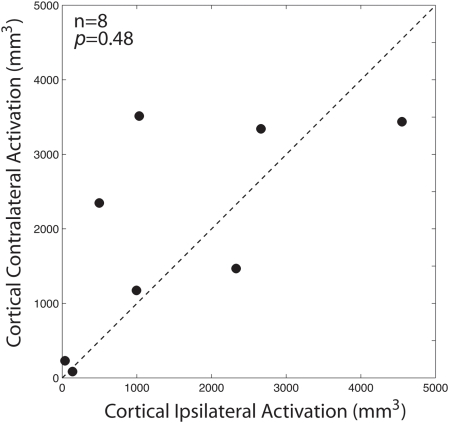
METHODOLOGY/PRINCIPAL FINDINGS: Here, we used a combination of microstimulation and fMRI in an anesthetized monkey preparation to study the connectivity of the superior colliculus (SC). Microstimulation of the SC resulted in changes in the blood oxygenation level-dependent (BOLD) signals in the SC and in several cortical and subcortical areas consistent with the known connectivity of the SC in primates.
CONCLUSIONS/SIGNIFICANCE: These findings demonstrates that the concurrent use of microstimulation and fMRI can be used to identify brain networks for further electrophysiological or fMRI investigation.
迄今为止,研究脑区连接性的神经解剖学研究采用的方法是,将化学或病毒示踪剂注入感兴趣的区域,随后使用组织学技术识别相连的区域。此类实验需要牺牲动物,且不允许在同一受试对象上进行后续的电生理研究,从而无法直接研究解剖学上确定区域的功能特性。
方法/主要发现:在此,我们在麻醉的猴子实验准备中结合使用微刺激和功能磁共振成像(fMRI)来研究上丘(SC)的连接性。对上丘的微刺激导致上丘以及几个皮层和皮层下区域的血氧水平依赖(BOLD)信号发生变化,这与灵长类动物中上丘已知的连接性一致。
结论/意义:这些发现表明,微刺激和fMRI的同时使用可用于识别脑网络,以便进行进一步的电生理或fMRI研究。