Mortensen R M, Zubiaur M, Neer E J, Seidman J G
Howard Hughes Medical Institute, Boston, MA.
Proc Natl Acad Sci U S A. 1991 Aug 15;88(16):7036-40. doi: 10.1073/pnas.88.16.7036.
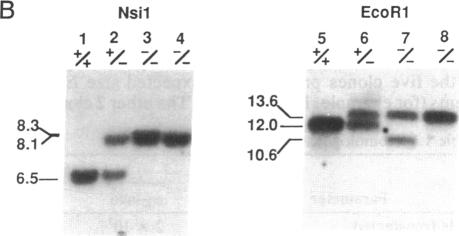
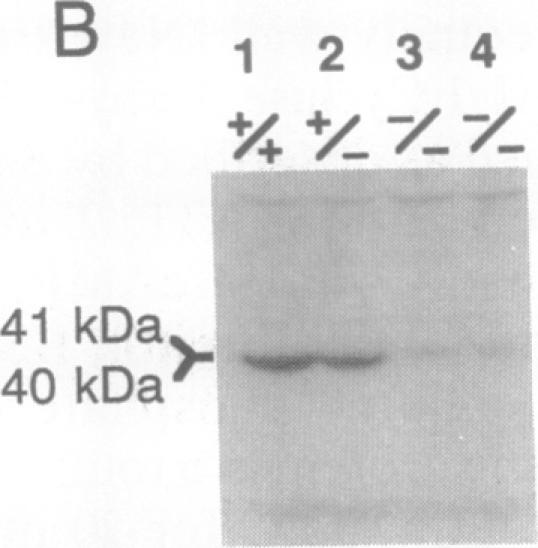
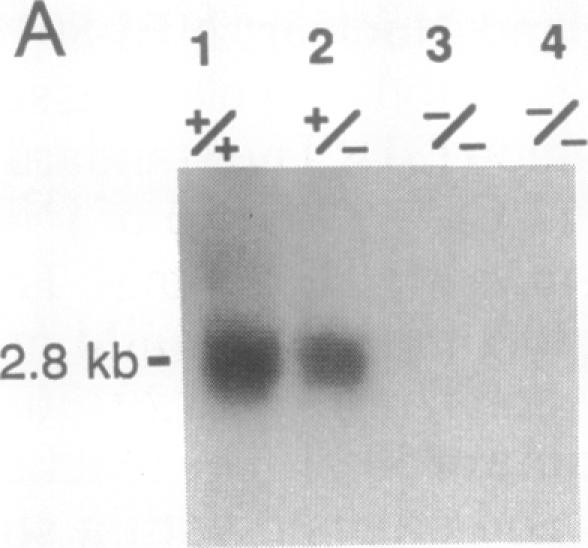
The alpha i2 subunit of the inhibitory heterotrimeric guanine nucleotide-binding proteins is highly conserved in mammals and is expressed in all cell types, but its exact function is not yet defined. We have investigated the role of this protein by producing embryonic stem (ES) cells lacking a functional alpha i2 gene. These alpha i2-null cell lines regulate adenylyl cyclase and grow and differentiate in vitro the same as wild-type ES cells. Homologous recombination was used to sequentially inactivate both copies of the alpha i2 gene. The first allele was inactivated by insertion of a neomycin-resistance gene. We modified the hygromycin B-resistance gene for improved expression in ES cells and used this gene to inactivate the remaining normal allele. The techniques used should be generally applicable to other genes whether or not they are expressed in ES cells.
抑制性异源三聚体鸟嘌呤核苷酸结合蛋白的αi2亚基在哺乳动物中高度保守,在所有细胞类型中均有表达,但其确切功能尚未明确。我们通过产生缺乏功能性αi2基因的胚胎干细胞(ES细胞)来研究该蛋白的作用。这些αi2基因缺失的细胞系与野生型ES细胞一样,能调节腺苷酸环化酶,并且在体外生长和分化。利用同源重组依次使αi2基因的两个拷贝失活。第一个等位基因通过插入新霉素抗性基因而失活。我们对潮霉素B抗性基因进行了修饰,以提高其在ES细胞中的表达,并使用该基因使其余的正常等位基因失活。所使用的技术一般应适用于其他基因,无论它们是否在ES细胞中表达。