Paradise Christopher J, Blue Jarrod D, Burkhart John Q, Goldberg Justin, Harshaw Lauren, Hawkins Katherine D, Kegan Benjamin, Krentz Tyler, Smith Leslie, Villalpando Shawn
Biology Department, Davidson College, Davidson, NC, USA.
BMC Ecol. 2008 Dec 19;8:22. doi: 10.1186/1472-6785-8-22.
Abiotic and biotic factors in a local habitat may strongly impact the community residing within, but spatially structured metacommunities are also influenced by regional factors such as immigration and colonization. We used three years of monthly treehole census data to evaluate the relative influence of local and regional factors on our study system.
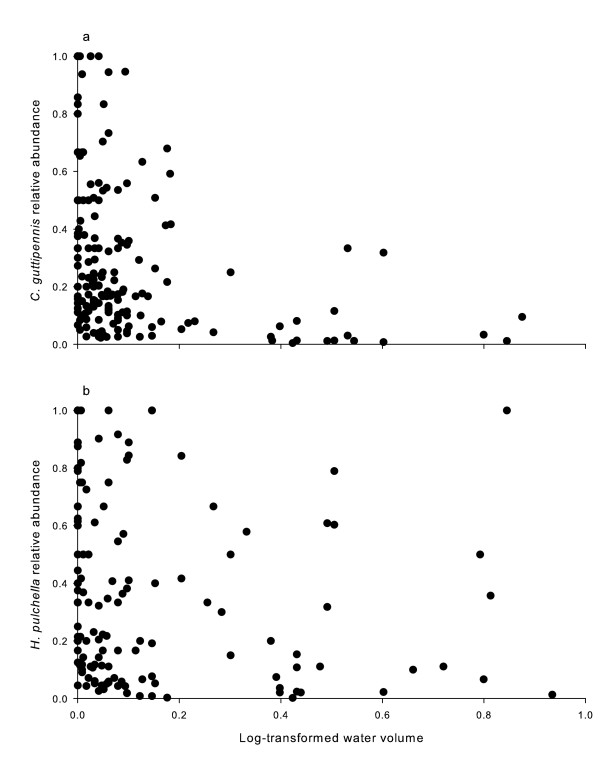
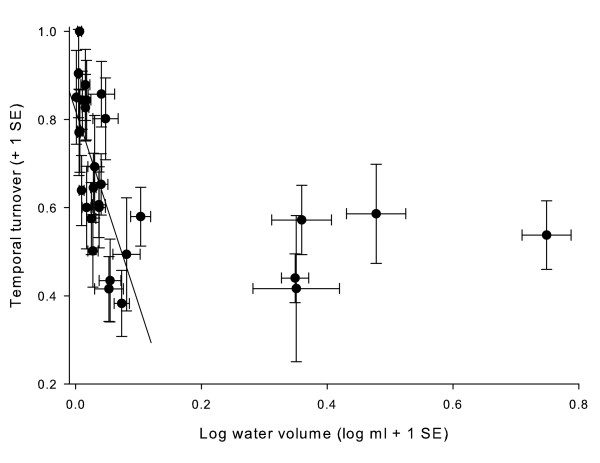
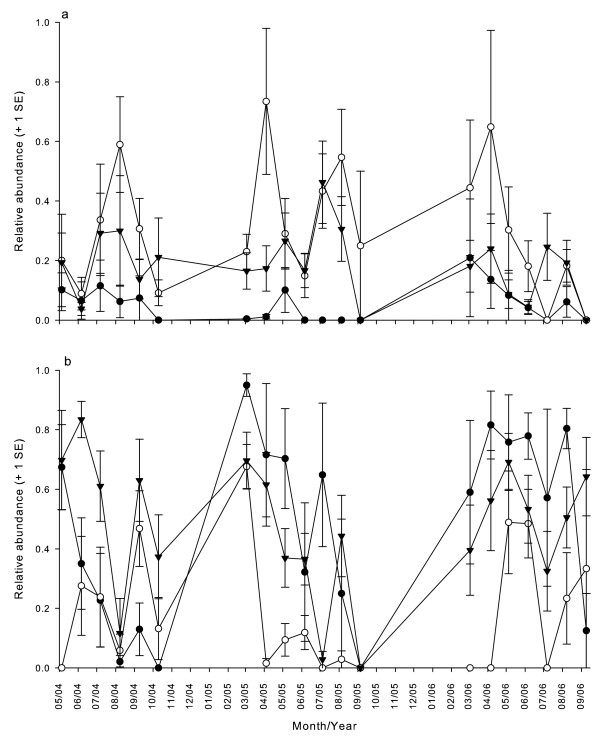
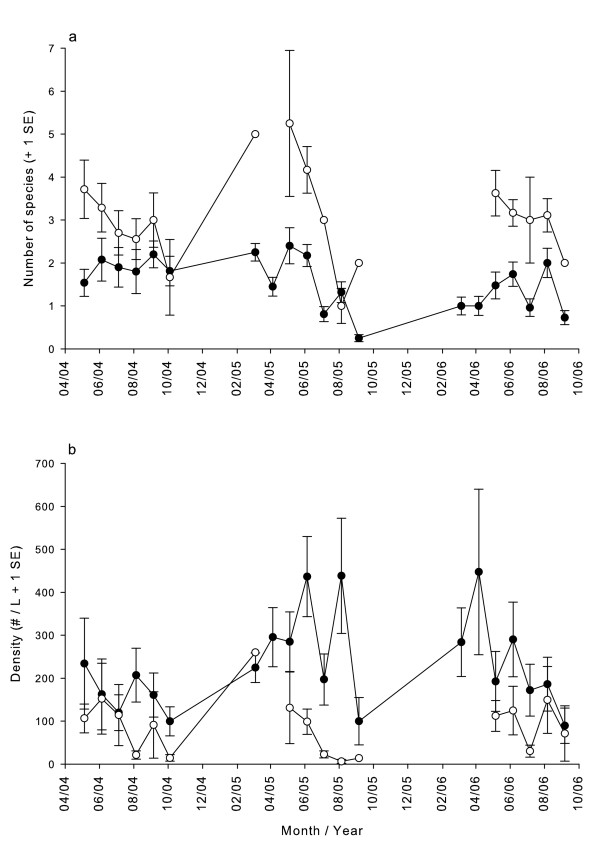
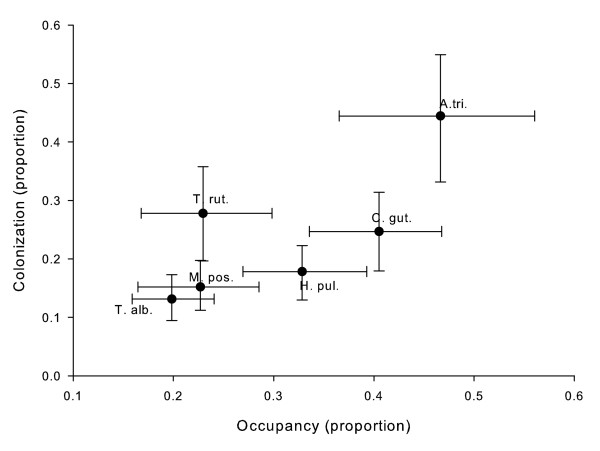
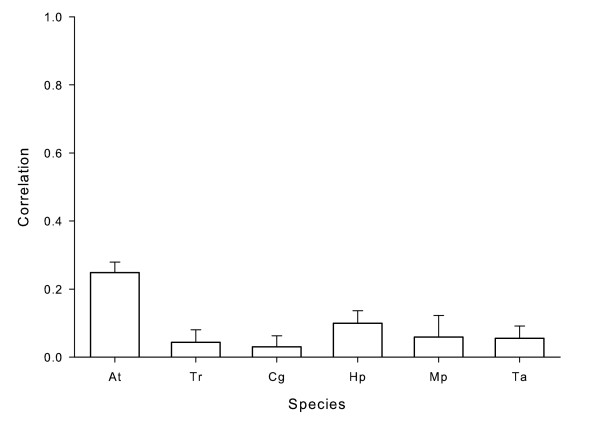
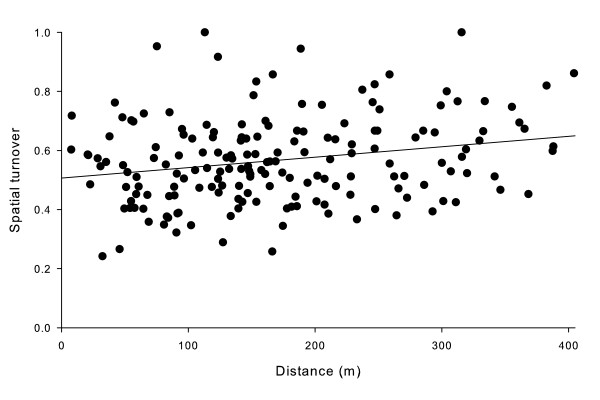
Every species responded to at least one of three local environmental factors measured: water volume, leaf litter mass, and presence of a top predator. Several species were affected by water volume, and a non-exclusive group of species were influenced by leaf litter mass. Relative abundance of Aedes triseriatus was higher in treeholes with higher volumes of water, and relative abundances of three out of six other species were lower in treeholes with higher volumes of water. Leaf litter mass positively affected densities of Aedes triseriatus and relative abundance of several dipteran species. The density of the top predator, Toxorhynchites rutilus, affected the relative abundance of the two most common species, A. triseriatus and Culicoides guttipennis. Treeholes with T. rutilus had an average of two more species than treeholes without T. rutilus. We found little evidence of synchrony between pairs of treeholes, either spatially or temporally. There were high levels of spatial and temporal turnover, and spatial turnover increased with distance between patches.
The strong effects of water volume, leaf litter mass, and presence of a top predator, along with the high temporal turnover strongly suggest that species presence and density are determined by local factors and changes in those factors over time. Both low water volume and high predator densities can eliminate populations in local patches, and those populations can recolonize patches when rain refills or predators exit treeholes. Population densities of the same species were not matched between pairs of treeholes, suggesting variation in local factors and limited dispersal. Distance effects on spatial turnover also support limitations to dispersal in the metacommunity, and we conclude that the weight of evidence favors a strong influence of local factors relative to regional factors.
局部栖息地中的非生物和生物因素可能会对栖息其中的群落产生强烈影响,但空间结构的集合群落也会受到诸如迁入和定殖等区域因素的影响。我们利用三年的每月树洞普查数据来评估局部和区域因素对我们研究系统的相对影响。
每个物种至少对所测量的三个局部环境因素之一做出了响应:水量、落叶质量和顶级捕食者的存在。有几个物种受到水量的影响,还有一组非排他性的物种受到落叶质量的影响。三带喙库蚊在水量较高的树洞中相对丰度较高,而其他六个物种中有三个在水量较高的树洞中相对丰度较低。落叶质量对三带喙库蚊的密度和几种双翅目物种的相对丰度有积极影响。顶级捕食者华丽巨蚊的密度影响了两种最常见物种——三带喙库蚊和刺螫库蠓的相对丰度。有华丽巨蚊的树洞比没有华丽巨蚊的树洞平均多两个物种。我们几乎没有发现树洞对在空间或时间上同步的证据。存在高水平的空间和时间周转,并且空间周转随着斑块之间距离的增加而增加。
水量、落叶质量和顶级捕食者的存在所产生的强烈影响,以及高时间周转强烈表明物种的存在和密度是由局部因素以及这些因素随时间的变化所决定的。低水量和高捕食者密度都可以消除局部斑块中的种群,当雨水重新填满或捕食者离开树洞时,这些种群可以重新定殖斑块。成对树洞之间相同物种的种群密度不匹配,表明局部因素存在差异且扩散有限。距离对空间周转的影响也支持了集合群落中扩散的局限性,并且我们得出结论,证据权重有利于局部因素相对于区域因素的强烈影响。