Bardien Soraya, Human Hannique, Harris Tashneem, Hefke Gwynneth, Veikondis Rene, Schaaf H Simon, van der Merwe Lize, Greinwald John H, Fagan Johan, de Jong Greetje
Division of Molecular Biology and Human Genetics, Stellenbosch University, Cape Town, South Africa.
BMC Med Genet. 2009 Jan 13;10:2. doi: 10.1186/1471-2350-10-2.
South Africa has one of the highest incidences of multidrug-resistant tuberculosis (MDR-TB) in the world. Concomitantly, aminoglycosides are commonly used in this country as a treatment against MDR-TB. To date, at least five mutations are known to confer susceptibility to aminoglycoside-induced hearing loss. The aim of the present study was to develop a rapid screening method to determine whether these mutations are present in the South African population.
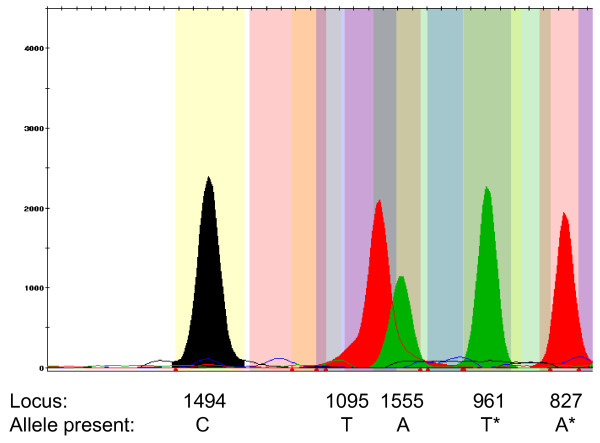
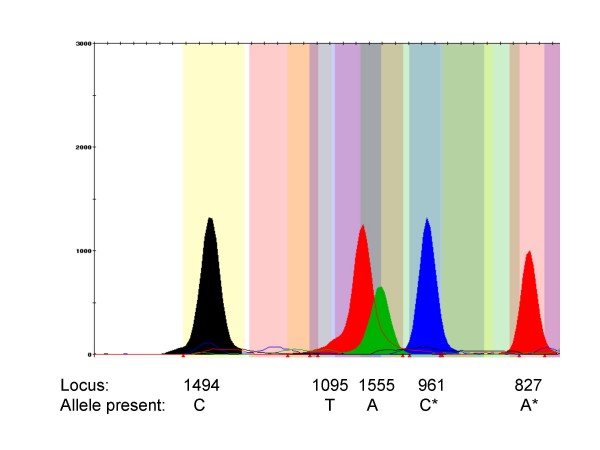
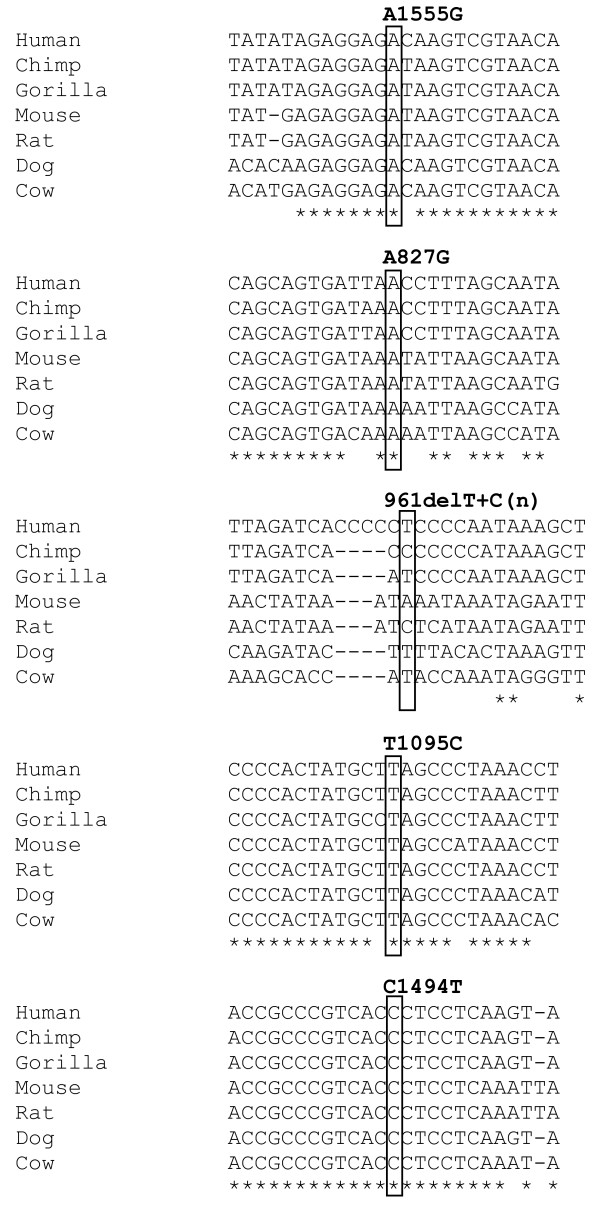
A multiplex method using the SNaPshot technique was used to screen for five mutations in the MT-RNR1 gene: A1555G, C1494T, T1095C, 961delT+C(n) and A827G. A total of 204 South African control samples, comprising 98 Mixed ancestry and 106 Black individuals were screened for the presence of the five mutations.
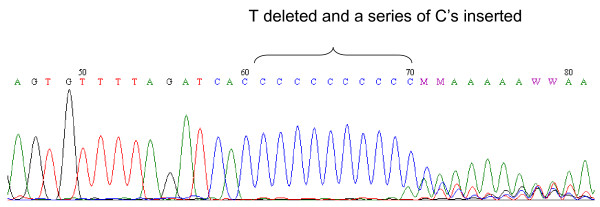
A robust, cost-effective method was developed that detected the presence of all five sequence variants simultaneously. In this pilot study, the A1555G mutation was identified at a frequency of 0.9% in the Black control samples. The 961delT+C(n) variant was present in 6.6% of the Black controls and 2% of the Mixed ancestry controls. The T1095C, C1494T and A827G variants were not identified in any of the study participants.
The frequency of 0.9% for the A1555G mutation in the Black population in South Africa is of concern given the high incidence of MDR-TB in this particular ethnic group. Future larger studies are warranted to determine the true frequencies of the aminoglycoside deafness mutations in the general South African population. The high frequencies of the 961delT+C(n) variant observed in the controls suggest that this change is a common non-pathogenic polymorphism. This genetic method facilitates the identification of individuals at high risk of developing hearing loss prior to the start of aminoglycoside therapy. This is important in a low-resource country like South Africa where, despite their adverse side-effects, aminoglycosides will continue to be used routinely and are accompanied with very limited or no audiological monitoring.
南非是世界上耐多药结核病(MDR-TB)发病率最高的国家之一。与此同时,该国常用氨基糖苷类药物治疗耐多药结核病。迄今为止,已知至少有五种突变会使人易患氨基糖苷类药物导致的听力损失。本研究的目的是开发一种快速筛查方法,以确定这些突变是否存在于南非人群中。
采用基于SNaPshot技术的多重方法,对MT-RNR1基因中的五个突变进行筛查:A1555G、C1494T、T1095C、961delT+C(n)和A827G。共对204份南非对照样本进行筛查,其中包括98名混血个体和106名黑人个体,以检测这五个突变的存在情况。
开发出一种可靠且经济高效的方法,可同时检测所有五个序列变体的存在情况。在这项初步研究中,在黑人对照样本中,A1555G突变的检出频率为0.9%。961delT+C(n)变体在6.6%的黑人对照样本和2%的混血对照样本中存在。在任何研究参与者中均未检测到T1095C、C1494T和A827G变体。
鉴于该特定种族群体中耐多药结核病的高发病率,南非黑人人群中A1555G突变0.9%的频率令人担忧。有必要开展未来规模更大的研究,以确定南非普通人群中氨基糖苷类药物致聋突变的真实频率。在对照样本中观察到的961delT+C(n)变体的高频率表明,这种变化是一种常见的非致病性多态性。这种基因检测方法有助于在开始氨基糖苷类药物治疗之前,识别出有听力损失高风险的个体。在南非这样的资源匮乏国家,这一点很重要,因为尽管氨基糖苷类药物有不良副作用,但仍将继续常规使用,且听力监测非常有限或根本没有。