Choi Colin K, Vicente-Manzanares Miguel, Zareno Jessica, Whitmore Leanna A, Mogilner Alex, Horwitz Alan Rick
Department of Biomedical Engineering, University of Virginia, Charlottesville, Virginia 22908, USA.
Nat Cell Biol. 2008 Sep;10(9):1039-50. doi: 10.1038/ncb1763.
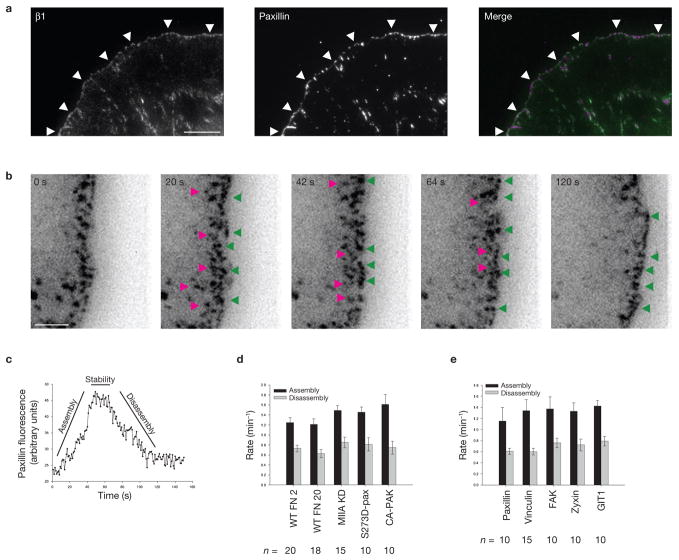
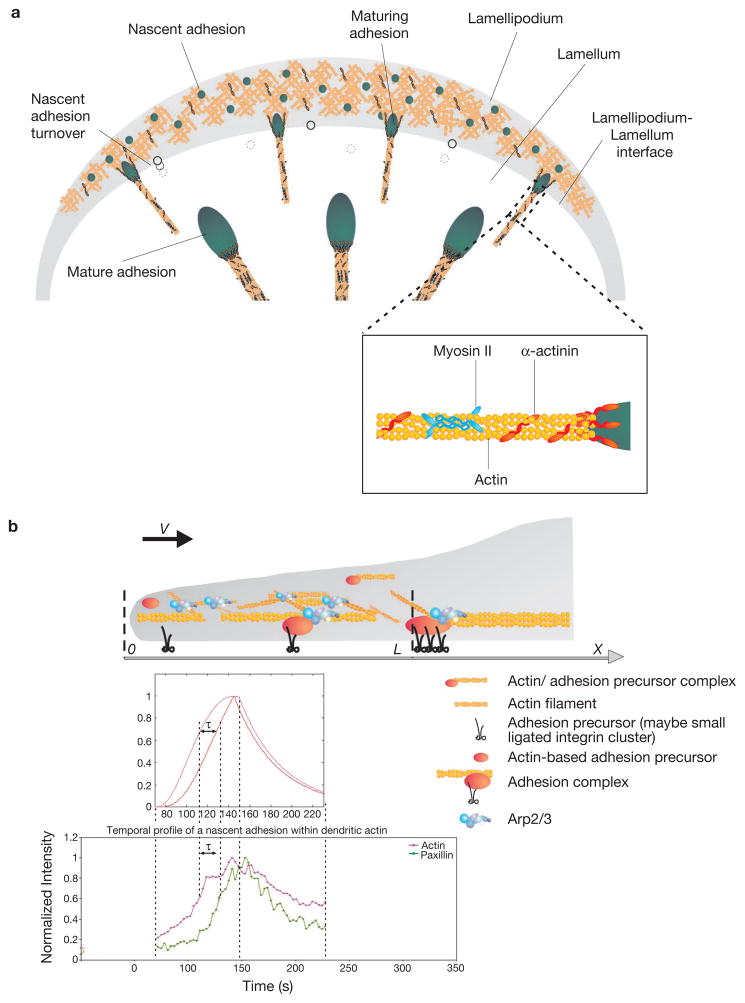
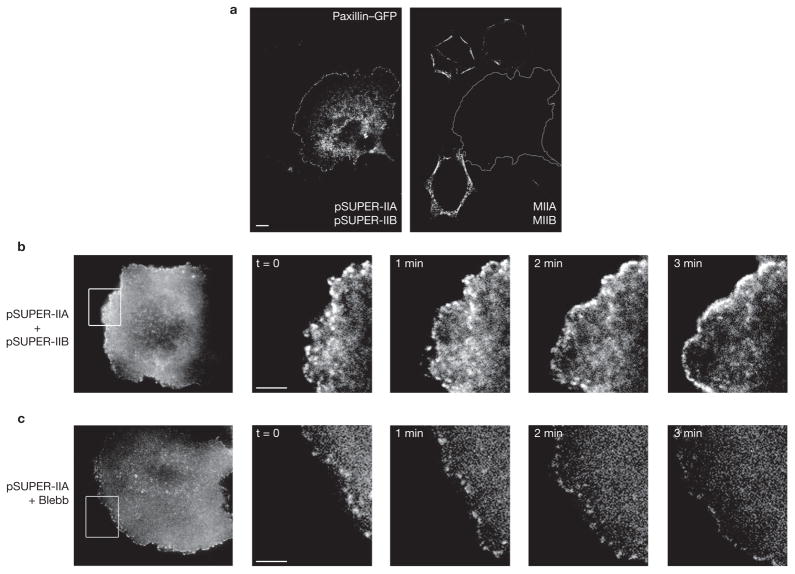
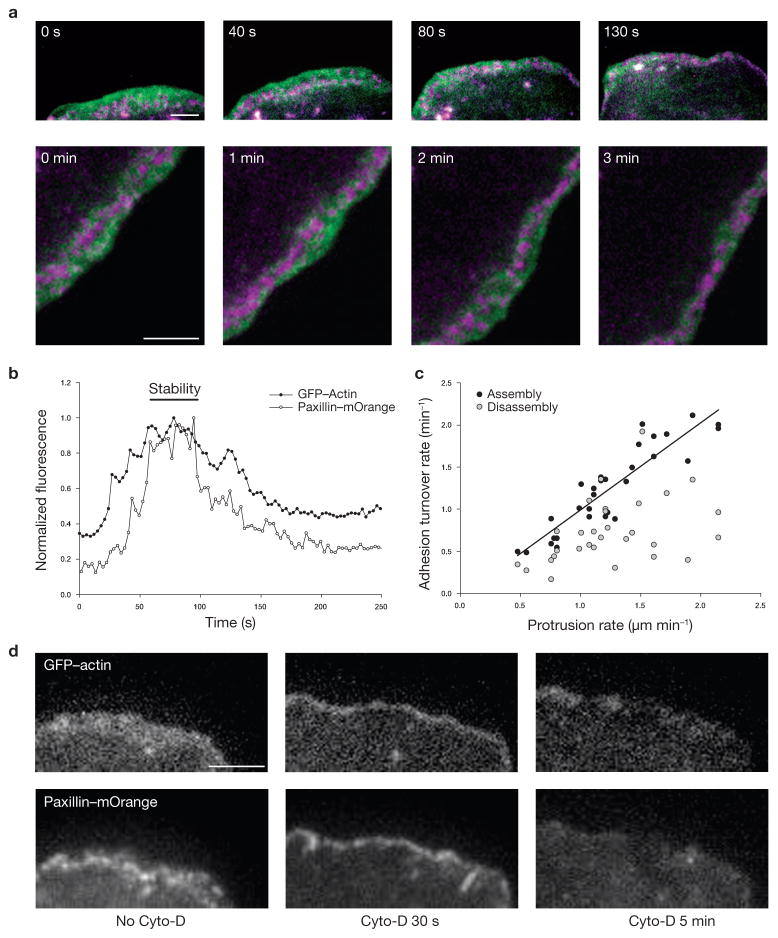
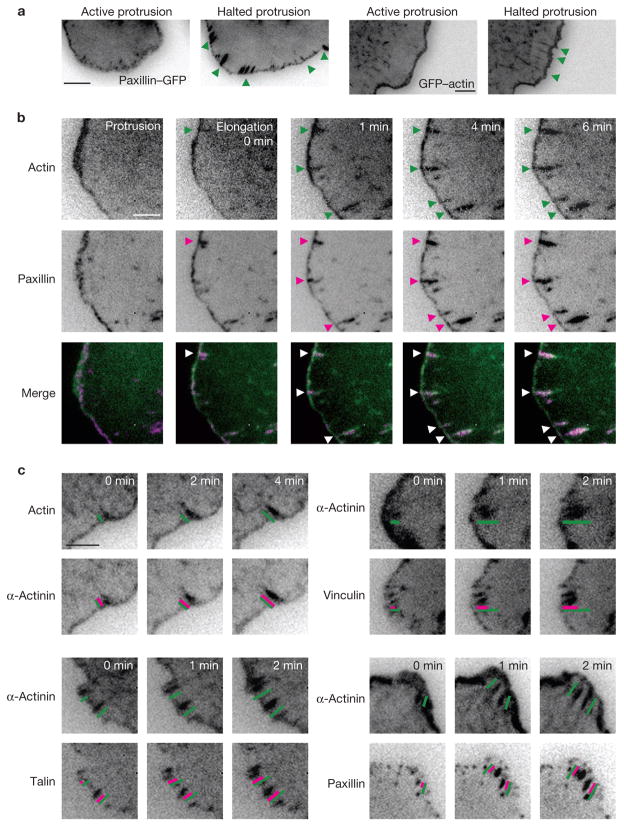
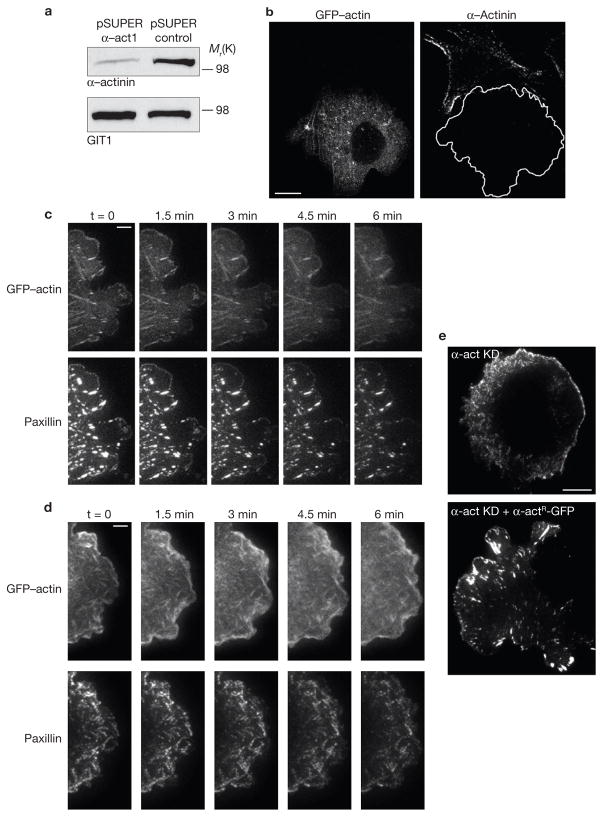
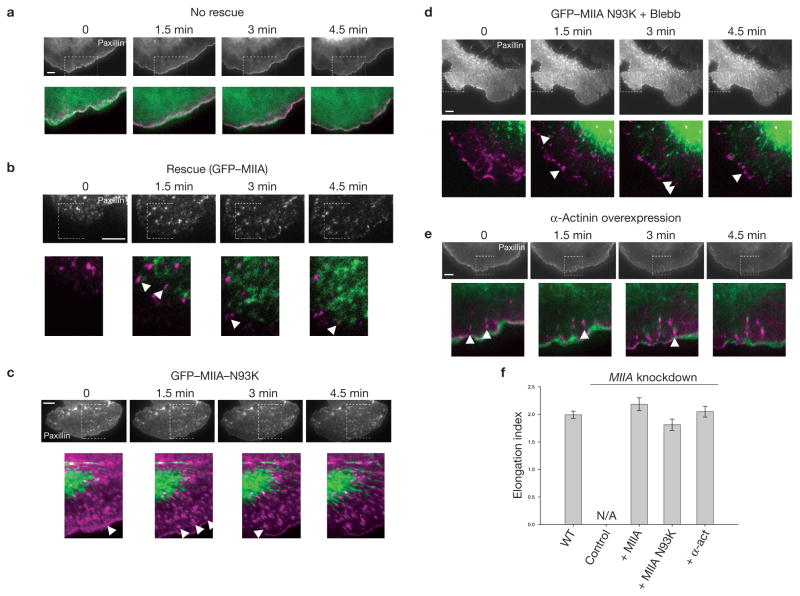
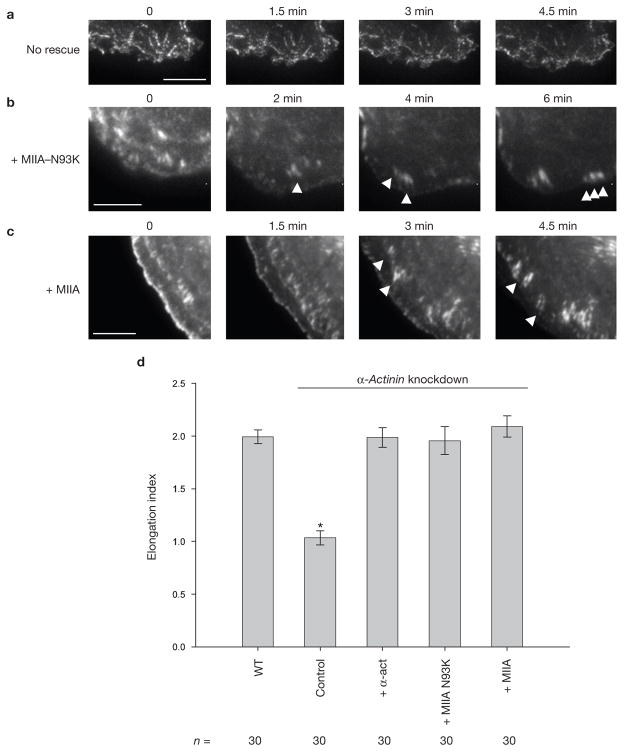
Using two-colour imaging and high resolution TIRF microscopy, we investigated the assembly and maturation of nascent adhesions in migrating cells. We show that nascent adhesions assemble and are stable within the lamellipodium. The assembly is independent of myosin II but its rate is proportional to the protrusion rate and requires actin polymerization. At the lamellipodium back, the nascent adhesions either disassemble or mature through growth and elongation. Maturation occurs along an alpha-actinin-actin template that elongates centripetally from nascent adhesions. Alpha-Actinin mediates the formation of the template and organization of adhesions associated with actin filaments, suggesting that actin crosslinking has a major role in this process. Adhesion maturation also requires myosin II. Rescue of a myosin IIA knockdown with an actin-bound but motor-inhibited mutant of myosin IIA shows that the actin crosslinking function of myosin II mediates initial adhesion maturation. From these studies, we have developed a model for adhesion assembly that clarifies the relative contributions of myosin II and actin polymerization and organization.
利用双色成像和高分辨率全内反射荧光显微镜,我们研究了迁移细胞中新生黏附的组装和成熟过程。我们发现新生黏附在片足内组装并保持稳定。组装过程不依赖于肌球蛋白II,但其速率与突出速率成正比,且需要肌动蛋白聚合。在片足后部,新生黏附要么解体,要么通过生长和伸长而成熟。成熟沿着从新生黏附向心延伸的α-辅肌动蛋白-肌动蛋白模板发生。α-辅肌动蛋白介导模板的形成以及与肌动蛋白丝相关的黏附的组织,这表明肌动蛋白交联在这一过程中起主要作用。黏附成熟也需要肌球蛋白II。用与肌动蛋白结合但运动受抑制的肌球蛋白IIA突变体挽救肌球蛋白IIA敲低表明,肌球蛋白II的肌动蛋白交联功能介导了初始黏附成熟。通过这些研究,我们建立了一个黏附组装模型,阐明了肌球蛋白II以及肌动蛋白聚合和组织的相对作用。