Linker Claudia, De Almeida Irene, Papanayotou Costis, Stower Matthew, Sabado Virginie, Ghorani Ehsan, Streit Andrea, Mayor Roberto, Stern Claudio D
Department of Cell and Developmental Biology, University College London, Gower Street (Anatomy Building), London WC1E 6BT, UK.
Dev Biol. 2009 Mar 15;327(2):478-86. doi: 10.1016/j.ydbio.2008.12.034. Epub 2009 Jan 3.
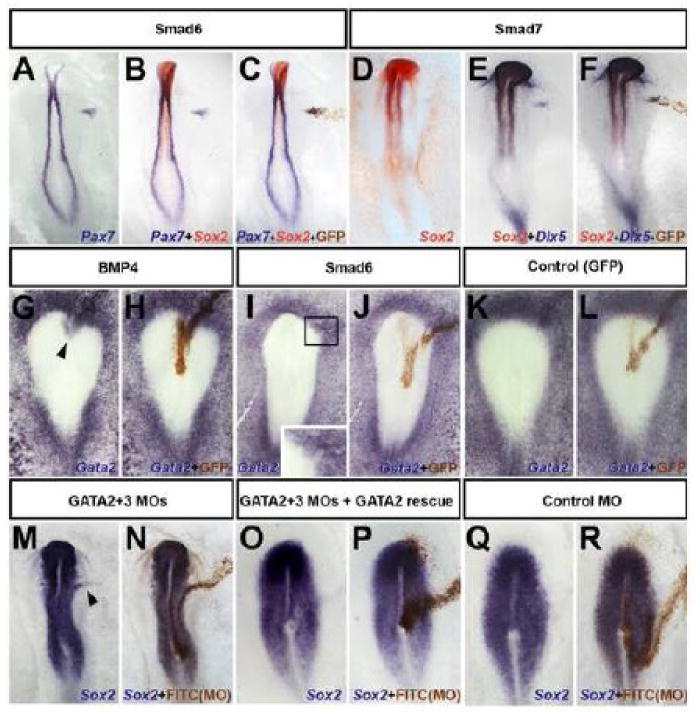
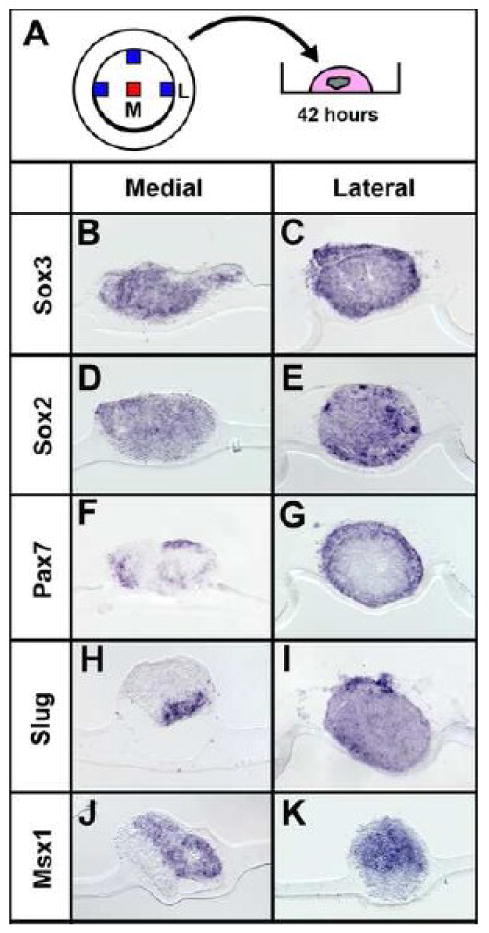
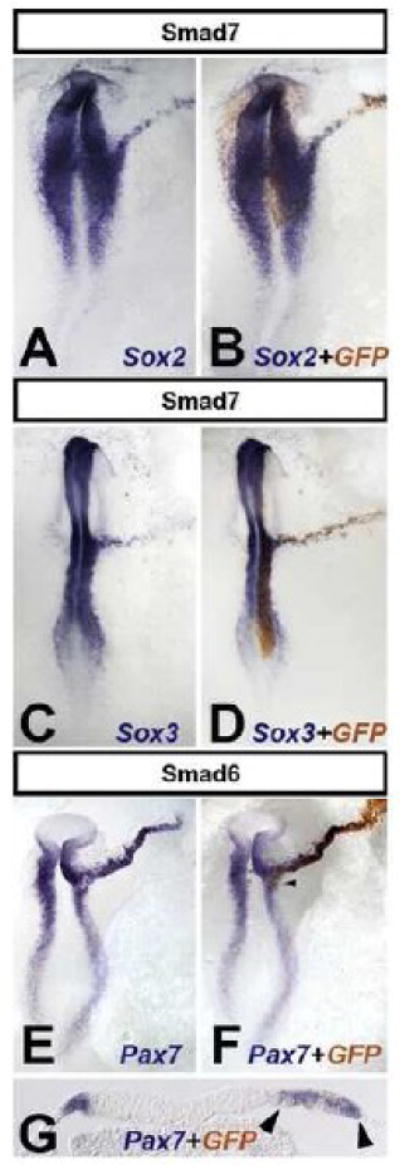
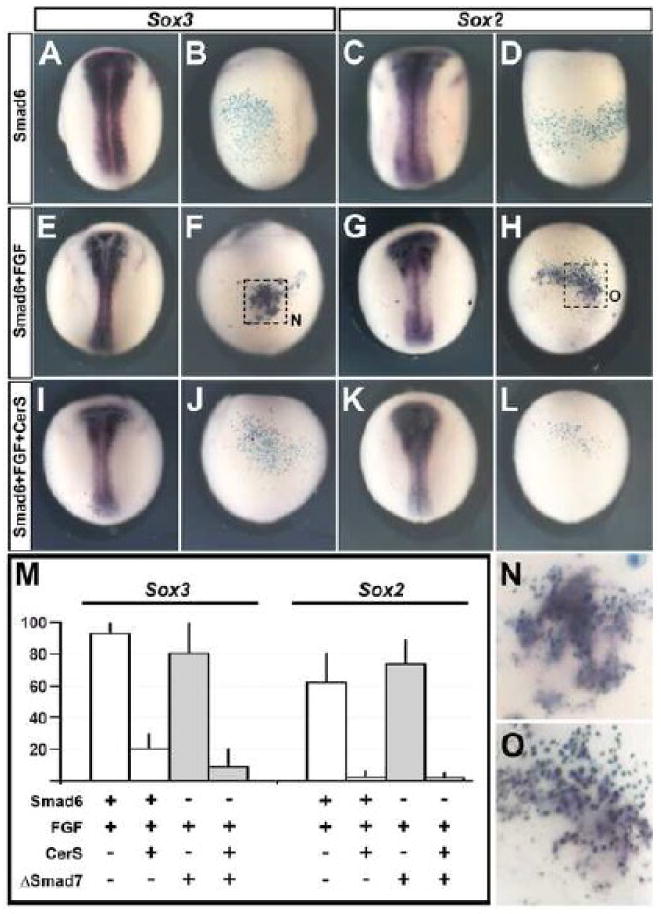
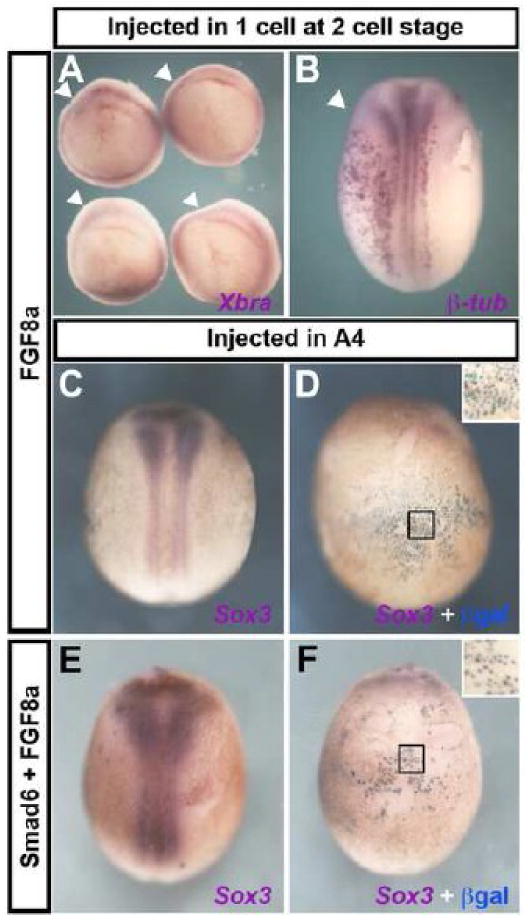
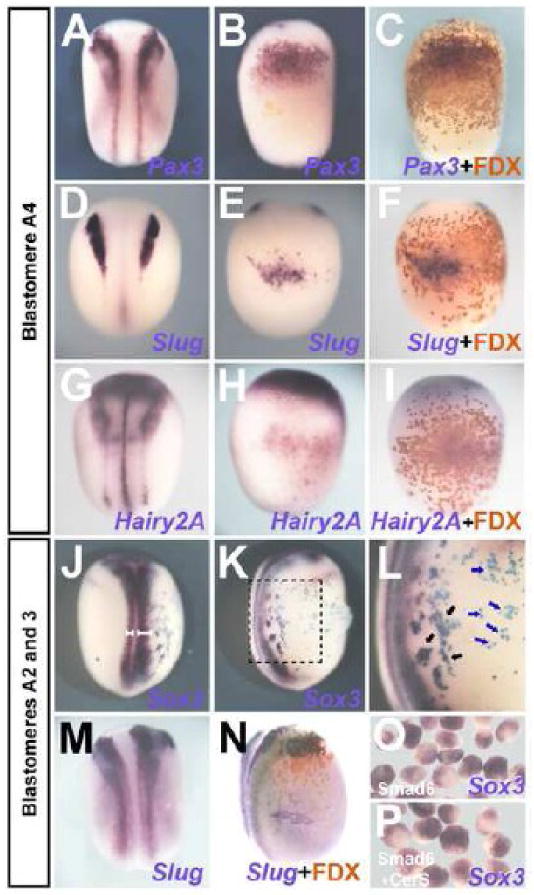
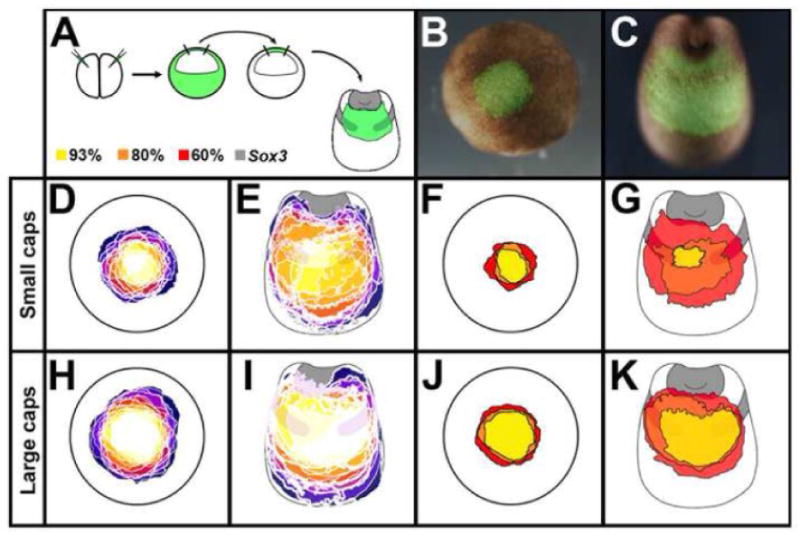
In Xenopus, the animal cap is very sensitive to BMP antagonists, which result in neuralization. In chick, however, only cells at the border of the neural plate can be neuralized by BMP inhibition. Here we compare the two systems. BMP antagonists can induce neural plate border markers in both ventral Xenopus epidermis and non-neural chick epiblast. However, BMP antagonism can only neuralize ectodermal cells when the BMP-inhibited cells form a continuous trail connecting them to the neural plate or its border, suggesting that homeogenetic neuralizing factors can only travel between BMP-inhibited cells. Xenopus animal cap explants contain cells fated to contribute to the neural plate border and even to the anterior neural plate, explaining why they are so easily neuralized by BMP-inhibition. Furthermore, chick explants isolated from embryonic epiblast behave like Xenopus animal caps and express border markers. We propose that the animal cap assay in Xenopus and explant assays in the chick are unsuitable for studying instructive signals in neural induction.
在非洲爪蟾中,动物帽对骨形态发生蛋白(BMP)拮抗剂非常敏感,这会导致神经化。然而,在鸡中,只有神经板边缘的细胞才能通过抑制BMP实现神经化。在此我们比较这两种系统。BMP拮抗剂可在非洲爪蟾腹侧表皮和鸡非神经外胚层中诱导神经板边缘标志物。然而,只有当受BMP抑制的细胞形成一条将它们与神经板或其边缘相连的连续路径时,BMP拮抗作用才能使外胚层细胞神经化,这表明同源神经化因子只能在受BMP抑制的细胞之间传递。非洲爪蟾动物帽外植体包含注定会形成神经板边缘甚至前神经板的细胞,这解释了它们为何如此容易被BMP抑制作用神经化。此外,从胚胎外胚层分离出的鸡外植体表现得像非洲爪蟾动物帽,并表达边缘标志物。我们认为,非洲爪蟾的动物帽实验和鸡的外植体实验不适用于研究神经诱导中的诱导信号。