Das Jayajit, Ho Mary, Zikherman Julie, Govern Christopher, Yang Ming, Weiss Arthur, Chakraborty Arup K, Roose Jeroen P
Department of Chemical Engineering, Massachusetts Institute of Technology, 77 Massachusetts Avenue, Cambridge, MA 02139, USA.
Cell. 2009 Jan 23;136(2):337-51. doi: 10.1016/j.cell.2008.11.051.
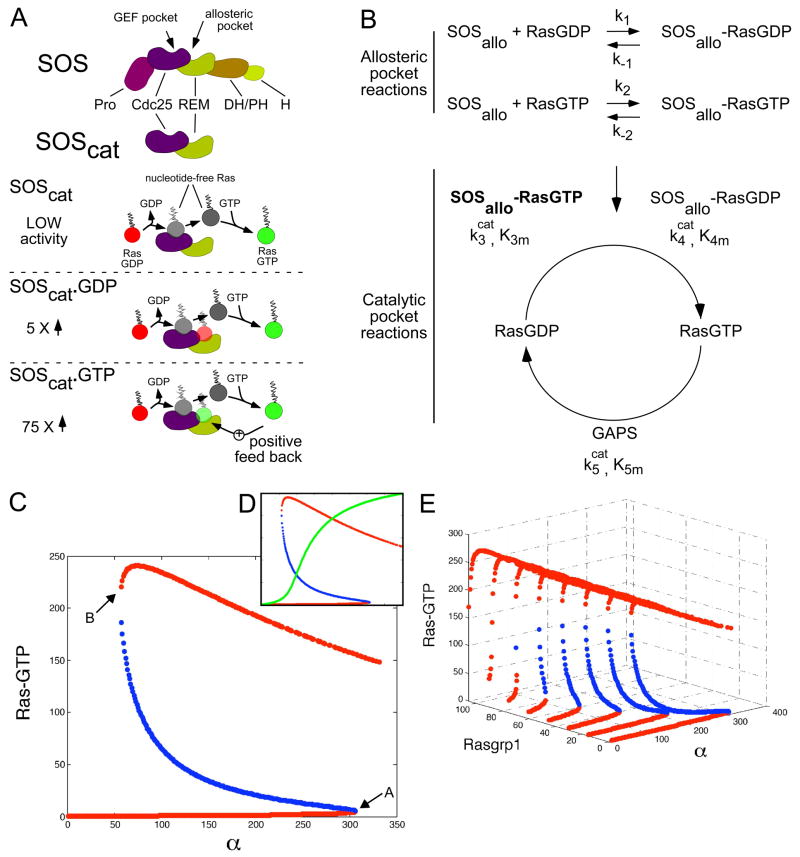
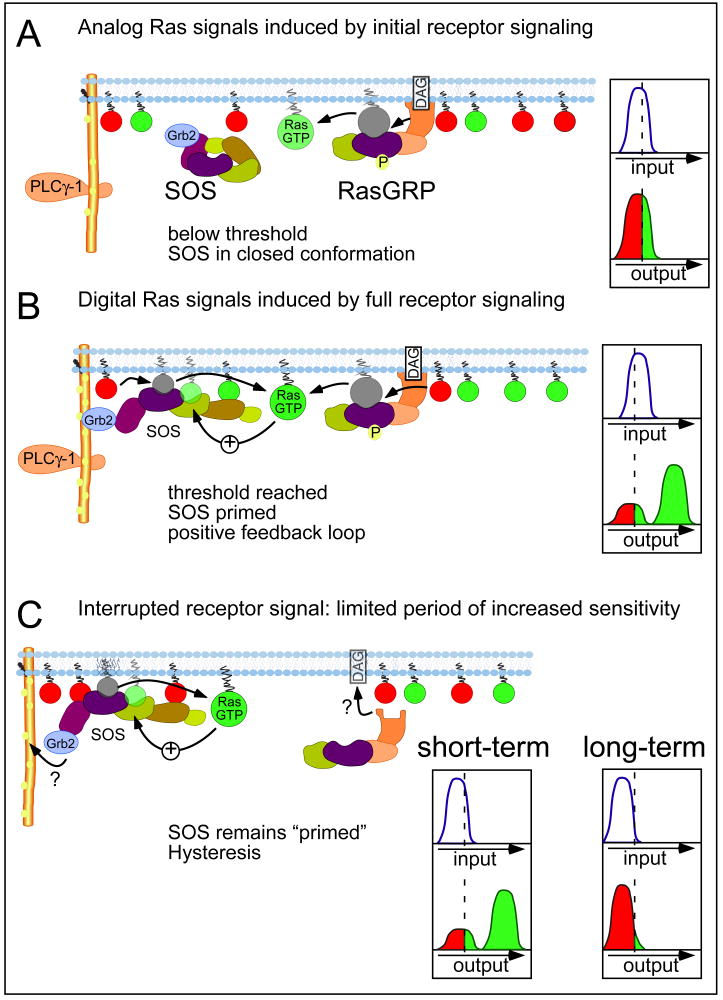
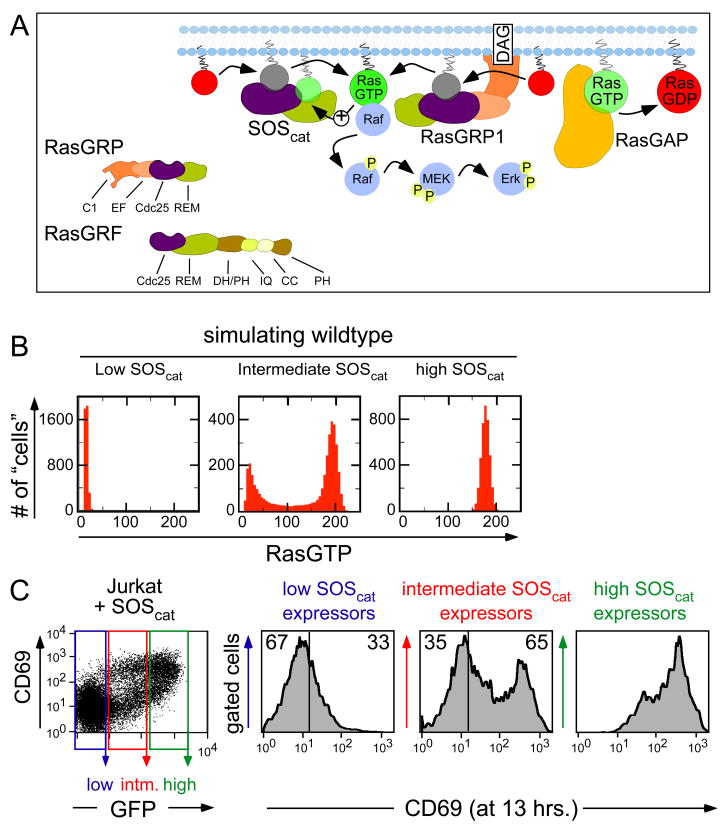
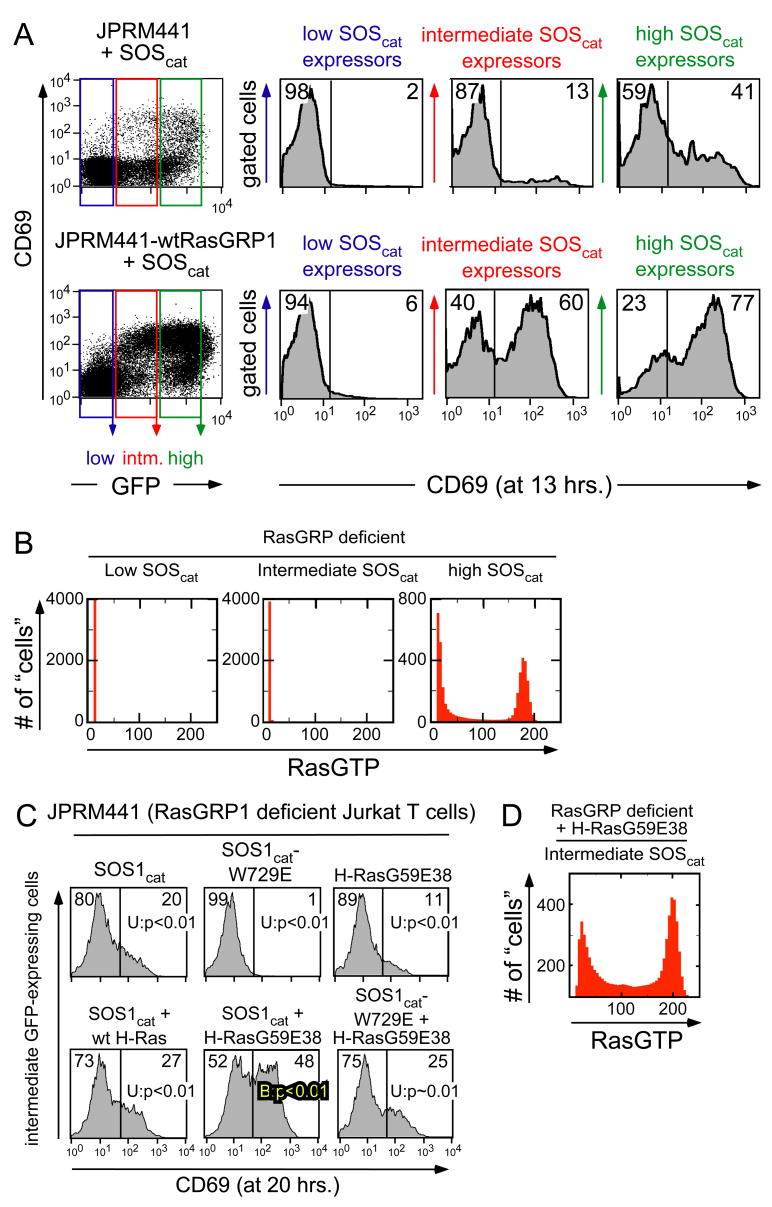
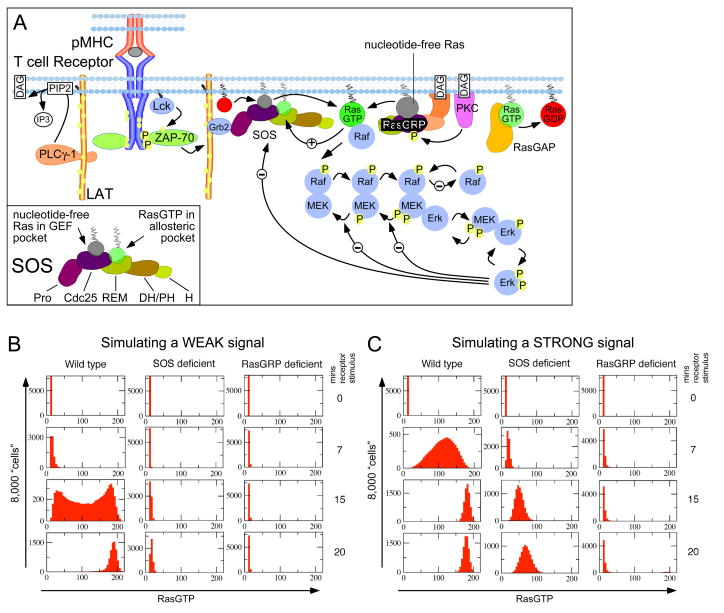
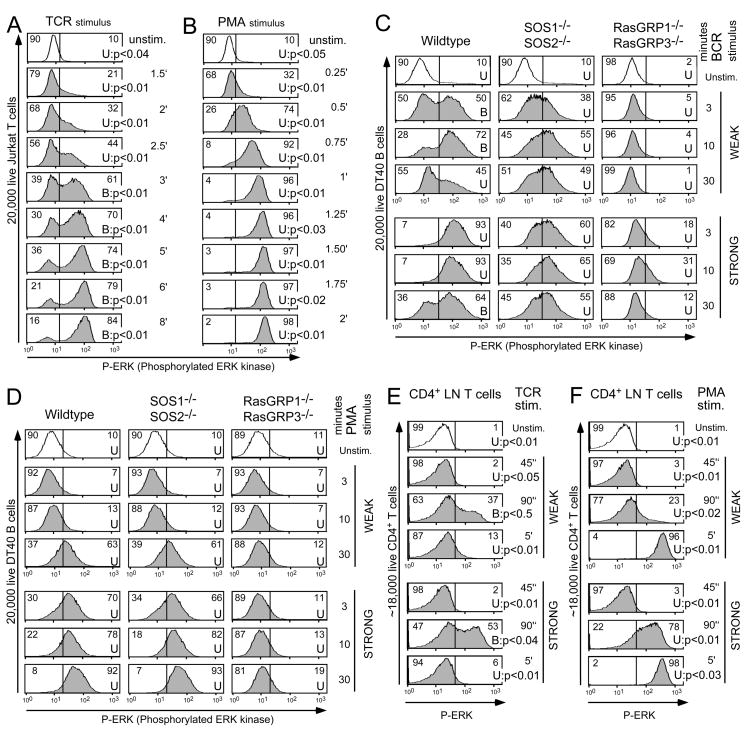
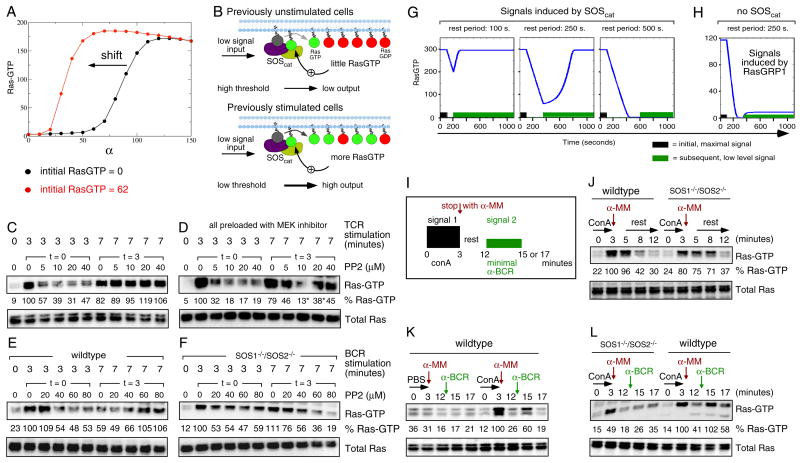
Activation of Ras proteins underlies functional decisions in diverse cell types. Two molecules, RasGRP and SOS, catalyze Ras activation in lymphocytes. Binding of active Ras to SOS' allosteric pocket markedly increases SOS' activity establishing a positive feedback loop for SOS-mediated Ras activation. Integrating in silico and in vitro studies, we demonstrate that digital signaling in lymphocytes (cells are "on" or "off") is predicated upon feedback regulation of SOS. SOS' feedback loop leads to hysteresis in the dose-response curve, which can enable a capacity to sustain Ras activation as stimuli are withdrawn and exhibit "memory" of past encounters with antigen. Ras activation via RasGRP alone is analog (graded increase in amplitude with stimulus). We describe how complementary analog (RasGRP) and digital (SOS) pathways act on Ras to efficiently convert analog input to digital output. Numerous predictions regarding the impact of our findings on lymphocyte function and development are noted.
Ras蛋白的激活是多种细胞类型中功能决策的基础。RasGRP和SOS这两种分子在淋巴细胞中催化Ras激活。活性Ras与SOS的变构口袋结合会显著增加SOS的活性,从而建立一个用于SOS介导的Ras激活的正反馈回路。综合计算机模拟和体外研究,我们证明淋巴细胞中的数字信号(细胞处于“开启”或“关闭”状态)取决于SOS的反馈调节。SOS的反馈回路导致剂量反应曲线出现滞后现象,这使得在刺激撤除时能够维持Ras激活,并展现出对过去抗原接触的“记忆”。仅通过RasGRP激活Ras是模拟的(幅度随刺激呈分级增加)。我们描述了互补的模拟(RasGRP)和数字(SOS)途径如何作用于Ras,以有效地将模拟输入转换为数字输出。文中还提到了许多关于我们的发现对淋巴细胞功能和发育影响的预测。