Neiss Michelle B, Stevenson Jim, Legrand Lisa N, Iacono William G, Sedikides Constantine
Department of Behavioral Neuroscience, Oregon Health & Science University, CR131, 3181 Southwest Sam Jackson Park Road, Portland, OR 97239, USA.
J Pers. 2009 Apr;77(2):327-46. doi: 10.1111/j.1467-6494.2008.00549.x. Epub 2009 Feb 2.
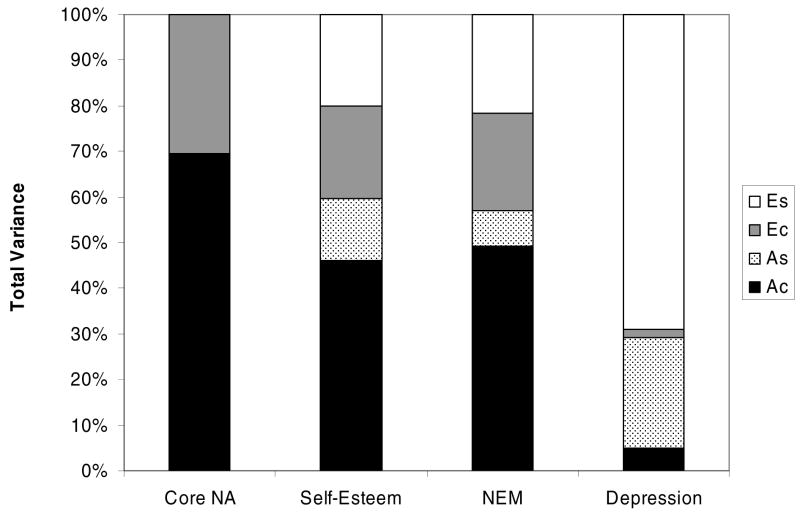
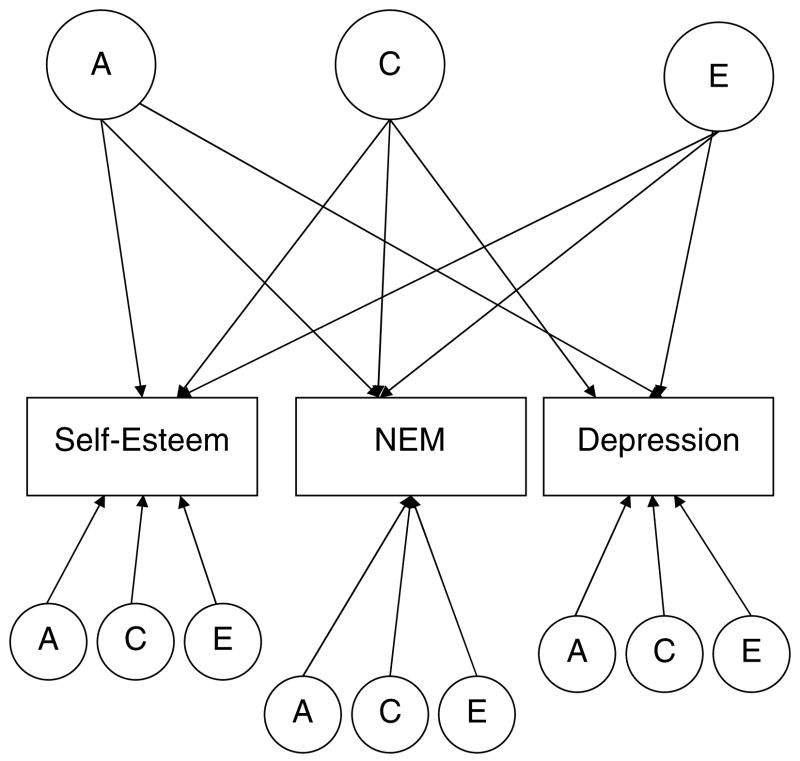
We tested the structure and magnitude of genetic and environmental influences on the overlap among self-esteem, negative emotionality, and major depression symptoms in adolescent girls (N=706) from the Minnesota Twin Family Study. Genetic and environmental influences on all three operated via a general, heritable factor. Genetic influences explained the majority of overlap among the three constructs, as well as most of the variance in self-esteem and negative emotionality. Genetic influences on depression were more modest and largely due to genetic factors specific to depression. These findings support the theory that self-esteem, depression, and neuroticism represent aspects of a common temperamental core. The interrelations among the three constructs in mid-adolescence is consistent with their interrelations in adulthood.
我们对明尼苏达双胞胎家庭研究中706名青春期女孩的自尊、负性情绪和重度抑郁症状之间的重叠部分,测试了遗传和环境影响的结构及程度。对所有这三者的遗传和环境影响都是通过一个普遍的、可遗传的因素起作用的。遗传影响解释了这三个构念之间的大部分重叠,以及自尊和负性情绪中的大部分变异。对抑郁的遗传影响则较为适度,且很大程度上归因于抑郁特有的遗传因素。这些发现支持了自尊、抑郁和神经质代表一个共同气质核心的不同方面这一理论。这三个构念在青春期中期的相互关系与它们在成年期的相互关系是一致的。