Center for Neurologic Diseases, Department of Neurology, Brigham & Women's Hospital, Harvard Medical School, Boston, Massachusetts, USA.
Mol Brain. 2009 Feb 9;2:5. doi: 10.1186/1756-6606-2-5.
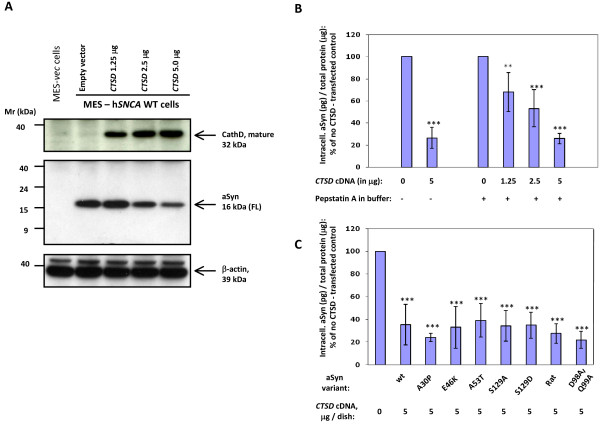
Elevated SNCA gene expression and intracellular accumulation of the encoded alpha-synuclein (aSyn) protein are associated with the development of Parkinson disease (PD). To date, few enzymes have been examined for their ability to degrade aSyn. Here, we explore the effects of CTSD gene expression, which encodes the lysosomal protease cathepsin D (CathD), on aSyn processing.
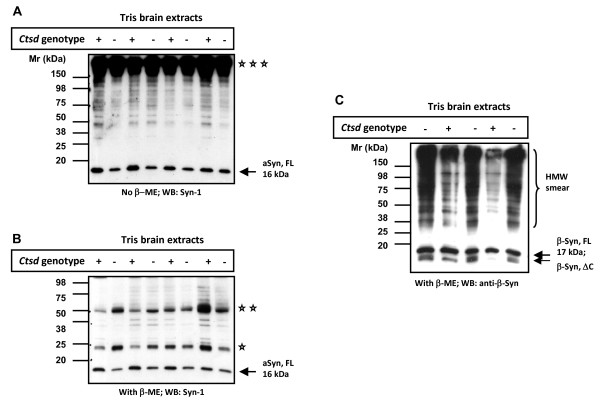
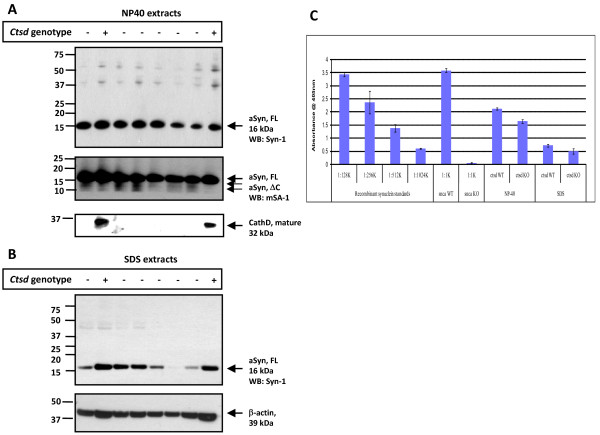
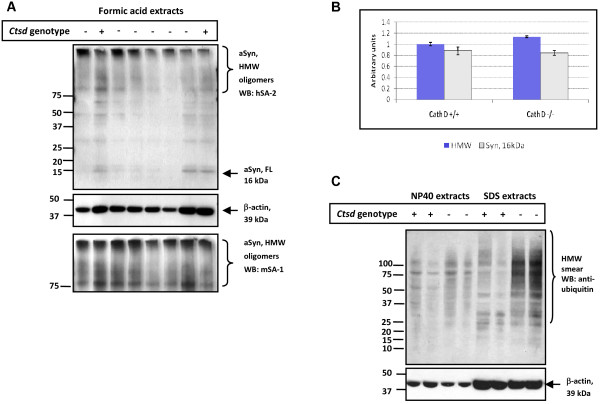
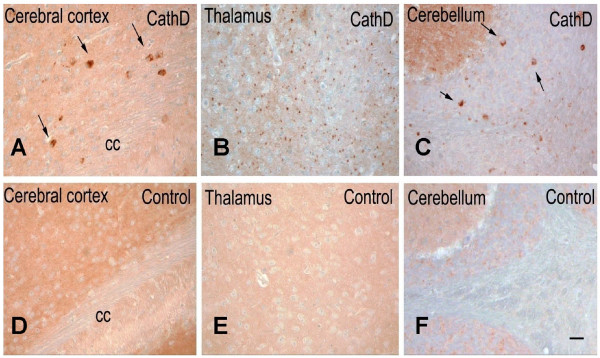
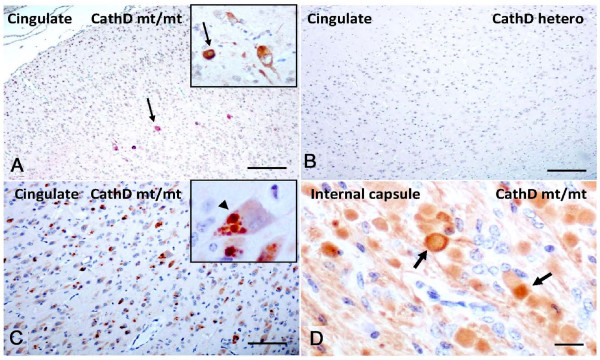
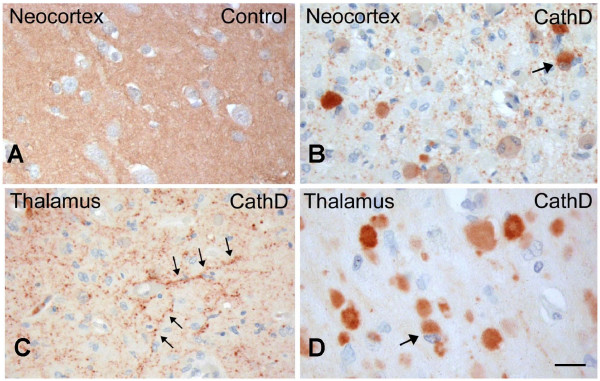
Over-expression of human CTSD cDNA in dopaminergic MES23.5 cell cultures induced the marked proteolysis of exogenously expressed aSyn proteins in a dose-dependent manner. Unexpectedly, brain extractions, Western blotting and ELISA quantification revealed evidence for reduced levels of soluble endogenous aSyn in ctsd knock-out mice. However, these CathD-deficient mice also contained elevated levels of insoluble, oligomeric aSyn species, as detected by formic acid extraction. In accordance, immunohistochemical studies of ctsd-mutant brain from mice, sheep and humans revealed selective synucleinopathy-like changes that varied slightly among the three species. These changes included intracellular aSyn accumulation and formation of ubiquitin-positive inclusions. Furthermore, using an established Drosophila model of human synucleinopathy, we observed markedly enhanced retinal toxicity in ctsd-null flies.
We conclude from these complementary investigations that: one, CathD can effectively degrade excess aSyn in dopaminergic cells; two, ctsd gene mutations result in a lysosomal storage disorder that includes microscopic and biochemical evidence of aSyn misprocessing; and three, CathD deficiency facilitates aSyn toxicity. We therefore postulate that CathD promotes 'synucleinase' activity, and that enhancing its function may lower aSyn concentrations in vivo.
SNCA 基因表达升高和编码的α-突触核蛋白(aSyn)的细胞内积累与帕金森病(PD)的发展有关。迄今为止,很少有酶被研究其降解 aSyn 的能力。在这里,我们探讨了 CTSD 基因表达(编码溶酶体蛋白酶组织蛋白酶 D(CathD))对 aSyn 加工的影响。
在多巴胺能 MES23.5 细胞培养物中过表达人 CTSD cDNA 可诱导外源性表达的 aSyn 蛋白的明显蛋白水解,呈剂量依赖性。出乎意料的是,脑提取物、Western 印迹和 ELISA 定量显示 ctsd 敲除小鼠中可溶性内源性 aSyn 水平降低。然而,这些 CathD 缺乏的小鼠也含有升高的不溶性寡聚 aSyn 物种,如甲酸提取所检测到的。相应地,来自小鼠、绵羊和人类的 ctsd 突变脑的免疫组织化学研究显示出选择性的突触核蛋白病样变化,在这三种物种中略有不同。这些变化包括细胞内 aSyn 积累和泛素阳性包涵体的形成。此外,使用已建立的人类突触核蛋白病果蝇模型,我们观察到 ctsd 缺失果蝇的视网膜毒性明显增强。
从这些互补研究中,我们得出以下结论:一、CathD 可以有效地降解多巴胺能细胞中的多余 aSyn;二、ctsd 基因突变导致溶酶体贮积病,包括 aSyn 错误加工的微观和生化证据;三、CathD 缺乏促进 aSyn 毒性。因此,我们假设 CathD 促进“突触核蛋白酶”活性,增强其功能可能会降低体内 aSyn 浓度。