Gaetano Cristoforo G, Samadi Nasser, Tomsig Jose L, Macdonald Timothy L, Lynch Kevin R, Brindley David N
Department of Biochemistry, Signal Transduction Research Group, University of Alberta, Edmonton, Alberta, Canada T6G 2S2.
Mol Carcinog. 2009 Sep;48(9):801-9. doi: 10.1002/mc.20524.
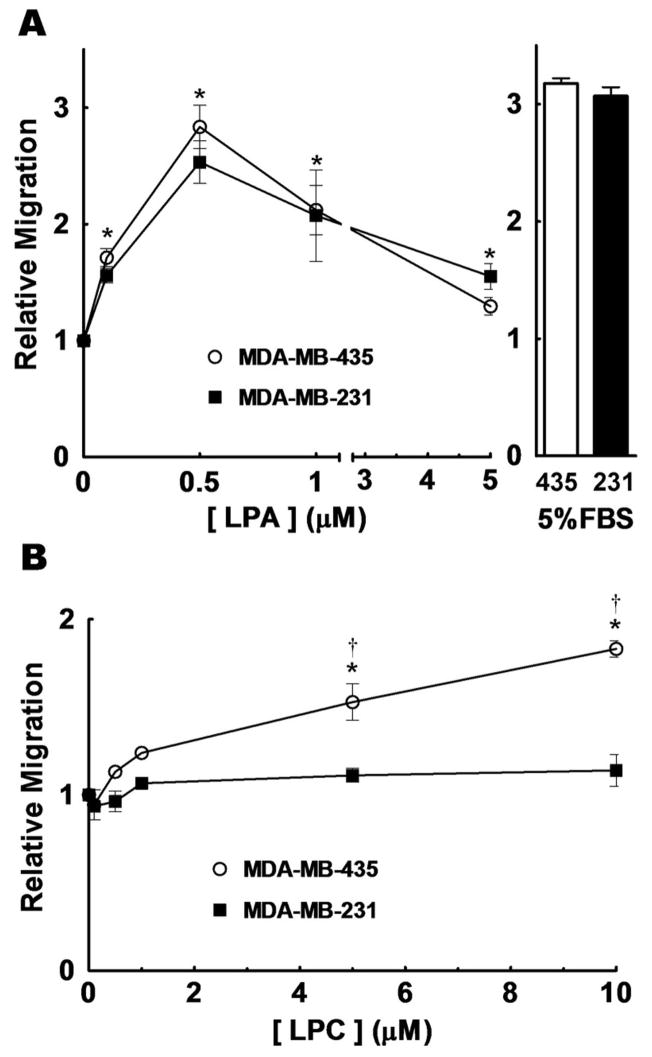
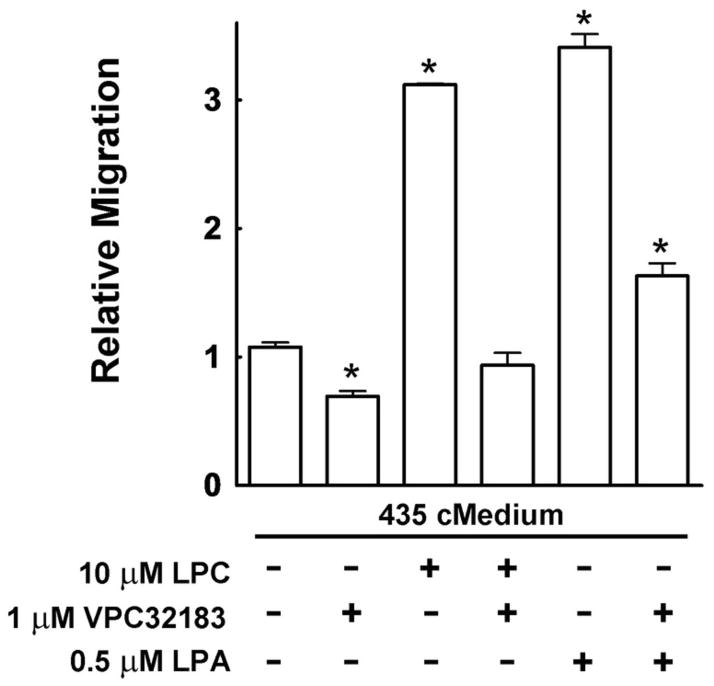
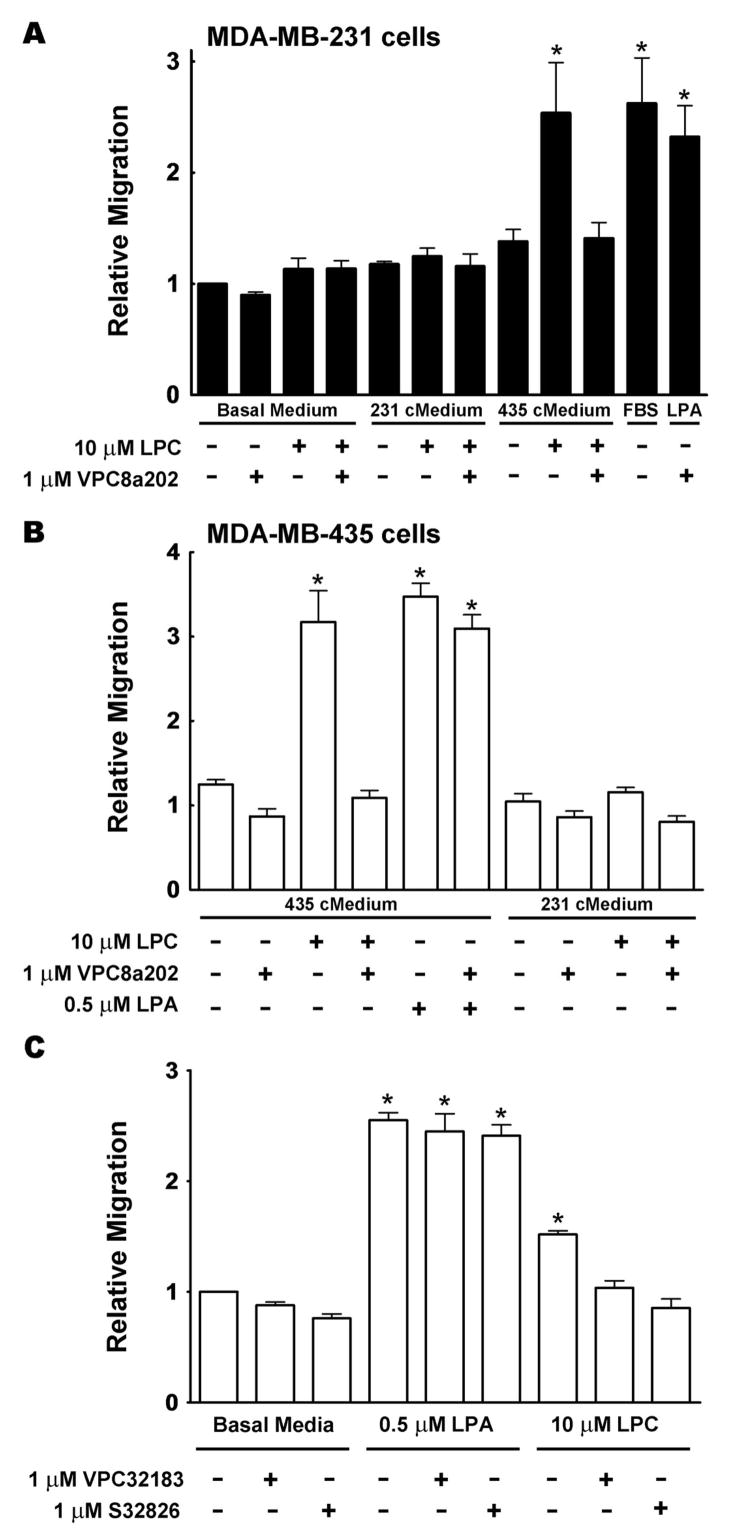
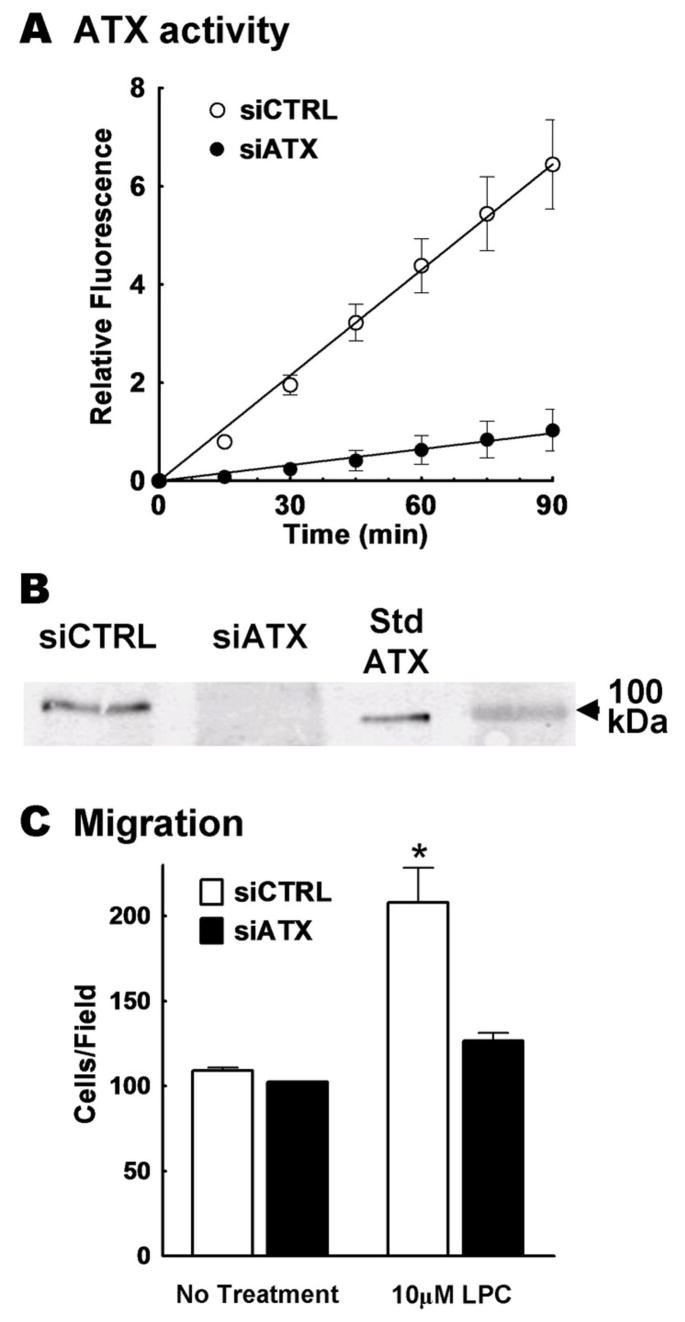
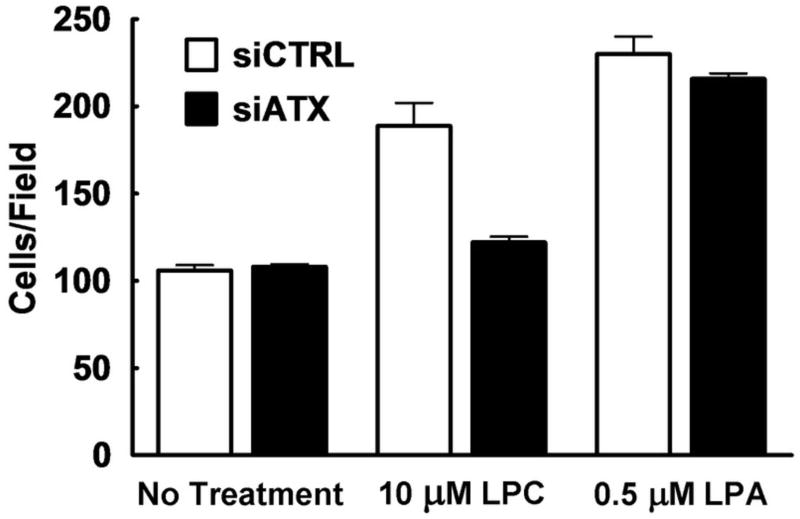
Increased expression of autotaxin in tumors including glioblastoma, breast, renal, ovarian, lung, and thyroid cancers is associated with increased tumor aggressiveness. Autotaxin promotes metastasis as well as cell growth, survival, and migration of cancer cells. These actions could depend on the noncatalytic effects of autotaxin on cell adhesion, or the catalytic activity of autotaxin, which converts lysophosphatidylcholine into lysophosphatidate in the extracellular fluid surrounding the tumor. Both lysophosphatidylcholine (LPC) and lysophosphatidate have been reported to stimulate migration through their respective G-protein coupled receptors. The present study determines the roles of autotaxin, LPC, and lysophosphatidate in controlling the migration of two cancer cell lines: MDA-MB-231 breast cancer cells, which produce little autotaxin and MDA-MB-435 melanoma cells that secrete significant levels of autotaxin. LPC alone was unable to stimulate the migration of either cell type unless autotaxin was present. Knocking down autotaxin secretion, or inhibiting its catalytic activity, blocked cell migration by preventing lysophosphatidate production and the subsequent activation of LPA(1/3) receptors. We conclude that inhibiting autotaxin production or activity could provide a beneficial adjuvant to chemotherapy for preventing tumor growth and metastasis in patients with high autotaxin expression in their tumors.
自分泌运动因子在包括胶质母细胞瘤、乳腺癌、肾癌、卵巢癌、肺癌和甲状腺癌在内的肿瘤中表达增加,与肿瘤侵袭性增强相关。自分泌运动因子促进癌细胞的转移以及细胞生长、存活和迁移。这些作用可能取决于自分泌运动因子对细胞黏附的非催化作用,或者取决于自分泌运动因子的催化活性,其可将溶血磷脂酰胆碱在肿瘤周围的细胞外液中转化为溶血磷脂酸。据报道,溶血磷脂酰胆碱(LPC)和溶血磷脂酸均可通过各自的G蛋白偶联受体刺激细胞迁移。本研究确定了自分泌运动因子、LPC和溶血磷脂酸在控制两种癌细胞系迁移中的作用:MDA-MB-231乳腺癌细胞,其产生很少的自分泌运动因子;以及MDA-MB-435黑色素瘤细胞,其分泌大量的自分泌运动因子。单独的LPC无法刺激任何一种细胞类型的迁移,除非存在自分泌运动因子。敲低自分泌运动因子的分泌或抑制其催化活性,可通过阻止溶血磷脂酸的产生以及随后LPA(1/3)受体的激活来阻断细胞迁移。我们得出结论,抑制自分泌运动因子的产生或活性可为化疗提供有益的辅助作用,以预防肿瘤中自分泌运动因子高表达患者的肿瘤生长和转移。