Hampshire Adam, Thompson Russell, Duncan John, Owen Adrian M
Cambridge University, Cambridge, England.
Cogn Affect Behav Neurosci. 2009 Mar;9(1):103-12. doi: 10.3758/CABN.9.1.103.
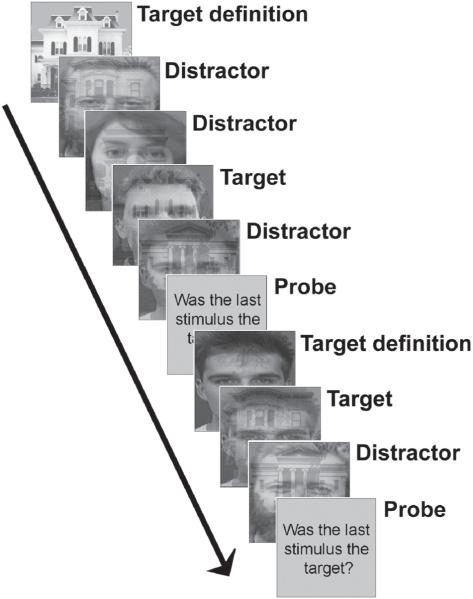
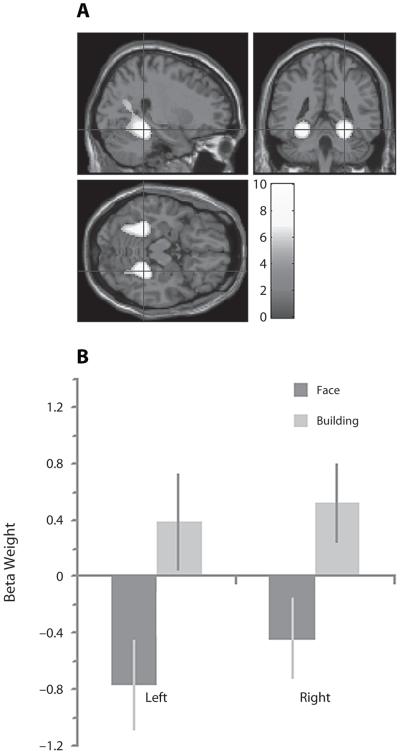
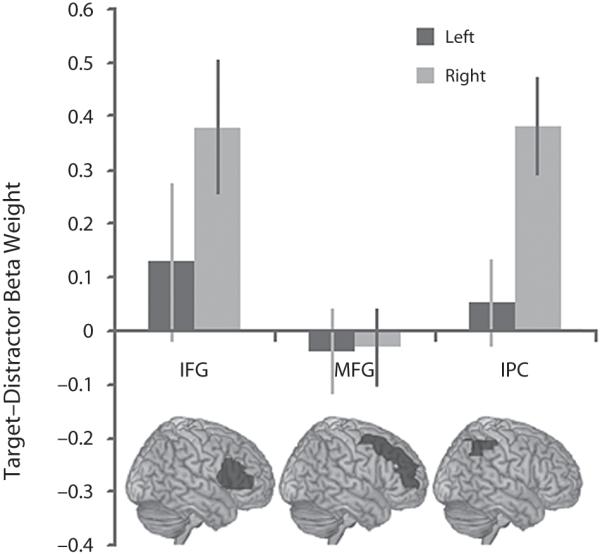
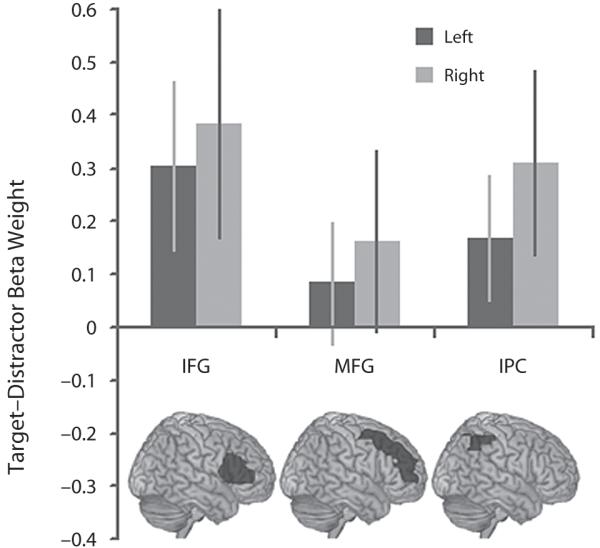
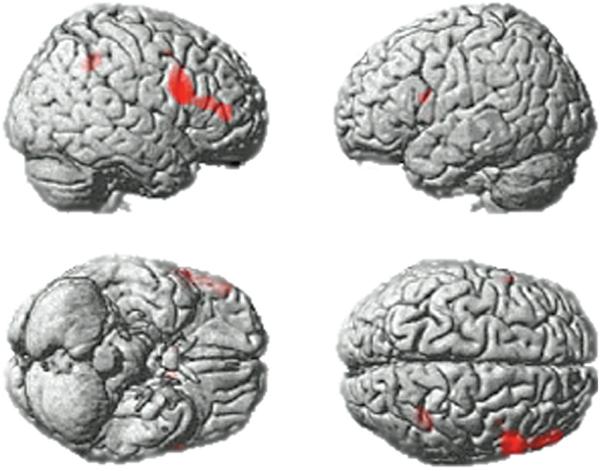
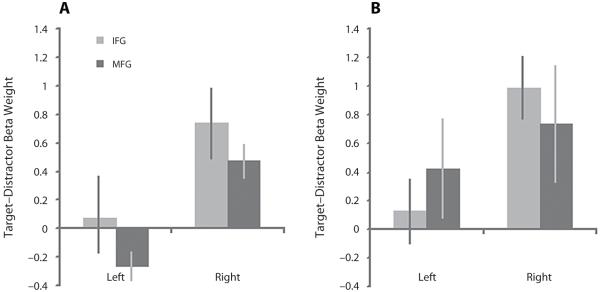
In the human brain, a network of frontal and parietal regions is commonly recruited during tasks that demand the deliberate, focused control of thought and action. Previously, using a simple target detection task, we reported striking differences in the selectivity of the BOLD response in anatomically distinct subregions of this network. In particular, it was observed that the right inferior frontal gyrus (IFG) followed a tightly tuned function, selectively responding only to the current target object. Here, we examine this functional specialization further, using adapted versions of our original task. Our results demonstrate that the response of the right IFG to targets is a strong and replicable phenomenon. It occurs under increased attentional load, when targets and distractors are equally frequent, and when controlling for inhibitory processes. These findings support the hypothesis that the right IFG responds selectively to those items that are of the most relevance to the currently intended task schema.
在人类大脑中,当执行需要对思维和行动进行刻意、集中控制的任务时,额叶和顶叶区域的一个网络通常会被激活。此前,我们通过一个简单的目标检测任务,报告了该网络在解剖学上不同的子区域中,BOLD反应的选择性存在显著差异。特别是,我们观察到右侧额下回(IFG)遵循一种高度调谐的功能,仅对当前目标对象有选择性地做出反应。在这里,我们使用原始任务的改编版本,进一步研究这种功能特化。我们的结果表明,右侧IFG对目标的反应是一种强烈且可重复的现象。它在注意力负荷增加、目标和干扰物出现频率相同时以及在控制抑制过程的情况下都会出现。这些发现支持了这样一种假设,即右侧IFG对那些与当前预期任务模式最相关的项目有选择性地做出反应。