Goldenberg Jamie L, Arndt Jamie, Hart Joshua, Routledge Clay
University of South Florida.
J Exp Soc Psychol. 2008 Mar;44(2):260-274. doi: 10.1016/j.jesp.2007.05.002.
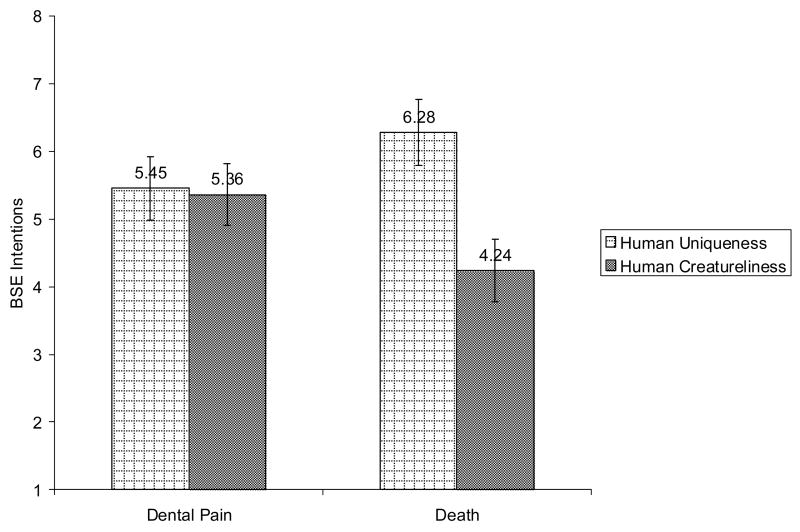
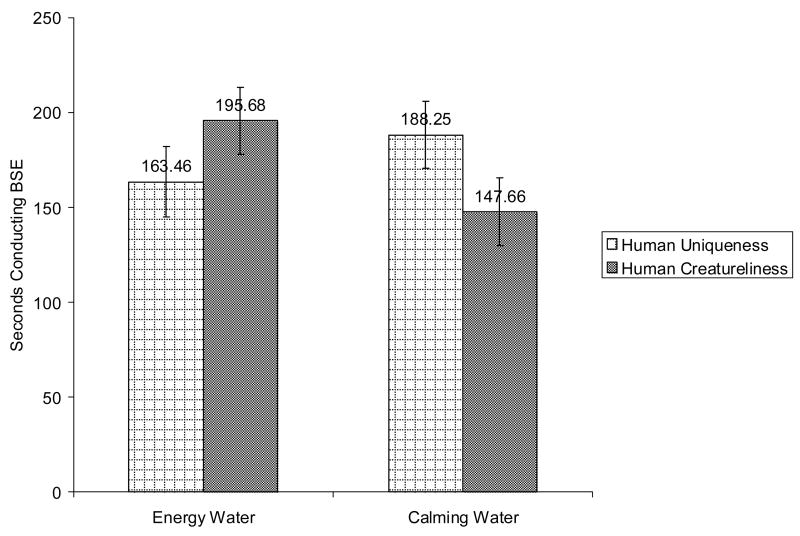
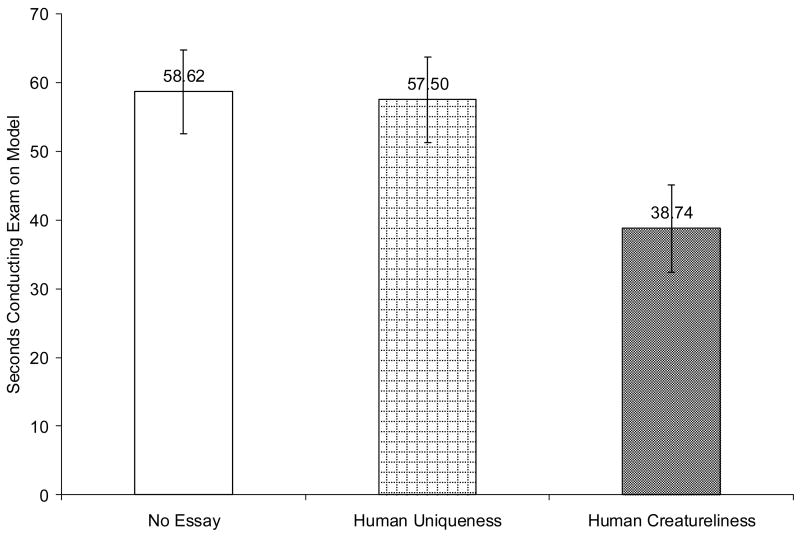
The present research applies an analysis derived from terror management theory to the health domain of breast examination, and in doing so uncovers previously unrecognized factors that may contribute to women's reluctance to perform breast self-examinations (BSEs). In Study 1, when concerns about mortality were primed, reminders of human beings' physical nature (i.e., creatureliness) reduced intentions to conduct BSEs compared to reminders of humans' uniqueness. In Study 2, women conducted shorter exams on a breast model (an experience found to increase death-thought accessibility) when creatureliness was primed compared to a uniqueness and no essay condition. In Study 3, after a creatureliness prime, women performed shorter BSEs when a placebo did not provide an alternative explanation for their discomfort compared to when it did. Advances for theory and breast self-exam promotion are discussed.
本研究将源自恐惧管理理论的一种分析方法应用于乳房检查的健康领域,在此过程中发现了一些先前未被认识到的因素,这些因素可能导致女性不愿进行乳房自我检查(BSE)。在研究1中,当对死亡的担忧被激发时,与人类独特性的提醒相比,对人类身体本质(即动物性)的提醒降低了进行BSE的意愿。在研究2中,与独特性和无短文条件相比,当动物性被激发时,女性在乳房模型上进行的检查时间更短(这种体验被发现会增加死亡念头的易接近性)。在研究3中,在动物性启动后,与安慰剂能为她们的不适提供替代解释的情况相比,当安慰剂不能提供替代解释时,女性进行的BSE时间更短。文中还讨论了该理论的进展以及乳房自我检查推广方面的内容。