Khandoga Alexander Georg, Khandoga Andrej, Reichel Christoph Andreas, Bihari Peter, Rehberg Markus, Krombach Fritz
Walter Brendel Centre of Experimental Medicine, Ludwig-Maximilians-Universität München, Munich, Germany.
PLoS One. 2009;4(3):e4693. doi: 10.1371/journal.pone.0004693. Epub 2009 Mar 4.
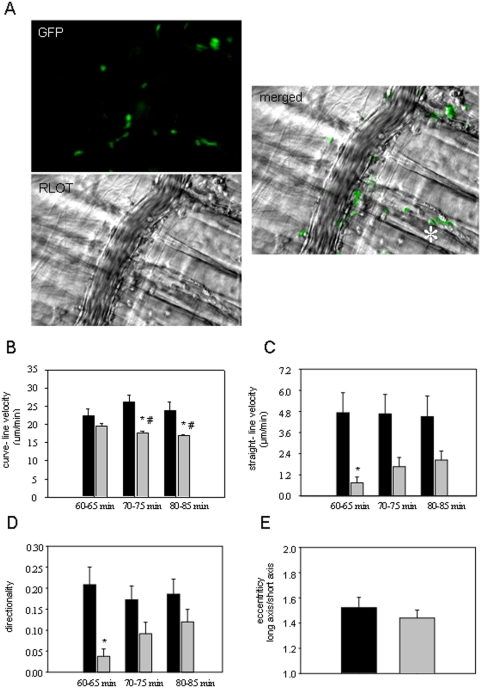
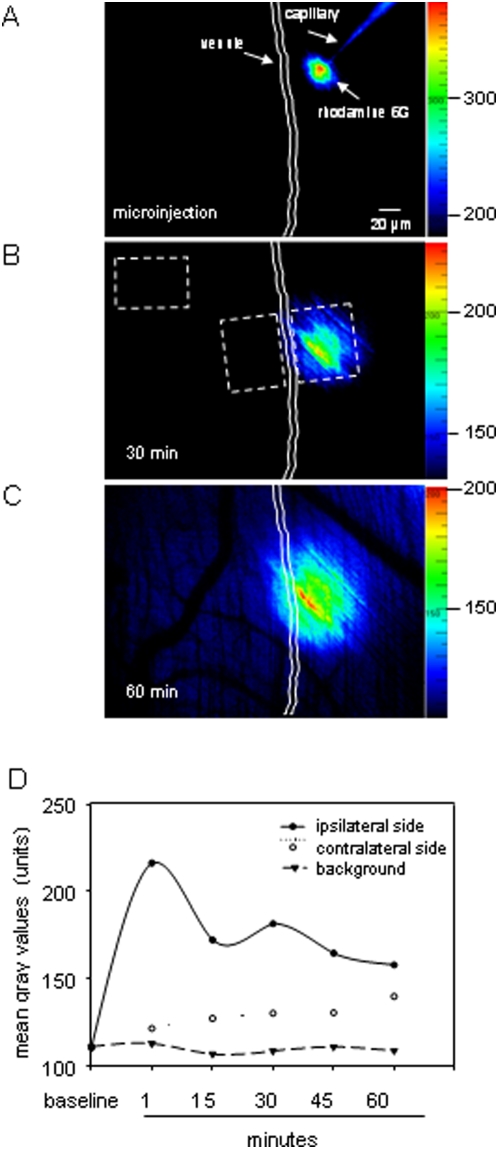
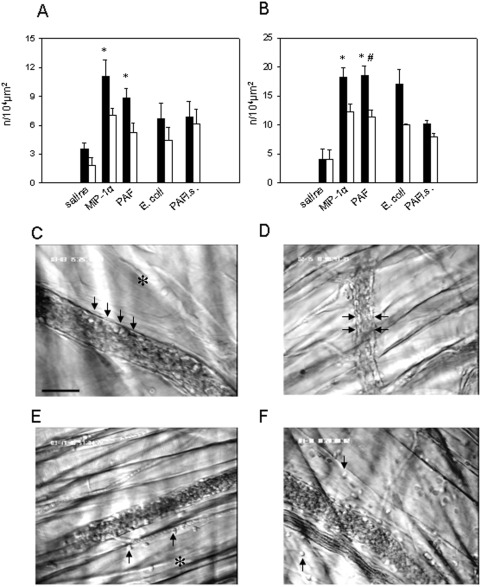
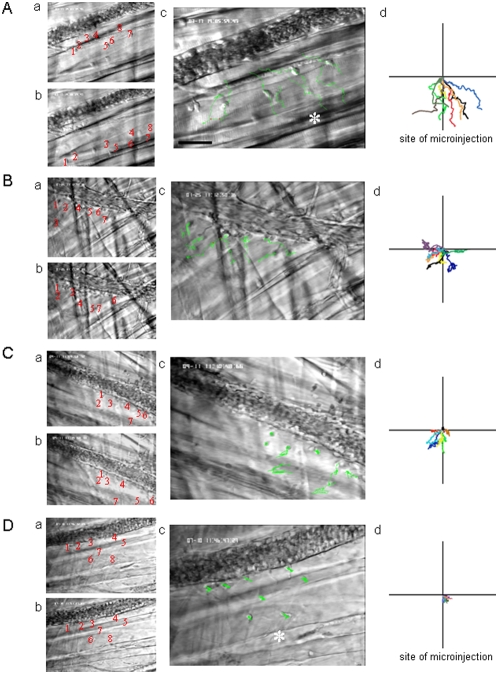
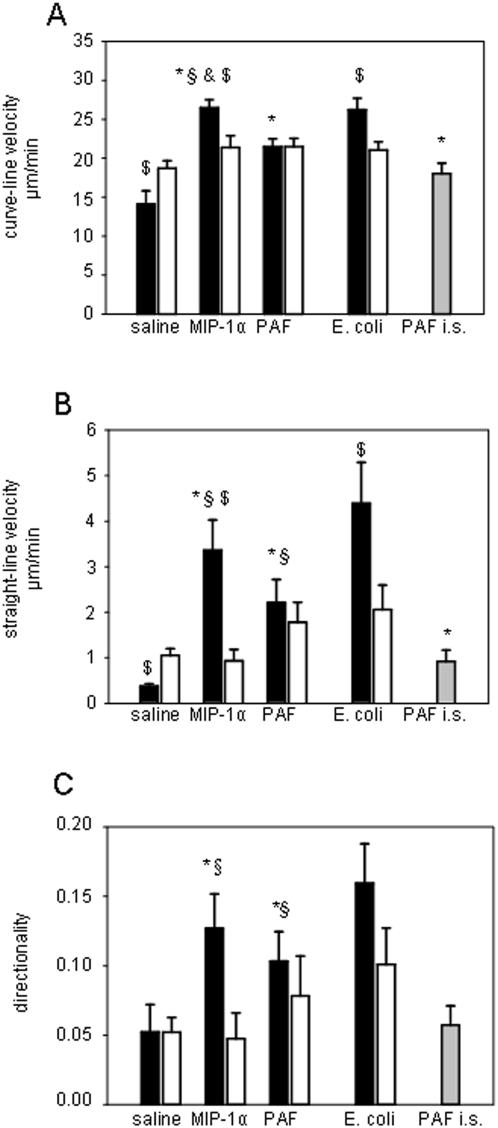
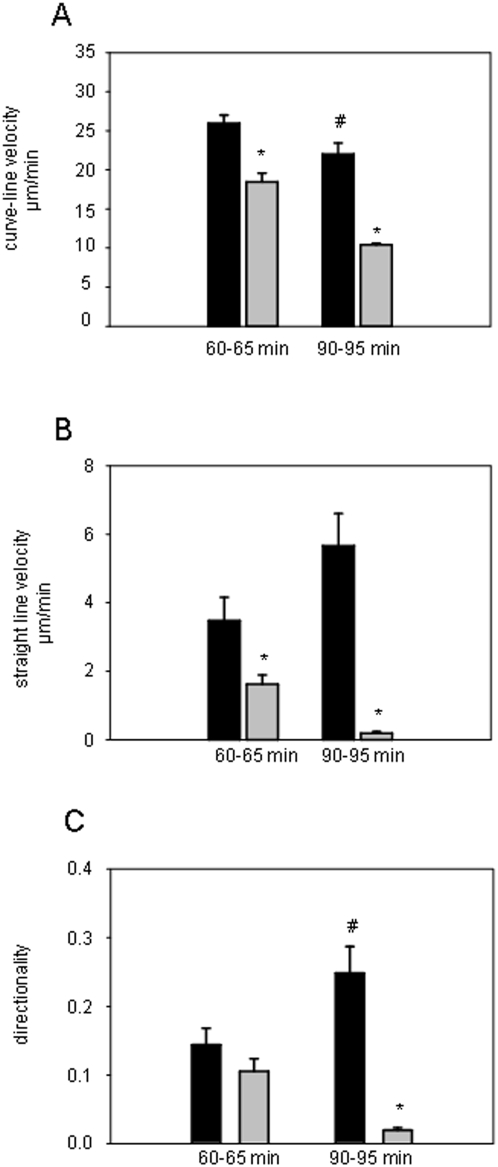
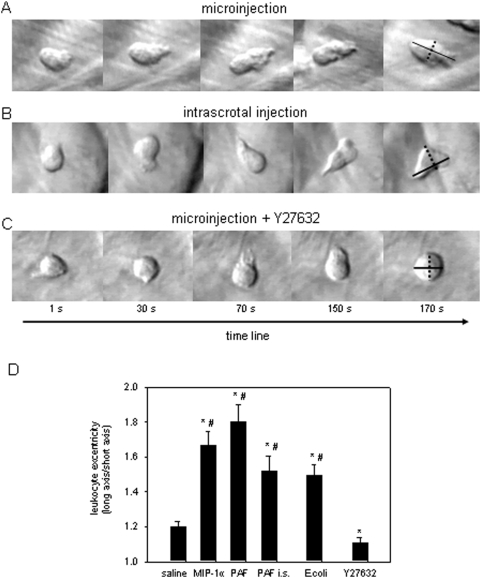
Directional migration of transmigrated leukocytes to the site of injury is a central event in the inflammatory response. Here, we present an in vivo chemotaxis assay enabling the visualization and quantitative analysis of subtype-specific directional motility and polarization of leukocytes in their natural 3D microenvironment. Our technique comprises the combination of i) semi-automated in situ microinjection of chemoattractants or bacteria as local chemotactic stimulus, ii) in vivo near-infrared reflected-light oblique transillumination (RLOT) microscopy for the visualization of leukocyte motility and morphology, and iii) in vivo fluorescence microscopy for the visualization of different leukocyte subpopulations or fluorescence-labeled bacteria. Leukocyte motility parameters are quantified off-line in digitized video sequences using computer-assisted single cell tracking. Here, we show that perivenular microinjection of chemoattractants [macrophage inflammatory protein-1alpha (MIP-1alpha/Ccl3), platelet-activating factor (PAF)] or E. coli into the murine cremaster muscle induces target-oriented intravascular adhesion and transmigration as well as polarization and directional interstitial migration of leukocytes towards the locally administered stimuli. Moreover, we describe a crucial role of Rho kinase for the regulation of directional motility and polarization of transmigrated leukocytes in vivo. Finally, combining in vivo RLOT and fluorescence microscopy in Cx3CR1(gfp/gfp) mice (mice exhibiting green fluorescent protein-labeled monocytes), we are able to demonstrate differences in the migratory behavior of monocytes and neutrophils.Taken together, we propose a novel approach for investigating the mechanisms and spatiotemporal dynamics of subtype-specific motility and polarization of leukocytes during their directional interstitial migration in vivo.
迁移的白细胞向损伤部位的定向迁移是炎症反应中的核心事件。在此,我们展示了一种体内趋化性分析方法,能够在白细胞自然的三维微环境中对其亚型特异性定向运动和极化进行可视化和定量分析。我们的技术包括以下几个方面的结合:i)作为局部趋化刺激物的趋化因子或细菌的半自动原位显微注射;ii)用于白细胞运动和形态可视化的体内近红外反射光斜透射(RLOT)显微镜;iii)用于不同白细胞亚群或荧光标记细菌可视化的体内荧光显微镜。使用计算机辅助单细胞追踪在数字化视频序列中离线定量白细胞运动参数。在此,我们表明向小鼠提睾肌静脉周围显微注射趋化因子[巨噬细胞炎性蛋白-1α(MIP-1α/Ccl3)、血小板活化因子(PAF)]或大肠杆菌可诱导白细胞向局部给药刺激物的靶向性血管内黏附、迁移以及极化和定向间质迁移。此外,我们描述了Rho激酶在体内调节迁移白细胞的定向运动和极化中的关键作用。最后,在Cx3CR1(gfp/gfp)小鼠(表现出绿色荧光蛋白标记单核细胞的小鼠)中结合体内RLOT和荧光显微镜,我们能够证明单核细胞和中性粒细胞迁移行为的差异。综上所述,我们提出了一种新的方法来研究白细胞在体内定向间质迁移过程中亚型特异性运动和极化的机制及时空动态。