Schwartz Schraga, Gal-Mark Nurit, Kfir Nir, Oren Ram, Kim Eddo, Ast Gil
Department of Human Molecular Genetics and Biochemistry, Sackler Faculty of Medicine, Tel-Aviv University, Tel Aviv, Israel.
PLoS Comput Biol. 2009 Mar;5(3):e1000300. doi: 10.1371/journal.pcbi.1000300. Epub 2009 Mar 6.
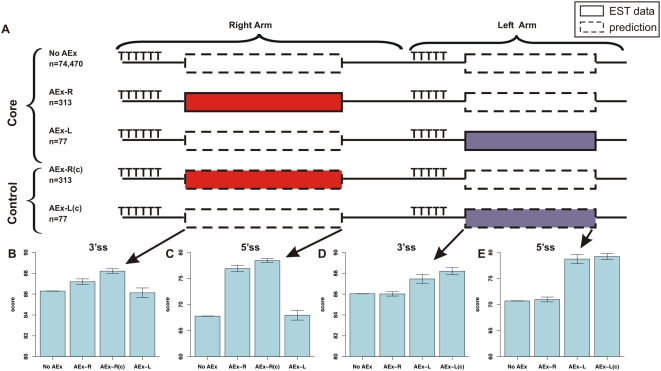
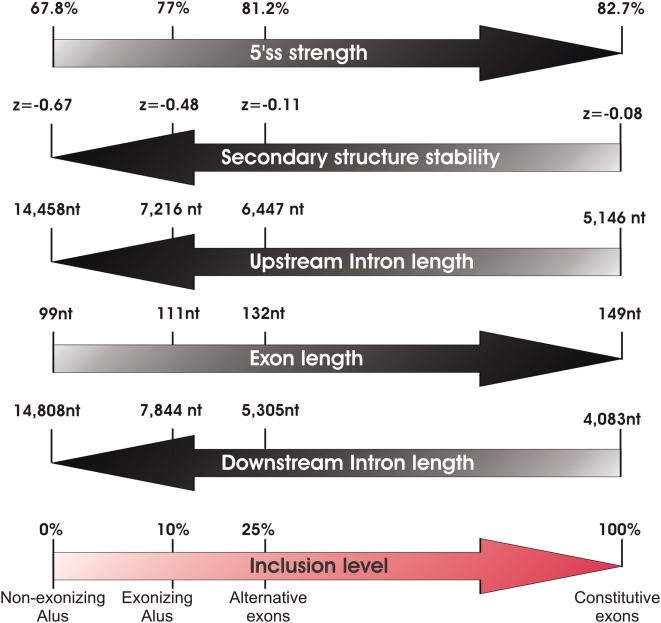
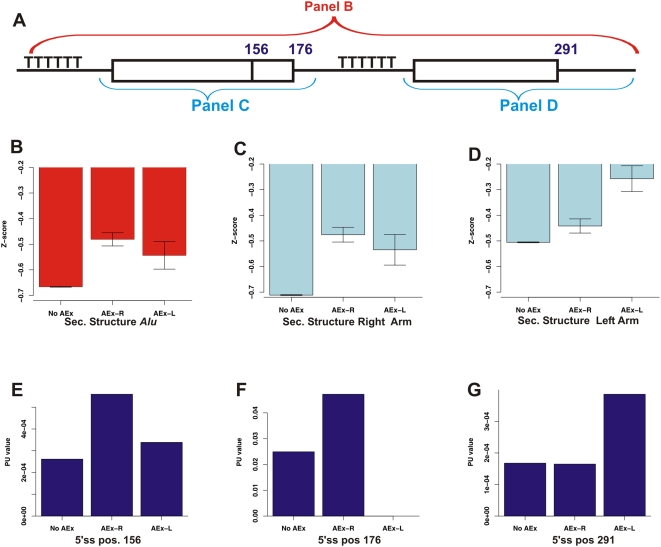
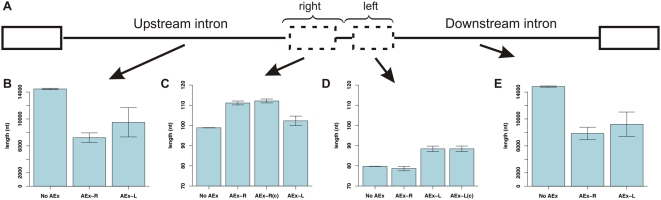
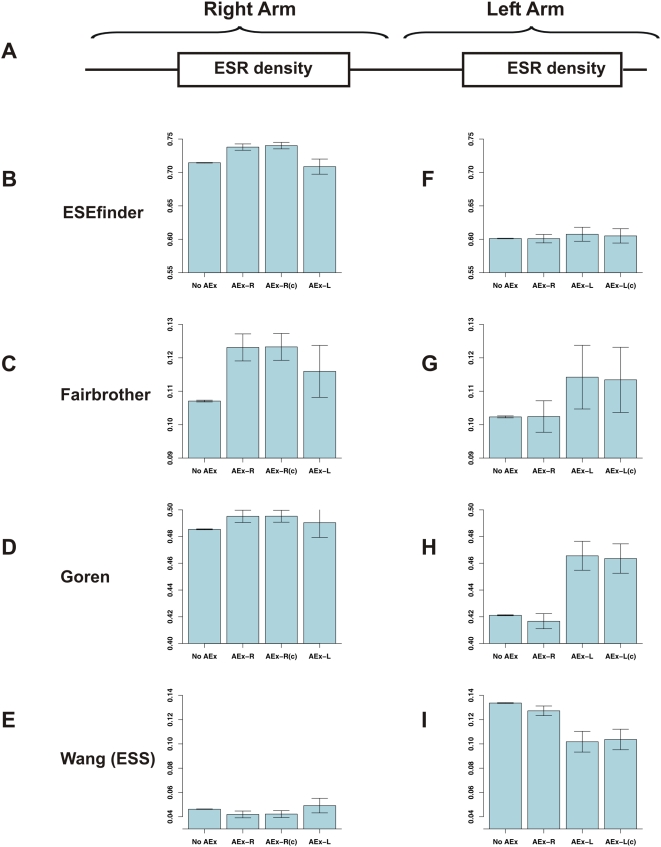
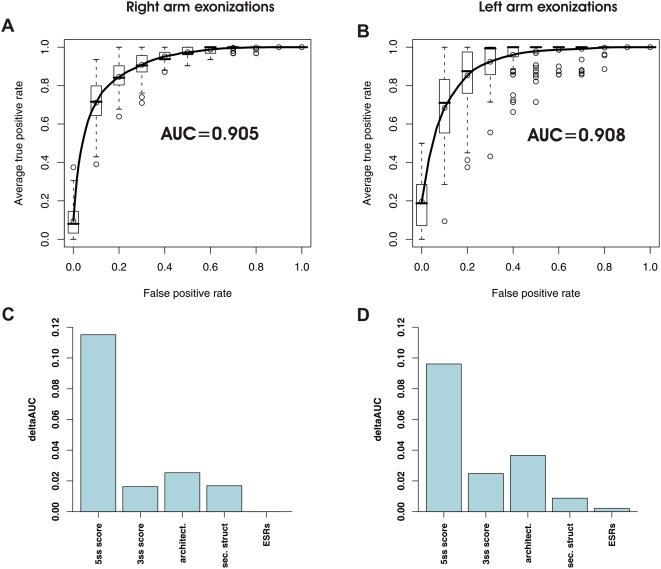
Despite decades of research, the question of how the mRNA splicing machinery precisely identifies short exonic islands within the vast intronic oceans remains to a large extent obscure. In this study, we analyzed Alu exonization events, aiming to understand the requirements for correct selection of exons. Comparison of exonizing Alus to their non-exonizing counterparts is informative because Alus in these two groups have retained high sequence similarity but are perceived differently by the splicing machinery. We identified and characterized numerous features used by the splicing machinery to discriminate between Alu exons and their non-exonizing counterparts. Of these, the most novel is secondary structure: Alu exons in general and their 5' splice sites (5'ss) in particular are characterized by decreased stability of local secondary structures with respect to their non-exonizing counterparts. We detected numerous further differences between Alu exons and their non-exonizing counterparts, among others in terms of exon-intron architecture and strength of splicing signals, enhancers, and silencers. Support vector machine analysis revealed that these features allow a high level of discrimination (AUC = 0.91) between exonizing and non-exonizing Alus. Moreover, the computationally derived probabilities of exonization significantly correlated with the biological inclusion level of the Alu exons, and the model could also be extended to general datasets of constitutive and alternative exons. This indicates that the features detected and explored in this study provide the basis not only for precise exon selection but also for the fine-tuned regulation thereof, manifested in cases of alternative splicing.
尽管经过了数十年的研究,但mRNA剪接机制如何在浩瀚的内含子海洋中精确识别短外显子岛的问题,在很大程度上仍然不清楚。在本研究中,我们分析了Alu外显子化事件,旨在了解正确选择外显子的要求。将发生外显子化的Alu与其未发生外显子化的对应物进行比较是有意义的,因为这两组中的Alu保留了高度的序列相似性,但被剪接机制以不同方式看待。我们识别并表征了剪接机制用于区分Alu外显子及其未发生外显子化的对应物的众多特征。其中,最新颖的是二级结构:一般来说,Alu外显子,尤其是它们的5'剪接位点(5'ss),其局部二级结构相对于未发生外显子化的对应物稳定性降低。我们检测到Alu外显子与其未发生外显子化的对应物之间还有许多其他差异,包括外显子-内含子结构以及剪接信号、增强子和沉默子的强度。支持向量机分析表明,这些特征能够对外显子化和未外显子化的Alu进行高度区分(AUC = 0.91)。此外,通过计算得出的外显子化概率与Alu外显子的生物学包含水平显著相关,并且该模型还可以扩展到组成型和可变外显子的一般数据集。这表明本研究中检测和探索的特征不仅为精确的外显子选择提供了基础,也为其微调调控提供了基础,这在可变剪接的情况下有所体现。