Nabholz Benoit, Glémin Sylvain, Galtier Nicolas
Université Montpellier 2 CNRS UMR 5554 - Institut des Sciences de l'Evolution Place E. Bataillon - CC064, Montpellier, France.
BMC Evol Biol. 2009 Mar 10;9:54. doi: 10.1186/1471-2148-9-54.
During the last ten years, major advances have been made in characterizing and understanding the evolution of mitochondrial DNA, the most popular marker of molecular biodiversity. Several important results were recently reported using mammals as model organisms, including (i) the absence of relationship between mitochondrial DNA diversity and life-history or ecological variables, (ii) the absence of prominent adaptive selection, contrary to what was found in invertebrates, and (iii) the unexpectedly large variation in neutral substitution rate among lineages, revealing a possible link with species maximal longevity. We propose to challenge these results thanks to the bird/mammal comparison. Direct estimates of population size are available in birds, and this group presents striking life-history trait differences with mammals (higher mass-specific metabolic rate and longevity). These properties make birds the ideal model to directly test for population size effects, and to discriminate between competing hypotheses about the causes of substitution rate variation.
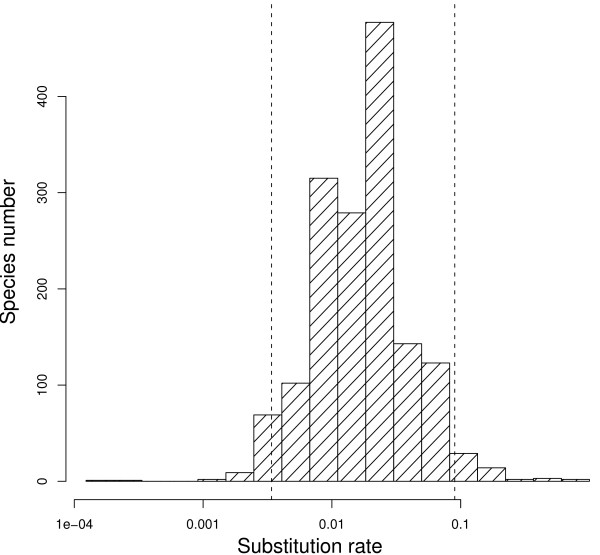
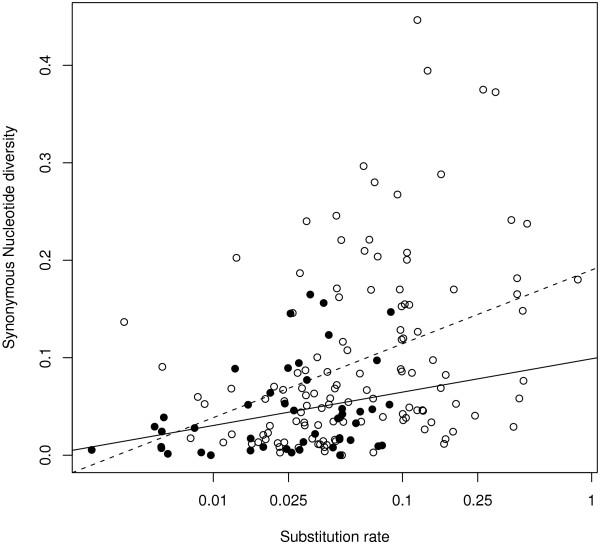
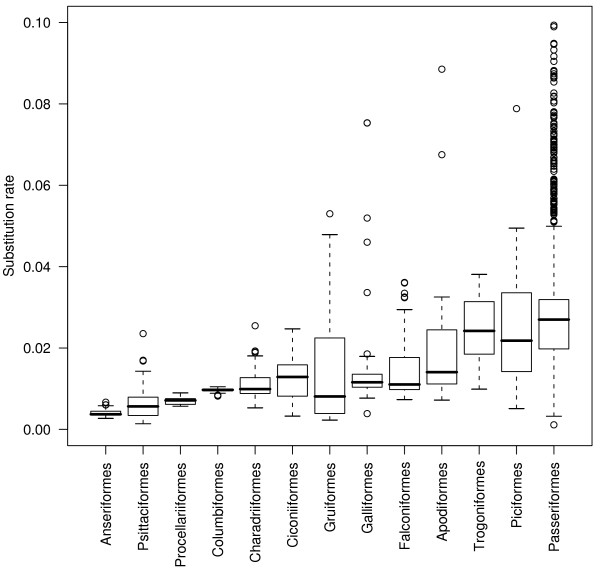
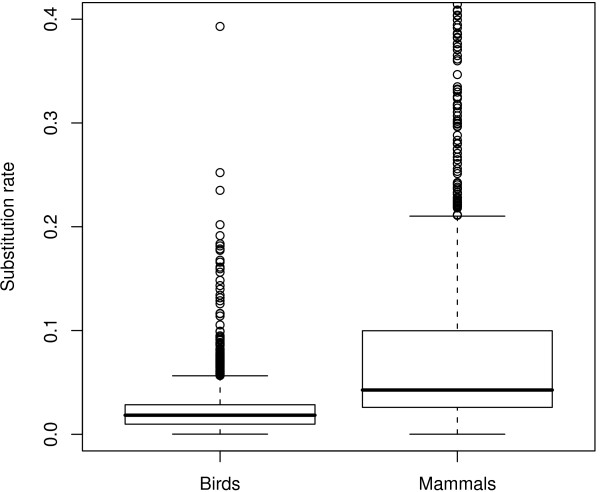
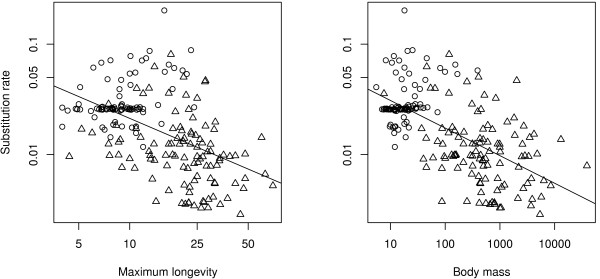
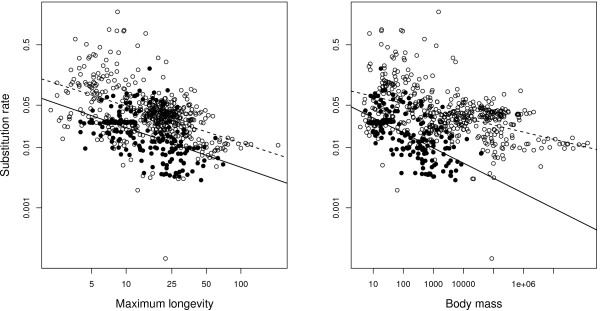
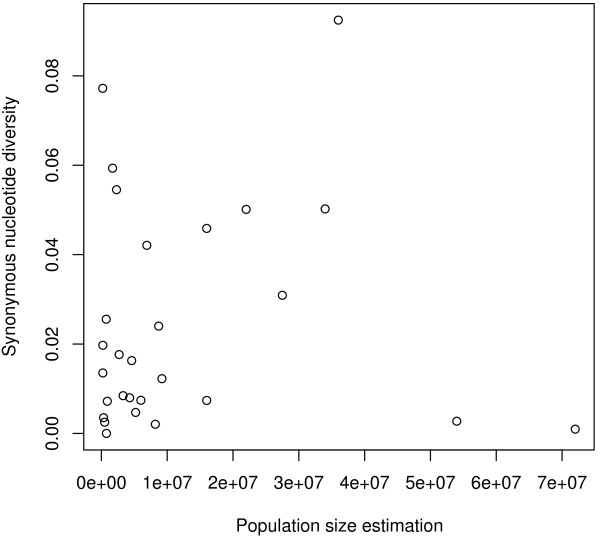
A phylogenetic analysis of cytochrome b third-codon position confirms that the mitochondrial DNA mutation rate is quite variable in birds, passerines being the fastest evolving order. On average, mitochondrial DNA evolves slower in birds than in mammals of similar body size. This result is in agreement with the longevity hypothesis, and contradicts the hypothesis of a metabolic rate-dependent mutation rate. Birds show no footprint of adaptive selection on cytochrome b evolutionary patterns, but no link between direct estimates of population size and cytochrome b diversity. The mutation rate is the best predictor we have of within-species mitochondrial diversity in birds. It partly explains the differences in mitochondrial DNA diversity patterns observed between mammals and birds, previously interpreted as reflecting Hill-Robertson interferences with the W chromosome.
Mitochondrial DNA diversity patterns in birds are strongly influenced by the wide, unexpected variation of mutation rate across species. From a fundamental point of view, these results are strongly consistent with a relationship between species maximal longevity and mitochondrial mutation rate, in agreement with the mitochondrial theory of ageing. Form an applied point of view, this study reinforces and extends the message of caution previously expressed for mammals: mitochondrial data tell nothing about species population sizes, and strongly depart the molecular clock assumption.
在过去十年中,在表征和理解线粒体DNA(分子生物多样性最常用的标记)的进化方面取得了重大进展。最近报道了几项以哺乳动物为模式生物的重要研究成果,包括:(i)线粒体DNA多样性与生活史或生态变量之间不存在关联;(ii)与在无脊椎动物中发现的情况相反,不存在显著的适应性选择;(iii)谱系间中性替代率存在意外的巨大差异,揭示了与物种最大寿命可能存在的联系。我们建议通过鸟类/哺乳动物的比较来挑战这些结果。鸟类有直接的种群大小估计值,并且该类群与哺乳动物在生活史特征上存在显著差异(更高的质量特异性代谢率和寿命)。这些特性使鸟类成为直接测试种群大小效应以及区分关于替代率变化原因的相互竞争假设的理想模型。
细胞色素b第三密码子位置的系统发育分析证实,鸟类线粒体DNA突变率变化很大,雀形目是进化最快的目。平均而言,鸟类线粒体DNA的进化速度比体型相似的哺乳动物慢。这一结果与寿命假说一致,与代谢率依赖性突变率假说相矛盾。鸟类在细胞色素b进化模式上没有适应性选择的痕迹,但种群大小的直接估计值与细胞色素b多样性之间没有联系。突变率是我们预测鸟类种内线粒体多样性的最佳指标。它部分解释了在哺乳动物和鸟类之间观察到的线粒体DNA多样性模式差异,此前这些差异被解释为反映了与W染色体的希尔 - 罗伯逊干扰。
鸟类线粒体DNA多样性模式受到物种间突变率广泛且意外变化的强烈影响。从基础角度来看,这些结果与物种最大寿命和线粒体突变率之间的关系高度一致,这与衰老的线粒体理论相符。从应用角度来看,本研究强化并扩展了先前针对哺乳动物所表达的谨慎信息:线粒体数据无法说明物种的种群大小,并且与分子钟假设有很大偏差。