McMenamin Brenton W, Shackman Alexander J, Maxwell Jeffrey S, Greischar Lawrence L, Davidson Richard J
University of MinnesotaTwin Cities, Minneapolis-Saint Paul, Minnesota, USA.
Psychophysiology. 2009 May;46(3):578-92. doi: 10.1111/j.1469-8986.2009.00787.x. Epub 2009 Mar 4.
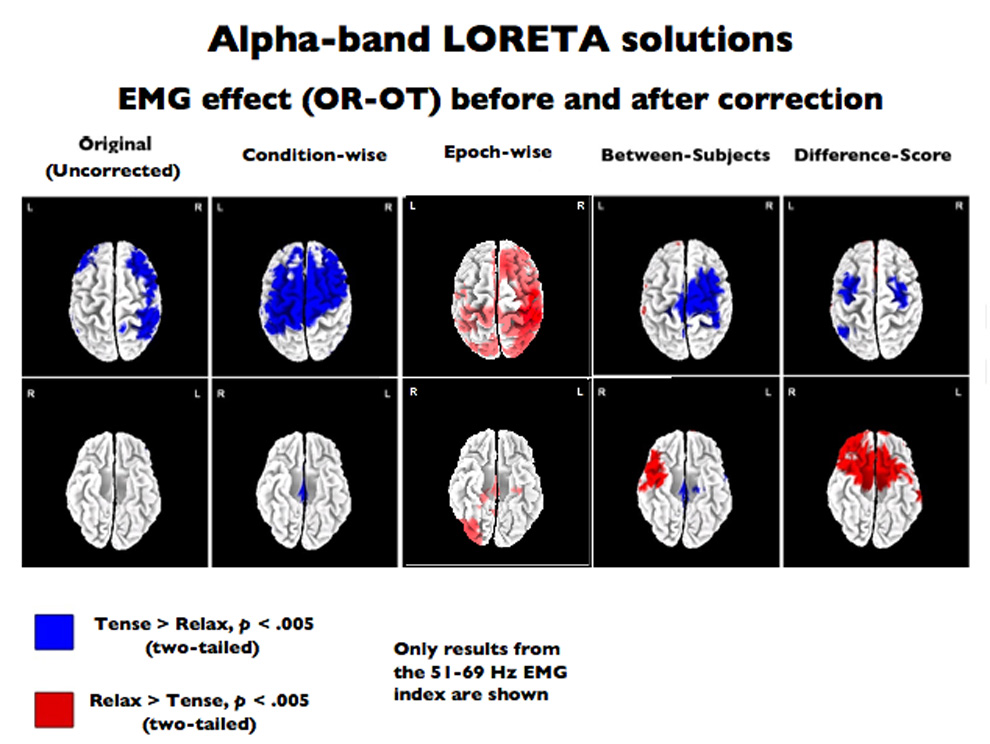
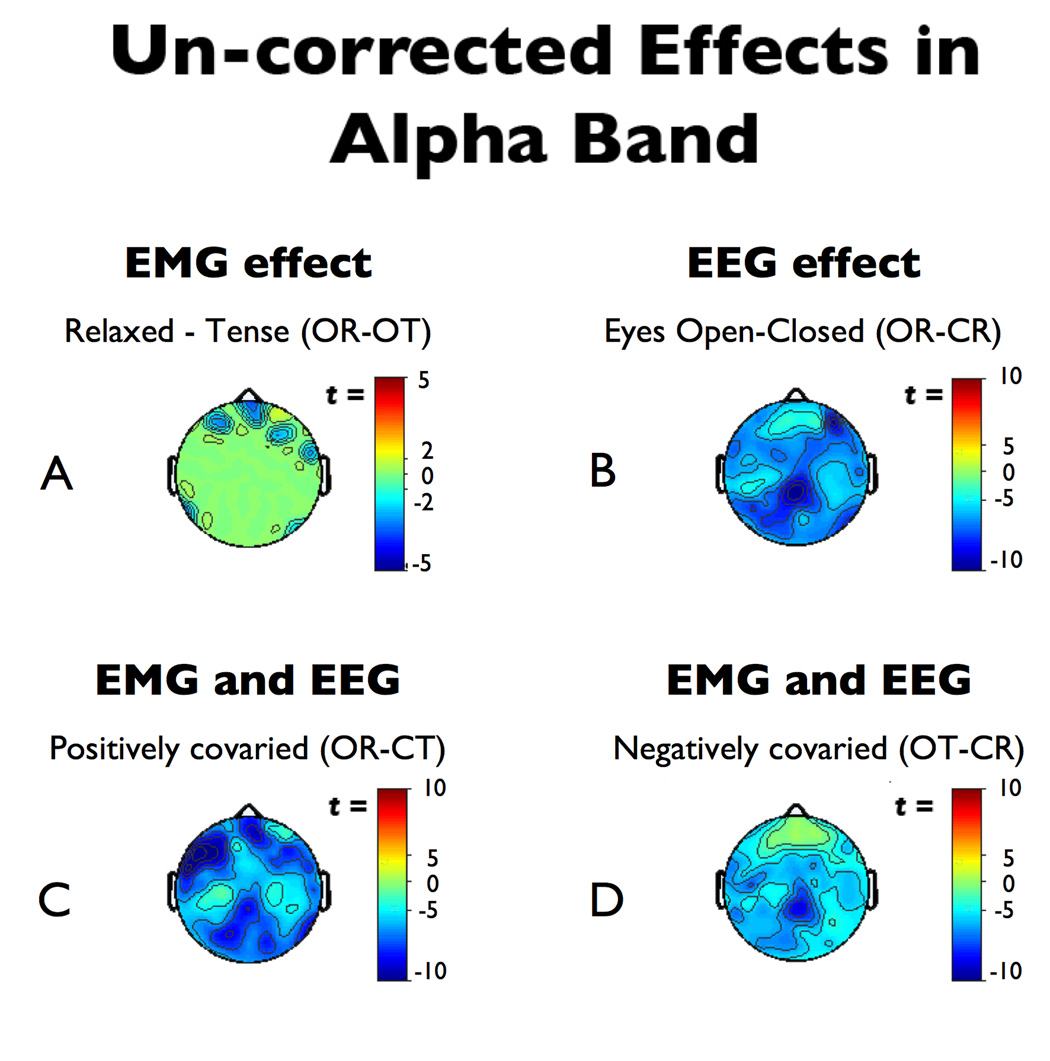
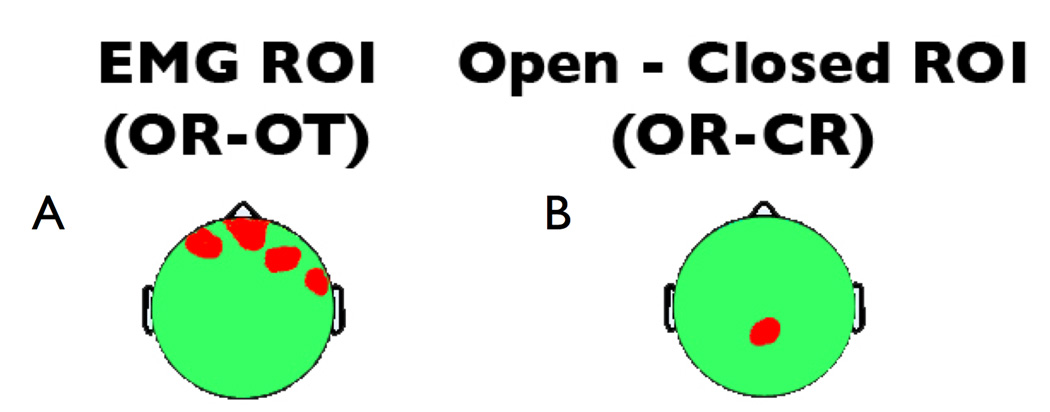
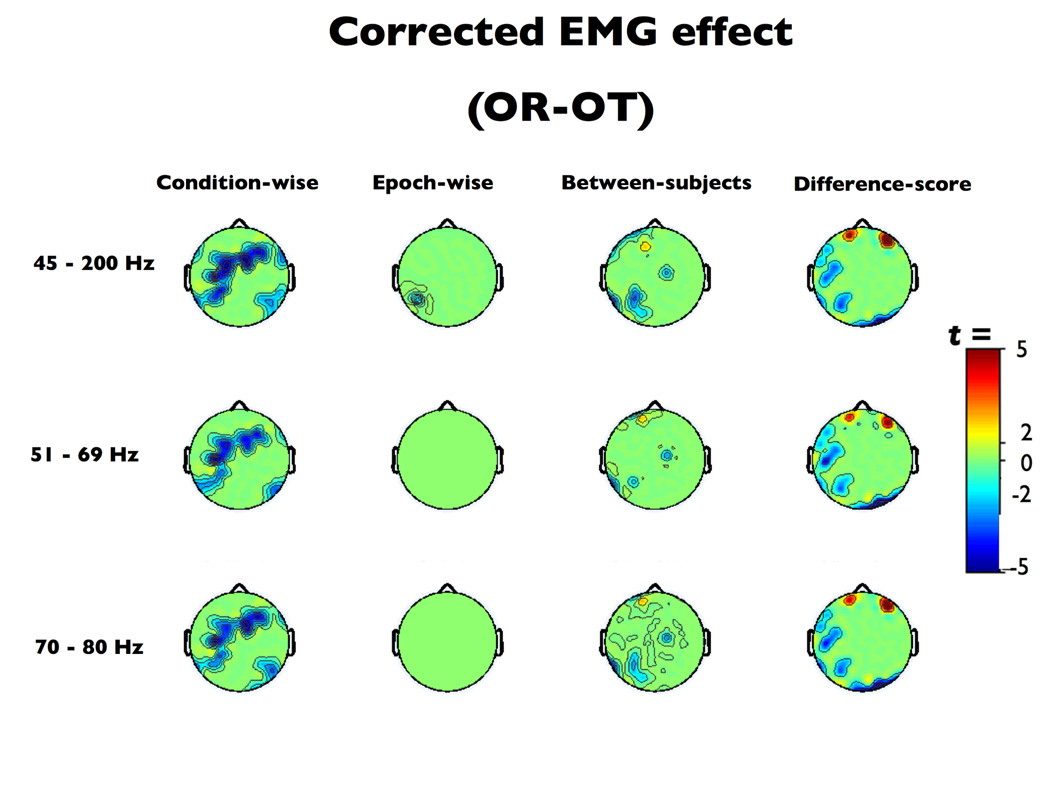
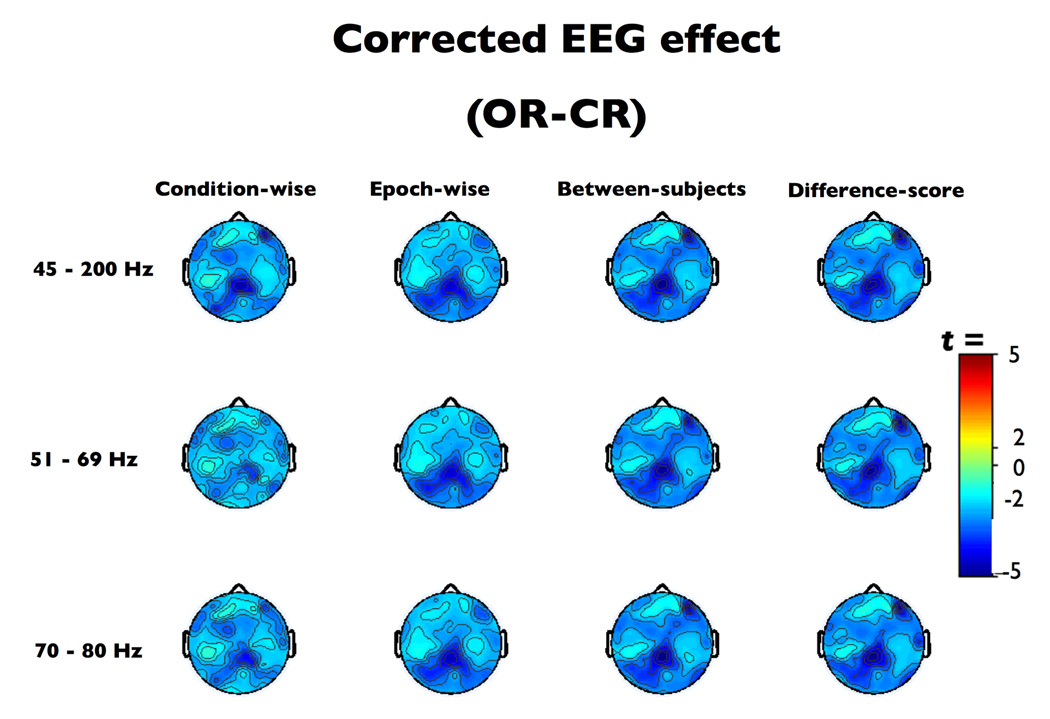
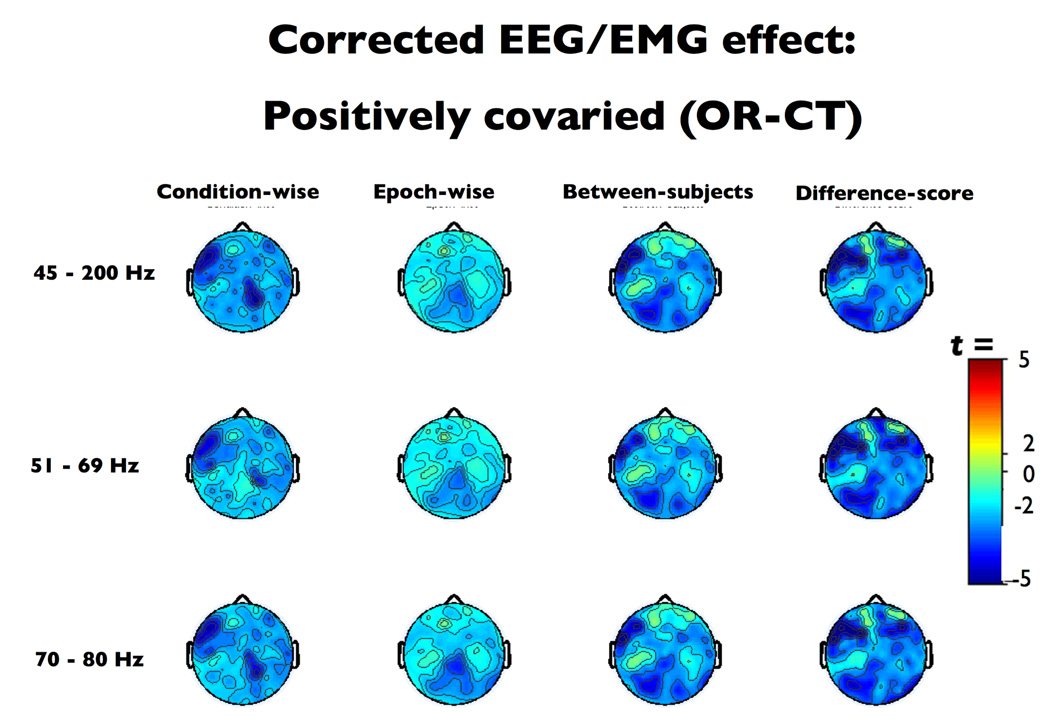
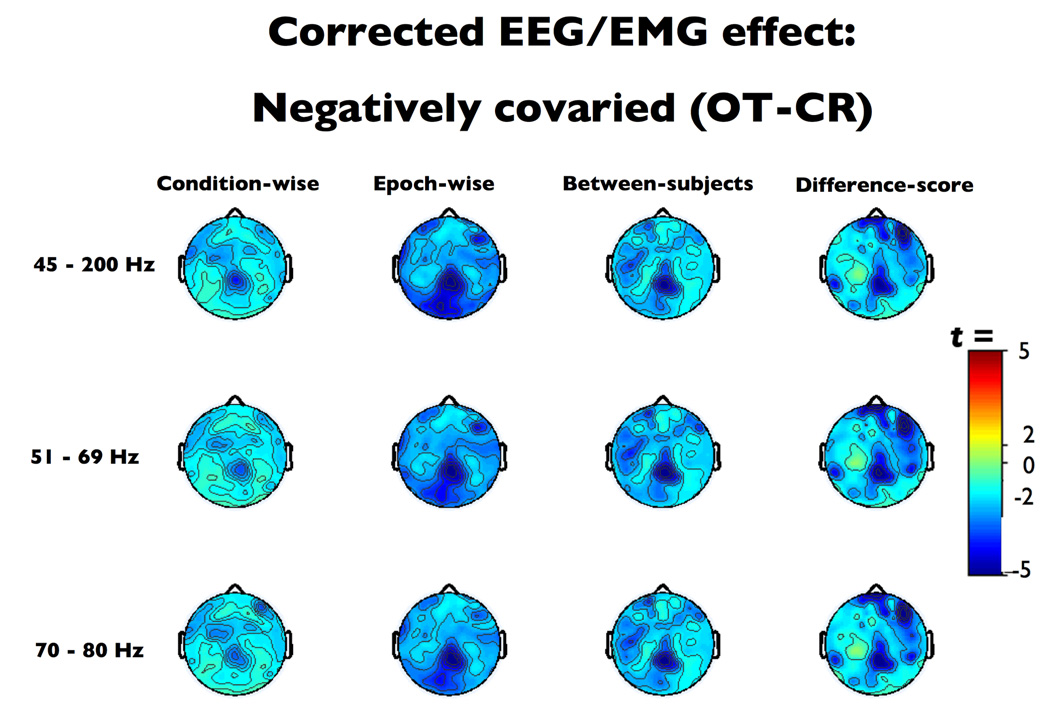
EEG and EEG source-estimation are susceptible to electromyographic artifacts (EMG) generated by the cranial muscles. EMG can mask genuine effects or masquerade as a legitimate effect-even in low frequencies, such as alpha (8-13 Hz). Although regression-based correction has been used previously, only cursory attempts at validation exist, and the utility for source-localized data is unknown. To address this, EEG was recorded from 17 participants while neurogenic and myogenic activity were factorially varied. We assessed the sensitivity and specificity of four regression-based techniques: between-subjects, between-subjects using difference-scores, within-subjects condition-wise, and within-subject epoch-wise on the scalp and in data modeled using the LORETA algorithm. Although within-subject epoch-wise showed superior performance on the scalp, no technique succeeded in the source-space. Aside from validating the novel epoch-wise methods on the scalp, we highlight methods requiring further development.
脑电图(EEG)及EEG源估计容易受到颅部肌肉产生的肌电图伪迹(EMG)的影响。EMG能够掩盖真实效应或伪装成一种合理效应——即使在低频,如阿尔法波(8 - 13赫兹)时也是如此。尽管此前已使用基于回归的校正方法,但仅有初步的验证尝试,且其对源定位数据的效用尚不清楚。为解决这一问题,我们记录了17名参与者的脑电图,同时对神经源性和肌源性活动进行了析因变化。我们评估了四种基于回归的技术的敏感性和特异性:受试者间、使用差异分数的受试者间、受试者内逐条件以及受试者内逐时段,这些技术分别应用于头皮脑电图数据以及使用LORETA算法建模的数据。尽管受试者内逐时段在头皮脑电图上表现出卓越性能,但在源空间中没有一种技术取得成功。除了在头皮脑电图上验证新型的逐时段方法外,我们还强调了需要进一步发展的方法。