Scarfì Sonia, Magnone Mirko, Ferraris Chiara, Pozzolini Marina, Benvenuto Federica, Benatti Umberto, Giovine Marco
Department of Experimental Medicine, Section of Biochemistry, University of Genova, Genova, Italy.
Respir Res. 2009 Mar 19;10(1):25. doi: 10.1186/1465-9921-10-25.
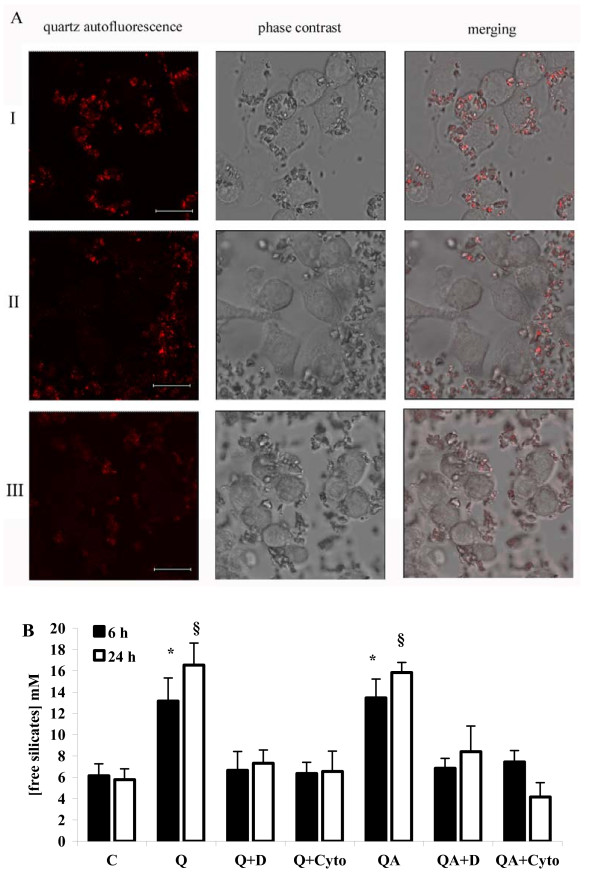
Inhalation of crystalline silica induces a pulmonary fibrotic degeneration called silicosis caused by the inability of alveolar macrophages to dissolve the crystalline structure of phagocytosed quartz particles. Ascorbic acid is capable of partially dissolving quartz crystals, leading to an increase of soluble silica concentration and to the generation of new radical sites on the quartz surface. The reaction is specific for the crystalline forms of silica. It has been already demonstrated an increased cytotoxicity and stronger induction of pro-inflammatory cyclooxygenase-2 (COX-2) by ascorbic acid pre-treated quartz (QA) compared to untreated quartz (Q) in the murine macrophage cell line RAW 264.7.
Taking advantage of the enhanced macrophage response to QA as compared to Q particles, we investigated the first steps of cell activation and the contribution of early signals generated directly from the plasma membrane to the production of TNF-alpha, a cytokine that activates both inflammatory and fibrogenic pathways.
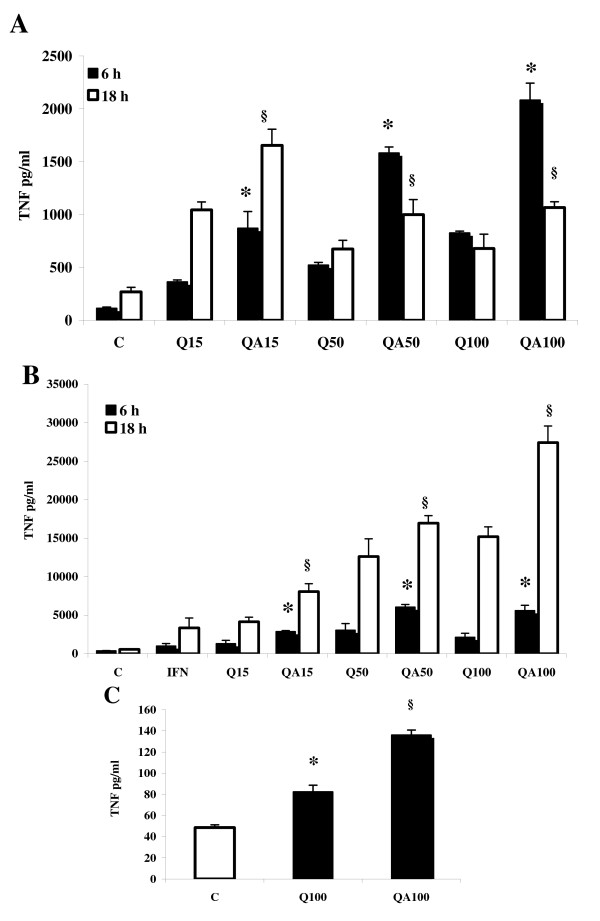
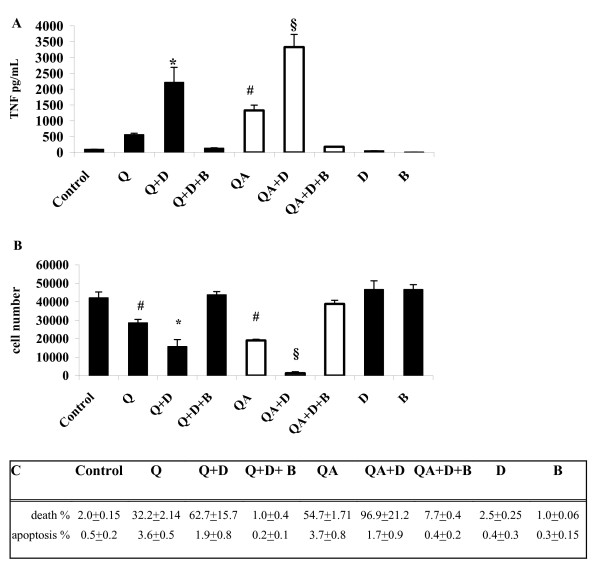
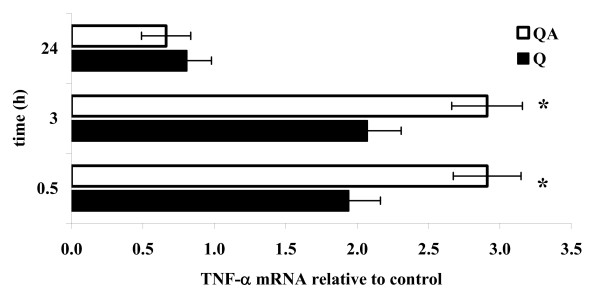
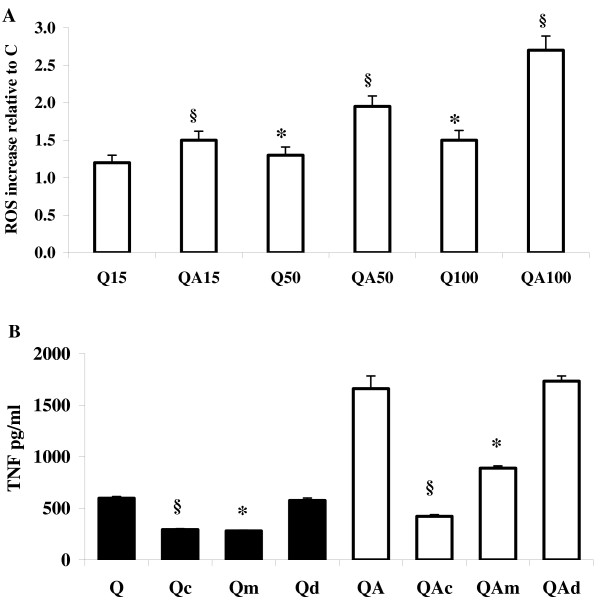
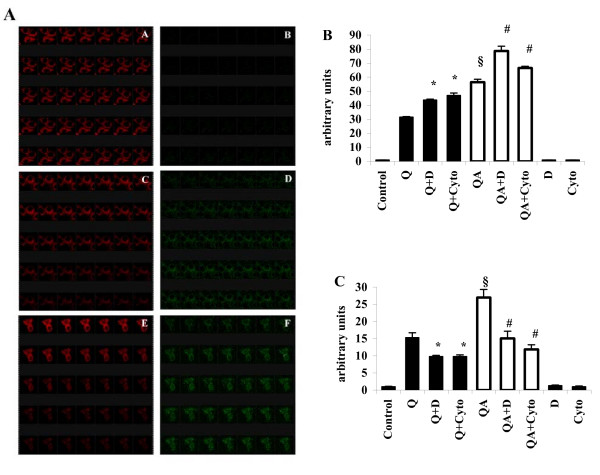
Here we demonstrate that TNF-alpha mRNA synthesis and protein secretion are significantly increased in RAW 264.7 macrophages challenged with QA as compared to Q particles, and that the enhanced response is due to an increase of intracellular ROS. Plasma membrane-particle contact, in the absence of phagocytosis, is sufficient to trigger TNF-alpha production through a mechanism involving membrane lipid peroxidation and this appears to be even more detrimental to macrophage survival than particle phagocytosis itself.
Taken together these data suggest that an impairment of pulmonary macrophage phagocytosis, i.e. in the case of alcoholic subjects, could potentiate lung disease in silica-exposed individuals.
吸入结晶二氧化硅会引发一种称为矽肺的肺纤维化变性,这是由于肺泡巨噬细胞无法溶解吞噬的石英颗粒的晶体结构所致。抗坏血酸能够部分溶解石英晶体,导致可溶性二氧化硅浓度增加,并在石英表面产生新的自由基位点。该反应对二氧化硅的晶体形式具有特异性。与未处理的石英(Q)相比,已证实在小鼠巨噬细胞系RAW 264.7中,抗坏血酸预处理的石英(QA)具有更高的细胞毒性和更强的促炎环氧化酶-2(COX-2)诱导作用。
利用与Q颗粒相比巨噬细胞对QA的反应增强这一特点,我们研究了细胞激活的第一步以及直接从质膜产生的早期信号对肿瘤坏死因子-α(TNF-α)产生的贡献,TNF-α是一种激活炎症和纤维化途径的细胞因子。
我们在此证明,与Q颗粒相比,用QA刺激的RAW 264.7巨噬细胞中TNF-α mRNA合成和蛋白质分泌显著增加,且反应增强是由于细胞内活性氧增加所致。在没有吞噬作用的情况下,质膜-颗粒接触足以通过涉及膜脂质过氧化的机制触发TNF-α的产生,而且这似乎比颗粒吞噬本身对巨噬细胞存活更具损害性。
综合这些数据表明,肺部巨噬细胞吞噬功能受损,即在酒精性受试者中,可能会增强矽肺暴露个体的肺部疾病。