Ren Jiaqiang, Jin Ping, Wang Ena, Marincola Francesco M, Stroncek David F
Department of Transfusion Medicine, Clinical Center, National Institute of Health, 9000 Rockville Pike, Bethesda, Maryland 20892, USA.
J Transl Med. 2009 Mar 23;7:20. doi: 10.1186/1479-5876-7-20.
The unique features of human embryonic stem (hES) cells make them the best candidate resource for both cell replacement therapy and development research. However, the molecular mechanisms responsible for the simultaneous maintenance of their self-renewal properties and undifferentiated state remain unclear. Non-coding microRNAs (miRNA) which regulate mRNA cleavage and inhibit encoded protein translation exhibit temporal or tissue-specific expression patterns and they play an important role in development timing.
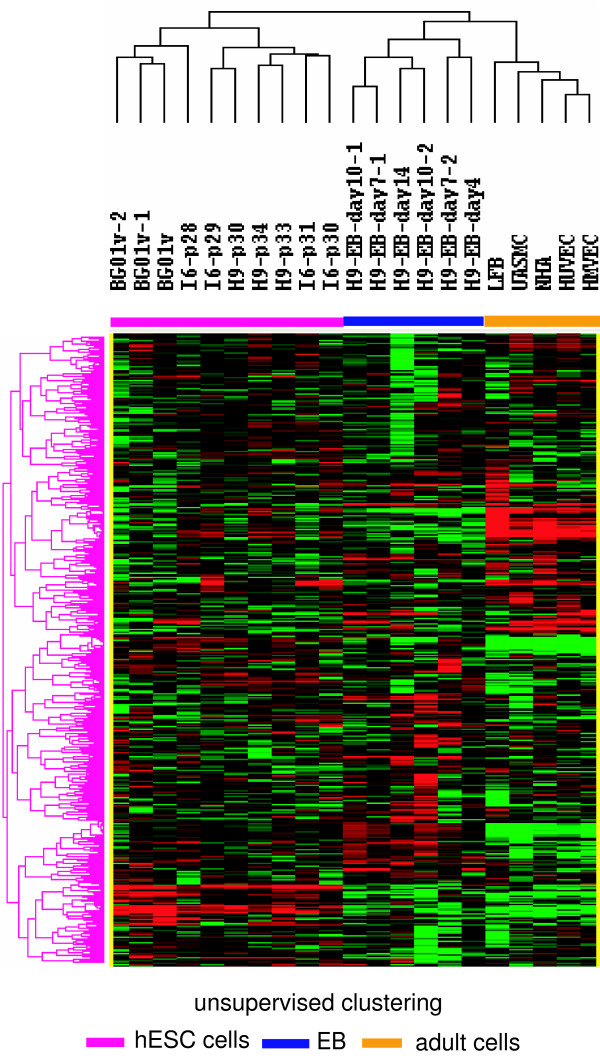
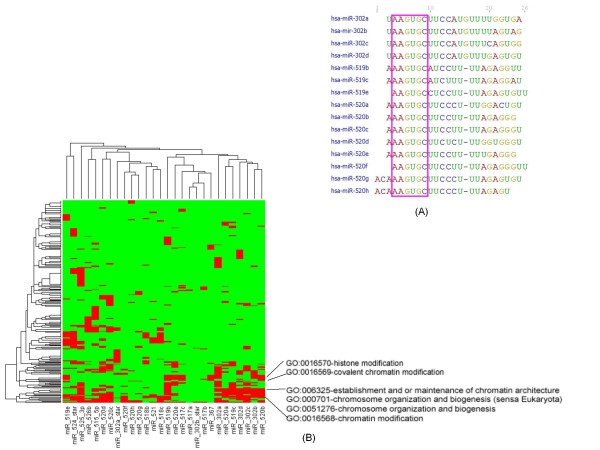
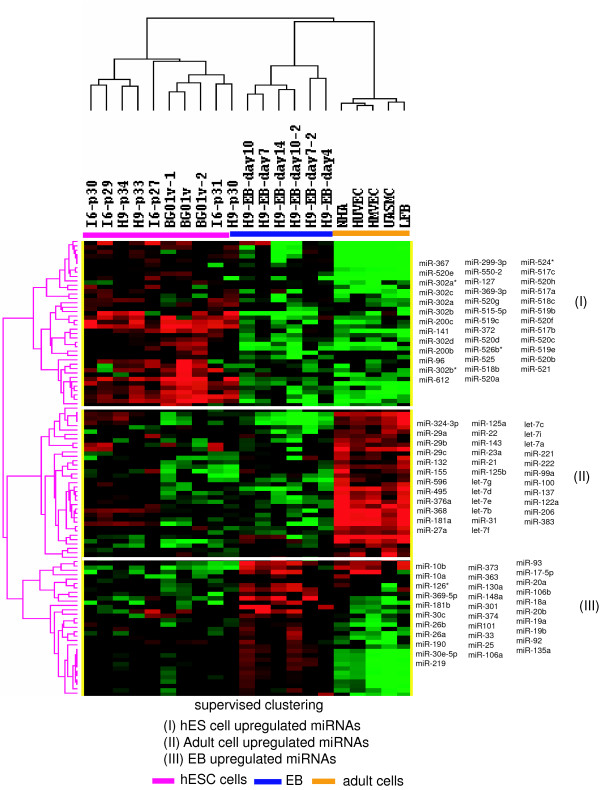
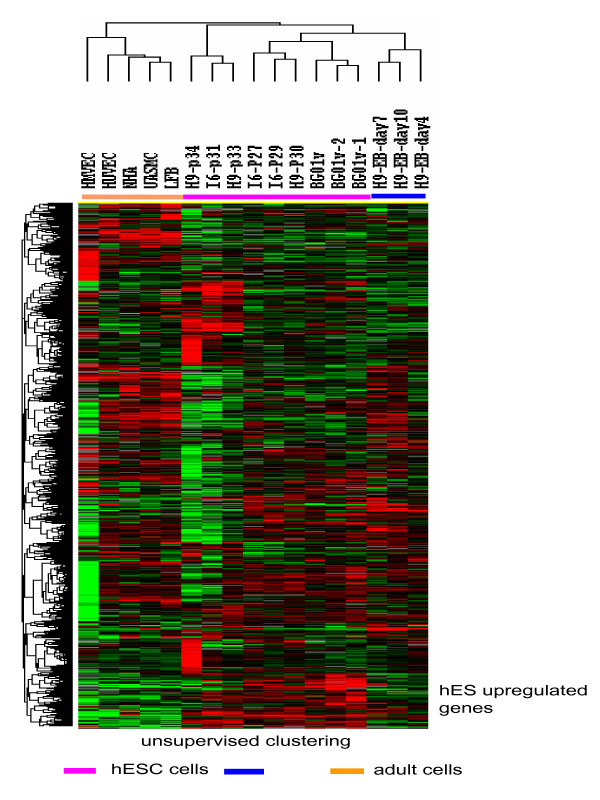
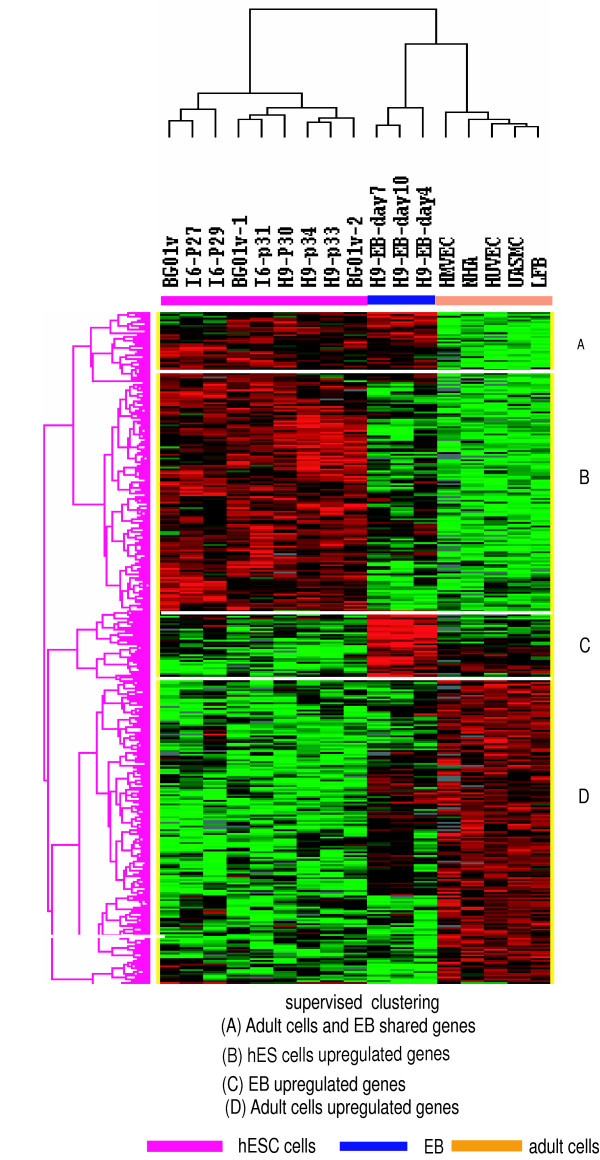
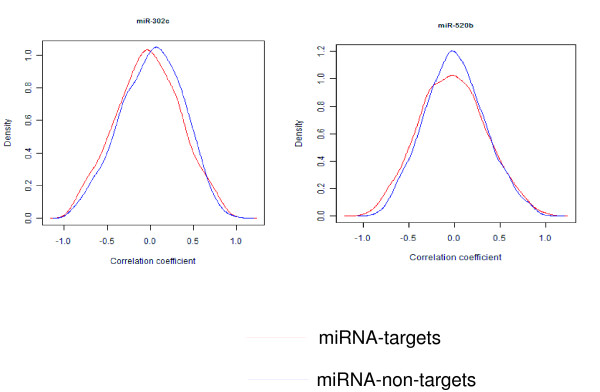
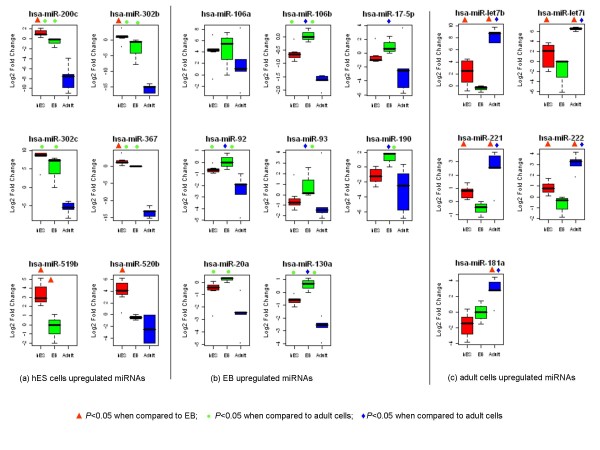
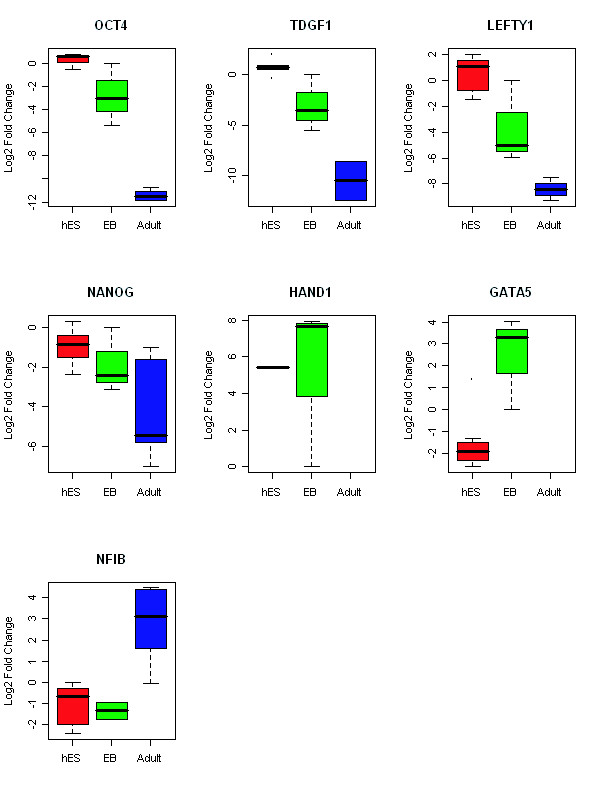
In this study, we analyzed miRNA and gene expression profiles among samples from 3 hES cell lines (H9, I6 and BG01v), differentiated embryoid bodies (EB) derived from H9 cells at different time points, and 5 adult cell types including Human Microvascular Endothelial Cells (HMVEC), Human Umbilical Vein Endothelial Cells (HUVEC), Umbilical Artery Smooth Muscle Cells (UASMC), Normal Human Astrocytes (NHA), and Lung Fibroblasts (LFB). This analysis rendered 104 miRNAs and 776 genes differentially expressed among the three cell types. Selected differentially expressed miRNAs and genes were further validated and confirmed by quantitative real-time-PCR (qRT-PCR). Especially, members of the miR-302 cluster on chromosome 4 and miR-520 cluster on chromosome 19 were highly expressed in undifferentiated hES cells. MiRNAs in these two clusters displayed similar expression levels. The members of these two clusters share a consensus 7-mer seed sequence and their targeted genes had overlapping functions. Among the targeted genes, genes with chromatin structure modification function are enriched suggesting a role in the maintenance of chromatin structure. We also found that the expression level of members of the two clusters, miR-520b and miR-302c, were negatively correlated with their targeted genes based on gene expression analysis
We identified the expression patterns of miRNAs and gene transcripts in the undifferentiation of human embryonic stem cells; among the miRNAs that are highly expressed in undifferentiated embryonic stem cells, the miR-520 cluster may be closely involved in hES cell function and its relevance to chromatin structure warrants further study.
人类胚胎干细胞(hES细胞)的独特特性使其成为细胞替代疗法和发育研究的最佳候选资源。然而,负责同时维持其自我更新特性和未分化状态的分子机制仍不清楚。非编码微小RNA(miRNA)可调节mRNA切割并抑制编码蛋白的翻译,呈现出时间或组织特异性表达模式,且在发育时机中发挥重要作用。
在本研究中,我们分析了来自3种hES细胞系(H9、I6和BG01v)、不同时间点源自H9细胞的分化胚状体(EB)以及5种成体细胞类型(包括人微血管内皮细胞(HMVEC)、人脐静脉内皮细胞(HUVEC)、脐动脉平滑肌细胞(UASMC)、正常人星形胶质细胞(NHA)和肺成纤维细胞(LFB))样本中的miRNA和基因表达谱。该分析使得在这三种细胞类型中有104种miRNA和776个基因差异表达。通过定量实时PCR(qRT-PCR)对选定的差异表达miRNA和基因进行了进一步验证和确认。特别是,4号染色体上的miR-302簇成员和19号染色体上的miR-520簇成员在未分化的hES细胞中高度表达。这两个簇中的miRNA显示出相似的表达水平。这两个簇的成员共享一个共有7聚体种子序列,且它们的靶基因具有重叠功能。在靶基因中,具有染色质结构修饰功能的基因富集,提示其在维持染色质结构中发挥作用。基于基因表达分析,我们还发现这两个簇的成员miR-520b和miR-302c的表达水平与其靶基因呈负相关。
我们确定了人类胚胎干细胞未分化过程中miRNA和基因转录本的表达模式;在未分化胚胎干细胞中高表达的miRNA中,miR-520簇可能与hES细胞功能密切相关,其与染色质结构的相关性值得进一步研究。