Mariño Eliana, Villanueva Jeanette, Walters Stacey, Liuwantara David, Mackay Fabienne, Grey Shane T
Immunology and Inflammation Program, Garvan Institute of Medical Research, Darlinghurst, NSW, Australia.
Diabetes. 2009 Jul;58(7):1568-77. doi: 10.2337/db08-1504. Epub 2009 Mar 31.
Tumor necrosis factor ligand family members B-cell-activating factor (BAFF) and a proliferation-inducing ligand (APRIL) can exert powerful effects on B-cell activation and development, type 1 T-helper cell (Th1) immune responses, and autoimmunity. We examined the effect of blocking BAFF and APRIL on the development of autoimmune diabetes.
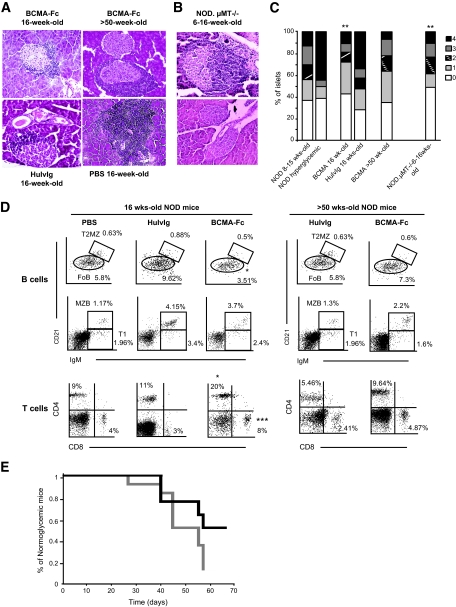
Female NOD mice were administered B-cell maturation antigen (BCMA)-Fc from 9 to 15 weeks of age. Diabetes incidence, islet pathology, and T- and B-cell populations were examined.
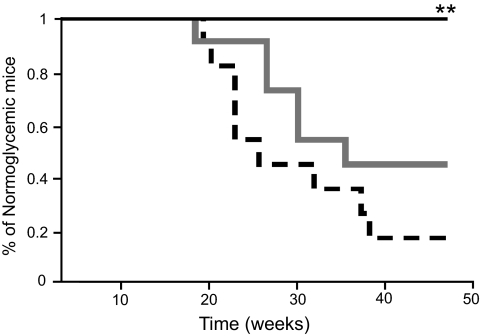
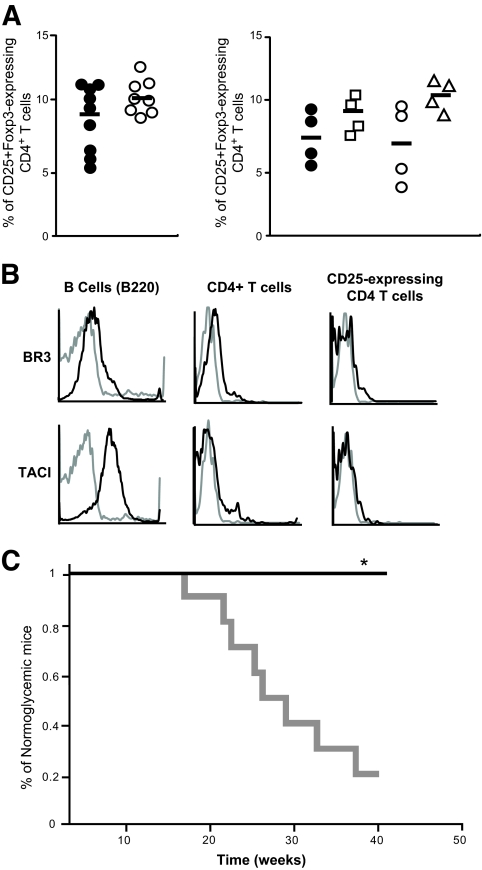
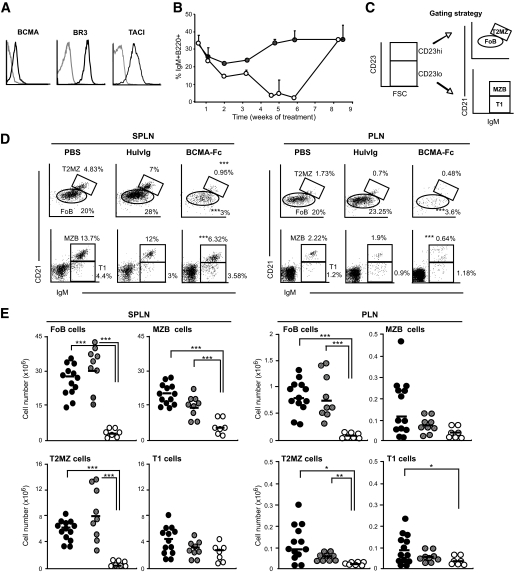
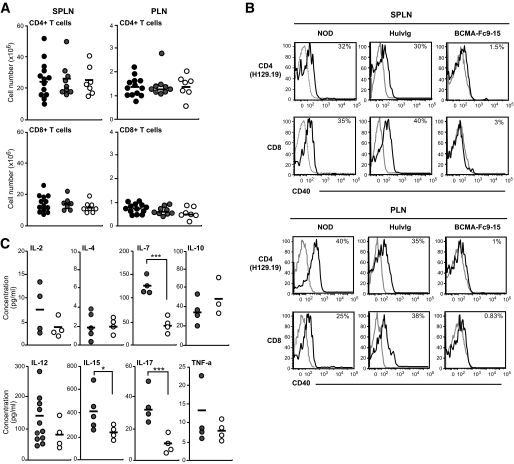
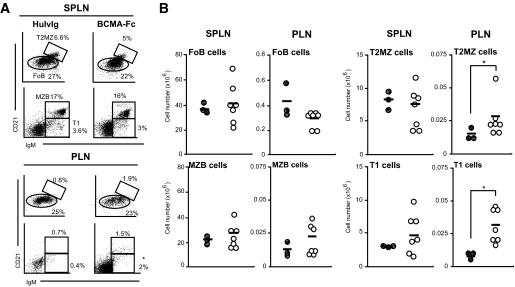
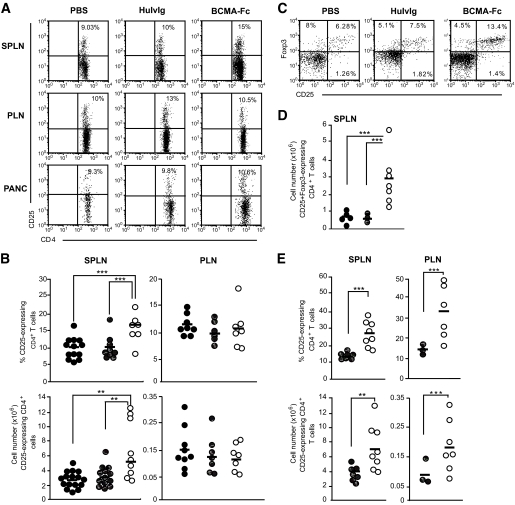
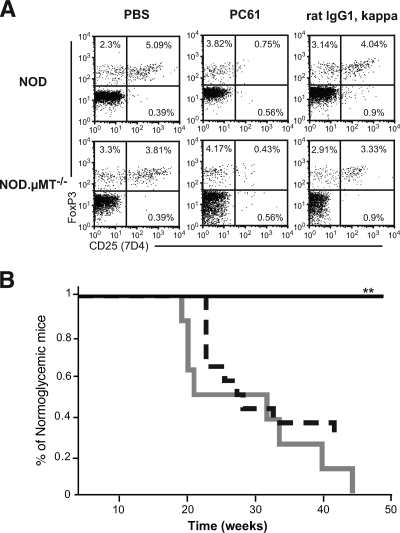
BCMA-Fc treatment reduced the severity of insulitis and prevented diabetes development in NOD mice. BCMA-Fc-treated mice showed reduced follicular, marginal-zone, and T2MZ B-cells. B-cell reduction was accompanied by decreased frequencies of pathogenic CD4(+)CD40(+) T-cells and reduced Th1 cytokines IL-7, IL-15, and IL-17. Thus, T-cell activation was blunted with reduced B-cells. However, BCMA-Fc-treated mice still harbored detectable diabetogenic T-cells, suggesting that regulatory mechanisms contributed to diabetes prevention. Indeed, BCMA-Fc-treated mice accumulated increased CD4(+)CD25(+) regulatory T-cells (Tregs) with age. CD4(+)CD25(+) cells were essential for maintaining euglycemia because their depletion abrogated BCMA-Fc-mediated protection. BCMA-Fc did not directly affect Treg homeostasis given that CD4(+)CD25(+)Foxp3(+) T-cells did not express TACI or BR3 receptors and that CD4(+)CD25(+)Foxp3(+) T-cell frequencies were equivalent in wild-type, BAFF(-/-), TACI(-/-), BCMA(-/-), and BR3(-/-) mice. Rather, B-cell depletion resulted in CD4(+)CD25(+) T-cell-mediated protection from diabetes because anti-CD25 monoclonal antibody treatment precipitated diabetes in both diabetes-resistant NOD.microMT(-/-) and BCMA-Fc-treated mice.
BAFF/APRIL blockade prevents diabetes. BCMA-Fc reduces B-cells, subsequently blunting autoimmune activity and allowing endogenous regulatory mechanisms to preserve a prehyperglycemic state.
肿瘤坏死因子配体家族成员B细胞激活因子(BAFF)和增殖诱导配体(APRIL)可对B细胞激活与发育、1型辅助性T细胞(Th1)免疫反应及自身免疫产生强大影响。我们研究了阻断BAFF和APRIL对自身免疫性糖尿病发展的影响。
对9至15周龄的雌性非肥胖糖尿病(NOD)小鼠给予B细胞成熟抗原(BCMA)-Fc。检测糖尿病发病率、胰岛病理以及T细胞和B细胞群体。
BCMA-Fc治疗减轻了NOD小鼠胰岛炎的严重程度并预防了糖尿病的发展。经BCMA-Fc治疗的小鼠的滤泡、边缘区和T2MZ B细胞减少。B细胞减少伴随着致病性CD4(+)CD40(+) T细胞频率降低以及Th1细胞因子IL-7、IL-15和IL-17减少。因此,随着B细胞减少,T细胞激活减弱。然而,经BCMA-Fc治疗的小鼠仍存在可检测到的致糖尿病T细胞,这表明调节机制有助于预防糖尿病。实际上,经BCMA-Fc治疗的小鼠随着年龄增长积累了更多的CD4(+)CD25(+)调节性T细胞(Tregs)。CD4(+)CD25(+)细胞对于维持血糖正常至关重要,因为去除它们会消除BCMA-Fc介导的保护作用。鉴于CD4(+)CD25(+)Foxp3(+) T细胞不表达TACI或BR3受体,且野生型、BAFF(-/-)、TACI(-/-)、BCMA(-/-)和BR3(-/-)小鼠中CD4(+)CD25(+)Foxp3(+) T细胞频率相当,所以BCMA-Fc不会直接影响Treg的稳态。相反,B细胞耗竭导致CD4(+)CD25(+) T细胞介导对糖尿病的保护,因为抗CD25单克隆抗体治疗会使抗糖尿病的NOD.microMT(-/-)小鼠和经BCMA-Fc治疗的小鼠均发生糖尿病。
阻断BAFF/APRIL可预防糖尿病。BCMA-Fc减少B细胞,随后减弱自身免疫活性,并使内源性调节机制维持血糖正常前期状态。