Cooper Christopher B, Celli Bartolome
David Geffen School of Medicine, University of California, Los Angeles, California 90095-1690, USA.
COPD. 2008 Dec;5(6):376-81. doi: 10.1080/15412550802522783.
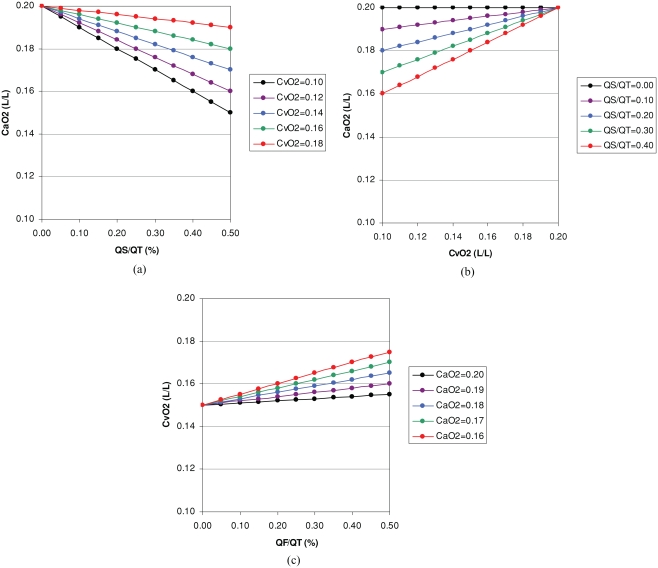
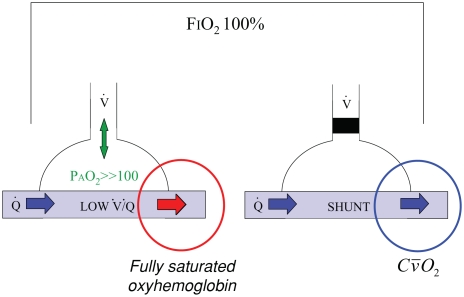
Chronic obstructive and interstitial lung diseases impair pulmonary gas exchange leading to wasted ventilation (alveolar dead space) and wasted perfusion (venous admixture). These two fundamental types of abnormality represent opposite ends of the spectrum of ventilation-perfusion mismatch with V/Q ratios of infinity and zero. Treatment approaches that improve airway function, reduce air trapping and hyperinflation have received much attention and might be successful at ameliorating the problems associated with high V/Q. However, in patients with low V/Q abnormality in whom venous admixture leads to hypoxemia, there are few therapeutic options. Indeed, some patients are refractory to treatment with supplemental oxygen particularly during exercise. Theoretically these patients could benefit from an intervention that increased mixed venous oxygen content thereby ameliorating the deleterious effects of venous admixture. In this perspective article we discuss the mechanisms whereby venous admixture contributes to hypoxemia and reduced oxygen delivery to tissues. We explore methods which could potentially increase mixed venous oxygen content thus ameliorating the deleterious effects of venous admixture. One such intervention that warrants further investigation is the therapeutic creation of an arterio-venous fistula. Such an approach would be novel, simple and minimally invasive. There is reason to believe that complications would be minor leading to a favorable risk-benefit analysis. This approach to treatment could have significant impact for patients with COPD but should also benefit any patient with chronic hypoxemia that impairs exercise performance.
慢性阻塞性和间质性肺疾病会损害肺气体交换,导致无效通气(肺泡死腔)和无效灌注(静脉血掺杂)。这两种基本类型的异常代表了通气-灌注不匹配范围的两端,其V/Q比值分别为无穷大和零。改善气道功能、减少气体潴留和肺过度充气的治疗方法备受关注,可能成功改善与高V/Q相关的问题。然而,对于因静脉血掺杂导致低氧血症的低V/Q异常患者,治疗选择很少。事实上,一些患者对补充氧气治疗无效,尤其是在运动期间。理论上,这些患者可能受益于增加混合静脉血氧含量的干预措施,从而减轻静脉血掺杂的有害影响。在这篇观点文章中,我们讨论静脉血掺杂导致低氧血症和减少组织氧输送的机制。我们探索可能增加混合静脉血氧含量从而减轻静脉血掺杂有害影响的方法。一种值得进一步研究的干预措施是治疗性动静脉造瘘术。这种方法新颖、简单且微创。有理由相信并发症轻微,风险效益分析良好。这种治疗方法可能对慢性阻塞性肺疾病患者产生重大影响,但也应使任何因慢性低氧血症而影响运动能力的患者受益。