Dowswell Therese, Bedwell Carol, Lavender Tina, Neilson James P
Cochrane Pregnancy and Childbirth Group, School of Reproductive and Developmental Medicine, Division of Perinatal and Reproductive Medicine, University of Liverpool , First Floor, Liverpool Women's NHS Foundation Trust, Liverpool, UK, L8 7SS.
Cochrane Database Syst Rev. 2009 Apr 15(2):CD007214. doi: 10.1002/14651858.CD007214.pub2.
Transcutaneous nerve stimulation (TENS) has been proposed as a means of reducing pain in labour. The TENS unit emits low-voltage electrical impulses which vary in frequency and intensity. During labour, TENS electrodes are generally placed on the lower back, although TENS may be used to stimulate acupuncture points or other parts of the body. The physiological mechanisms whereby TENS relieves pain are uncertain. The TENS unit is frequently operated by women, which may increase sense of control in labour.
To assess the effects of TENS on pain in labour.
We searched the Cochrane Pregnancy and Childbirth Group's Trials Register (November 2008).
Randomised controlled trials comparing women receiving TENS for pain relief in labour versus routine care, alternative pharmacological methods of pain relief, or placebo devices. We included all types of TENS machines.
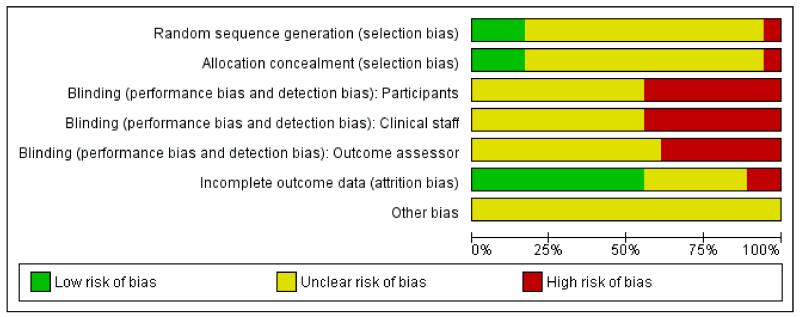
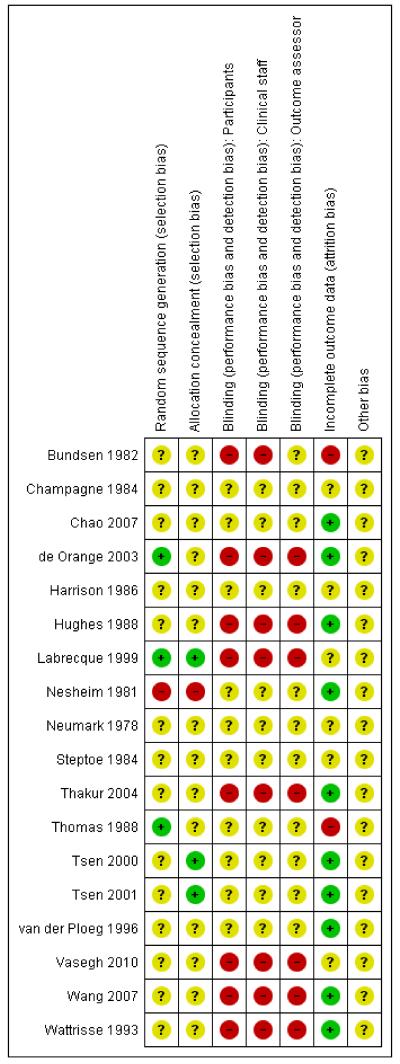
Two review authors assessed for inclusion all trials identified by the search strategy, carried out data extraction and assessed risk of bias. We have recorded reasons for excluding studies.
The search identified 25 studies; we excluded six and included 19 studies including 1671 women. Fifteen examined TENS applied to the back, two to acupuncture points and two to the cranium. Overall, there was little difference in pain ratings between TENS and control groups, although women receiving TENS to acupuncture points were less likely to report severe pain (risk ratio 0.41, 95% confidence interval 0.32 to 0.55). The majority of women using TENS said they would be willing to use it again in a future labour. Where TENS was used as an adjunct to epidural analgesia there was no evidence that it reduced pain. There was no consistent evidence that TENS had any impact on interventions and outcomes in labour. There was little information on outcomes for mothers and babies. No adverse events were reported.
AUTHORS' CONCLUSIONS: There is only limited evidence that TENS reduces pain in labour and it does not seem to have any impact (either positive or negative) on other outcomes for mothers or babies. The use of TENS at home in early labour has not been evaluated. TENS is widely available in hospital settings and women should have the choice of using it in labour.
经皮神经电刺激(TENS)已被提议作为减轻分娩疼痛的一种方法。TENS 装置发出频率和强度各异的低电压电脉冲。在分娩期间,TENS 电极通常置于下背部,不过 TENS 也可用于刺激穴位或身体的其他部位。TENS 缓解疼痛的生理机制尚不确定。TENS 装置通常由产妇操作,这可能会增强她们在分娩过程中的控制感。
评估 TENS 对分娩疼痛的影响。
我们检索了Cochrane妊娠与分娩组试验注册库(2008年11月)。
比较接受 TENS 缓解分娩疼痛的女性与常规护理、其他药物止痛方法或安慰剂装置的随机对照试验。我们纳入了所有类型的 TENS 机器。
两位综述作者评估检索策略所识别的所有试验是否符合纳入标准,进行数据提取并评估偏倚风险。我们记录了排除研究的原因。
检索共识别出25项研究;我们排除了6项,纳入了19项研究,涉及1671名女性。15项研究观察了应用于背部的TENS,2项观察了应用于穴位的TENS,2项观察了应用于颅骨的TENS。总体而言,TENS 组与对照组的疼痛评分差异不大,不过接受穴位TENS治疗的女性报告严重疼痛的可能性较小(风险比0.41,95%置信区间0.32至0.55)。大多数使用TENS的女性表示她们愿意在未来分娩时再次使用。当TENS作为硬膜外镇痛的辅助手段时,没有证据表明它能减轻疼痛。没有一致的证据表明TENS对分娩中的干预措施和结局有任何影响。关于母婴结局的信息很少。未报告不良事件。
仅有有限的证据表明TENS可减轻分娩疼痛,而且它似乎对母亲或婴儿的其他结局没有任何影响(无论是正面还是负面)。在家中分娩早期使用TENS尚未得到评估。TENS在医院环境中广泛可用,女性在分娩时有使用它的选择权。