Simone Eric A, Dziubla Thomas D, Discher Dennis E, Muzykantov Vladimir R
Department of Bioengineering, Institute for Translational Medicine and Therapeutics, and Institute for Environmental Medicine, University of Pennsylvania, Philadelphia, Pennsylvania 19104, USA.
Biomacromolecules. 2009 Jun 8;10(6):1324-30. doi: 10.1021/bm900189x.
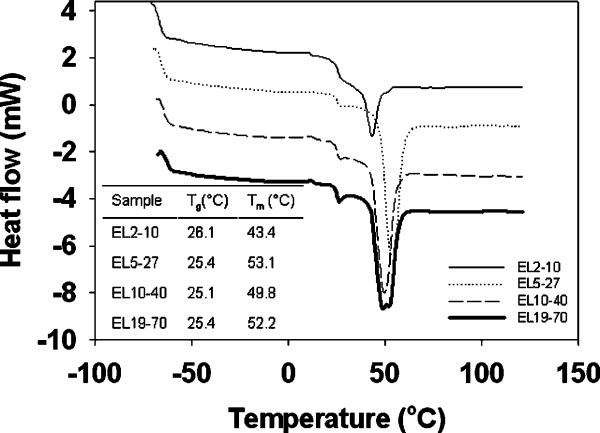
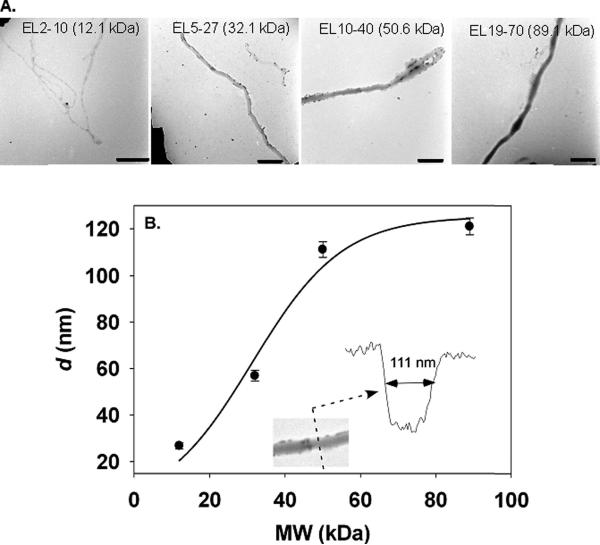
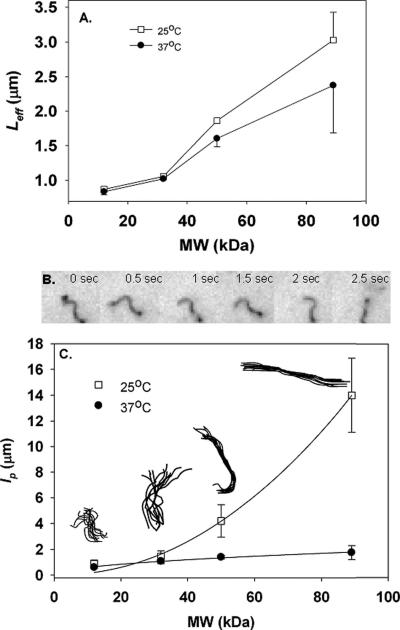
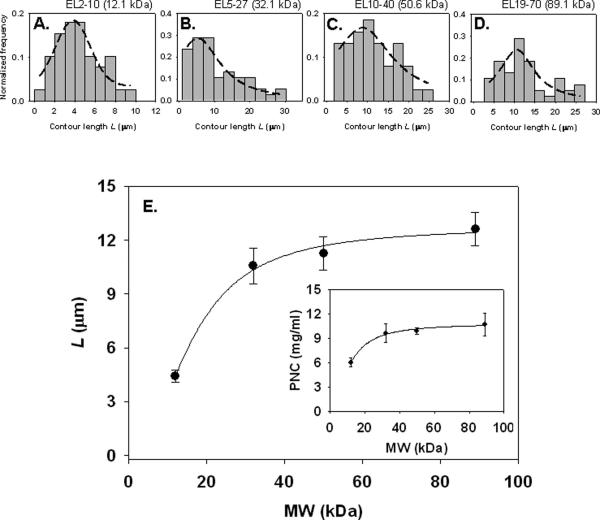
Therapeutic proteins are prone to inactivation by aggregation, proteases and natural inhibitors, motivating development of protective delivery systems. Here we focus on protective encapsulation of the potent antioxidant enzyme, catalase, by filamentous polymer nanocarriers (f-PNC), with the specific goal of addressing whether polymer molecular weight (MW) controls formation and structural properties such as size and stiffness. While maintaining the same MW ratio of polyethylene glycol to polylactic acid, a series of PEG-b-PLA diblock copolymers were synthesized, with total MW ranging from about 10 kg/mol to 100 kg/mol. All diblocks formed f-PNC upon processing, which encapsulated active enzyme that proved resistant to protease degradation. Further, f-PNC stiffness, length, and thickness increased with increasing MW. Interestingly, heating above a polymer's glass transition temperature (<30 degrees C) increased f-PNC flexibility. Thus, we report here for the first time f-PNC that encapsulate an active enzyme with polymer MW-tunable flexibility, offering several potential therapeutic applications.
治疗性蛋白质容易因聚集、蛋白酶和天然抑制剂而失活,这推动了保护性递送系统的发展。在此,我们专注于通过丝状聚合物纳米载体(f-PNC)对强效抗氧化酶过氧化氢酶进行保护性封装,具体目标是研究聚合物分子量(MW)是否控制其形成以及诸如尺寸和刚度等结构特性。在保持聚乙二醇与聚乳酸相同MW比的情况下,合成了一系列总MW范围约为10 kg/mol至100 kg/mol的PEG-b-PLA二嵌段共聚物。所有二嵌段在加工时形成f-PNC,其封装的活性酶对蛋白酶降解具有抗性。此外,f-PNC的刚度、长度和厚度随MW增加而增加。有趣的是,加热至聚合物玻璃化转变温度以上(<30摄氏度)会增加f-PNC的柔韧性。因此,我们首次在此报道了能够封装具有聚合物MW可调柔韧性的活性酶的f-PNC,其具有多种潜在治疗应用。