Shuvaev Vladimir V, Brenner Jacob S, Muzykantov Vladimir R
Department of Systems Pharmacology and Translational Therapeutics, Perelman School of Medicine, University of Pennsylvania, Philadelphia, PA 19104, United States; Center for Translational Targeted Therapeutics and Nanomedicine of the Institute for Translational Medicine and Therapeutics, Perelman School of Medicine, University of Pennsylvania, Philadelphia, PA 19104, United States.
Department of Systems Pharmacology and Translational Therapeutics, Perelman School of Medicine, University of Pennsylvania, Philadelphia, PA 19104, United States; Center for Translational Targeted Therapeutics and Nanomedicine of the Institute for Translational Medicine and Therapeutics, Perelman School of Medicine, University of Pennsylvania, Philadelphia, PA 19104, United States.
J Control Release. 2015 Dec 10;219:576-595. doi: 10.1016/j.jconrel.2015.09.055. Epub 2015 Oct 3.
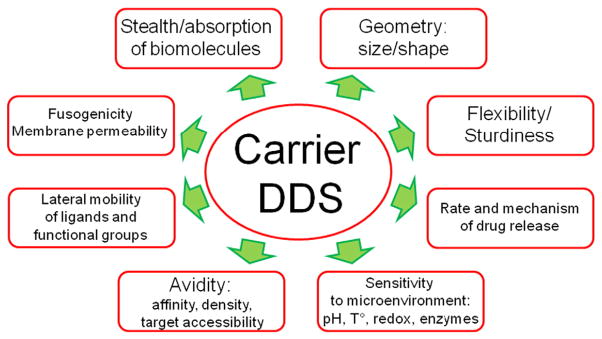
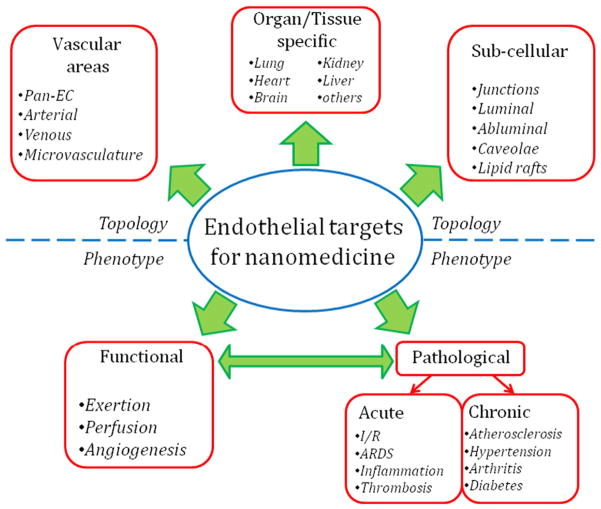
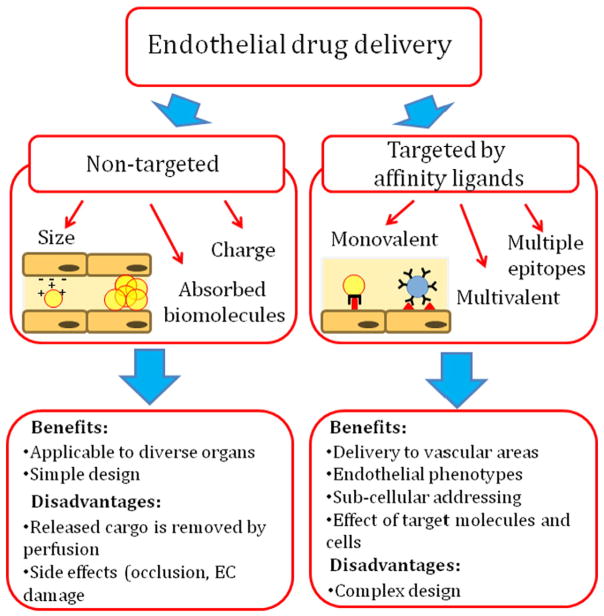
Endothelium, a thin monolayer of specialized cells lining the lumen of blood vessels is the key regulatory interface between blood and tissues. Endothelial abnormalities are implicated in many diseases, including common acute conditions with high morbidity and mortality lacking therapy, in part because drugs and drug carriers have no natural endothelial affinity. Precise endothelial drug delivery may improve management of these conditions. Using ligands of molecules exposed to the bloodstream on the endothelial surface enables design of diverse targeted endothelial nanomedicine agents. Target molecules and binding epitopes must be accessible to drug carriers, carriers must be free of harmful effects, and targeting should provide desirable sub-cellular addressing of the drug cargo. The roster of current candidate target molecules for endothelial nanomedicine includes peptidases and other enzymes, cell adhesion molecules and integrins, localized in different domains of the endothelial plasmalemma and differentially distributed throughout the vasculature. Endowing carriers with an affinity to specific endothelial epitopes enables an unprecedented level of precision of control of drug delivery: binding to selected endothelial cell phenotypes, cellular addressing and duration of therapeutic effects. Features of nanocarrier design such as choice of epitope and ligand control delivery and effect of targeted endothelial nanomedicine agents. Pathological factors modulate endothelial targeting and uptake of nanocarriers. Selection of optimal binding sites and design features of nanocarriers are key controllable factors that can be iteratively engineered based on their performance from in vitro to pre-clinical in vivo experimental models. Targeted endothelial nanomedicine agents provide antioxidant, anti-inflammatory and other therapeutic effects unattainable by non-targeted counterparts in animal models of common acute severe human disease conditions. The results of animal studies provide the basis for the challenging translation endothelial nanomedicine into the clinical domain.
内皮是一层薄薄的特殊细胞,排列在血管腔内,是血液与组织之间的关键调节界面。内皮异常与许多疾病有关,包括发病率和死亡率高且缺乏治疗方法的常见急性病症,部分原因是药物和药物载体对内皮没有天然亲和力。精确的内皮药物递送可能会改善这些病症的治疗。利用在内皮表面暴露于血流的分子的配体,可以设计出多种靶向内皮的纳米药物制剂。药物载体必须能够接触到靶分子和结合表位,载体必须无有害影响,并且靶向应能实现药物货物理想的亚细胞定位。目前用于内皮纳米药物的候选靶分子包括肽酶和其他酶、细胞粘附分子和整合素,它们位于内皮细胞质膜的不同区域,在整个脉管系统中分布不同。赋予载体对特定内皮表位的亲和力,可以实现前所未有的药物递送控制精度:与选定的内皮细胞表型结合、细胞定位以及治疗效果的持续时间。纳米载体设计的特征,如表位的选择和配体,控制着靶向内皮纳米药物制剂的递送和效果。病理因素会调节纳米载体的内皮靶向和摄取。选择最佳结合位点和纳米载体的设计特征是关键的可控因素,可以根据它们在体外到临床前体内实验模型中的性能进行迭代设计。在常见急性重症人类疾病的动物模型中,靶向内皮纳米药物制剂具有非靶向对应物无法实现的抗氧化、抗炎和其他治疗效果。动物研究结果为将内皮纳米药物极具挑战性地转化到临床领域提供了基础。