Zahoor Zahida, Davies Angela J, Kirk Ruth S, Rollinson David, Walker Anthony J
School of Life Sciences, Kingston University, Penrhyn Road, Kingston upon Thames, Surrey, KT1 2EE, UK.
Parasit Vectors. 2009 Apr 22;2(1):18. doi: 10.1186/1756-3305-2-18.
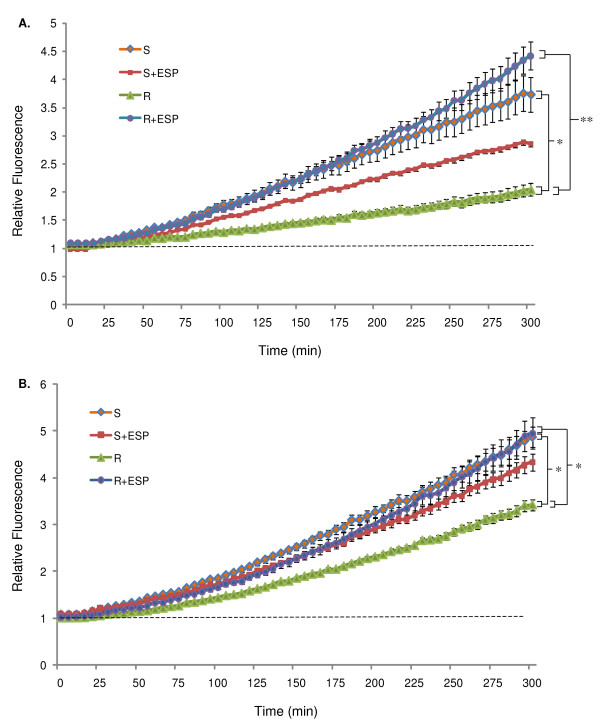
Schistosoma mansoni uses Biomphalaria glabrata as an intermediate host during its complex life cycle. In the snail, the parasite initially transforms from a miracidium into a mother sporocyst and during this process excretory-secretory products (ESPs) are released. Nitric oxide (NO) and its reactive intermediates play an important role in host defence responses against pathogens. This study therefore aimed to determine the effects of S. mansoni ESPs on NO production in defence cells (haemocytes) from schistosome-susceptible and schistosome-resistant B. glabrata strains. As S. mansoni ESPs have previously been shown to inhibit extracellular signal-regulated kinase (ERK) phosphorylation (activation) in haemocytes from susceptible, but not resistant, B. glabrata the regulation of NO output by ERK in these cells was also investigated.
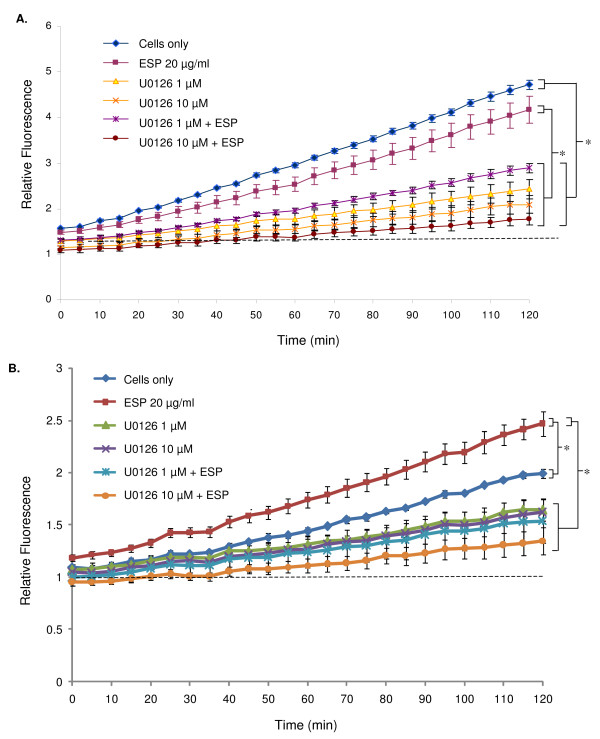
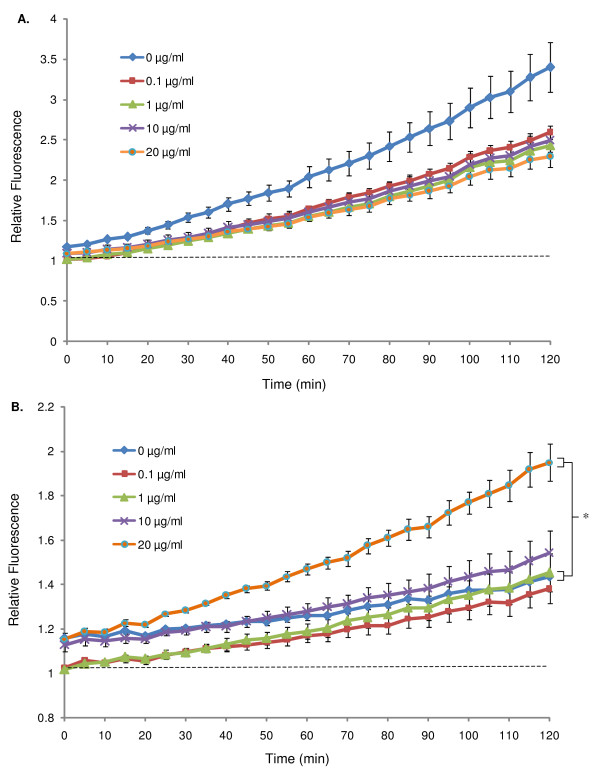
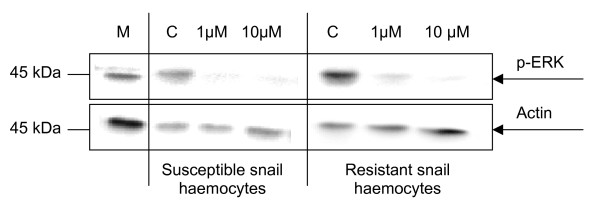
Haemocytes from resistant snails challenged with S. mansoni ESPs (20 mug/ml) over 5 h displayed an increase in NO production that was 3.3 times greater than that observed for unchallenged haemocytes; lower concentrations of ESPs (0.1-10 mug/ml) did not significantly increase NO output. In contrast, haemocytes from susceptible snails showed no significant change in NO output following challenge with ESPs at any concentration used (0.1-20 mug/ml). Western blotting revealed that U0126 (1 muM or 10 muM) blocked the phosphorylation (activation) status of ERK in haemocytes from both snail strains. Inhibition of ERK signalling by U0126 attenuated considerably intracellular NO production in haemocytes from both susceptible and resistant B. glabrata strains, identifying ERK as a key regulator of NO output in these cells.
S. mansoni ESPs differentially influence intracellular NO levels in susceptible and resistant B. glabrata haemocytes, possibly through modulation of the ERK signalling pathway. Such effects might facilitate survival of S. mansoni in its intermediate host.
曼氏血吸虫在其复杂的生命周期中利用光滑双脐螺作为中间宿主。在蜗牛体内,寄生虫最初从毛蚴转变为母胞蚴,在此过程中会释放排泄 - 分泌产物(ESPs)。一氧化氮(NO)及其反应性中间体在宿主对抗病原体的防御反应中起重要作用。因此,本研究旨在确定曼氏血吸虫ESPs对来自易感和抗血吸虫的光滑双脐螺品系的防御细胞(血细胞)中NO产生的影响。由于先前已表明曼氏血吸虫ESPs可抑制易感但非抗性光滑双脐螺血细胞中的细胞外信号调节激酶(ERK)磷酸化(激活),因此还研究了ERK对这些细胞中NO输出的调节作用。
用曼氏血吸虫ESPs(20微克/毫升)处理5小时的抗性蜗牛血细胞显示NO产生增加,比未处理的血细胞高出3.3倍;较低浓度的ESPs(0.1 - 10微克/毫升)未显著增加NO输出。相比之下,用任何浓度(0.1 - 20微克/毫升)的ESPs处理后,易感蜗牛的血细胞中NO输出均无显著变化。蛋白质印迹分析表明,U0126(1微摩尔或10微摩尔)可阻断两种蜗牛品系血细胞中ERK的磷酸化(激活)状态。U0126对ERK信号的抑制显著减弱了易感和抗性光滑双脐螺品系血细胞中的细胞内NO产生,表明ERK是这些细胞中NO输出的关键调节因子。
曼氏血吸虫ESPs对易感和抗性光滑双脐螺血细胞中的细胞内NO水平有不同影响,可能是通过调节ERK信号通路实现的。这种影响可能有助于曼氏血吸虫在其中间宿主中的存活。