• 文献检索
  • 文档翻译
  • 深度研究
  • 学术资讯
  • Suppr Zotero 插件Zotero 插件
  • 邀请有礼
  • 套餐&价格
  • 历史记录
应用&插件
Suppr Zotero 插件Zotero 插件浏览器插件Mac 客户端Windows 客户端微信小程序
定价
高级版会员购买积分包购买API积分包
服务
文献检索文档翻译深度研究API 文档MCP 服务
关于我们
关于 Suppr公司介绍联系我们用户协议隐私条款
关注我们

Suppr 超能文献

核心技术专利:CN118964589B侵权必究
粤ICP备2023148730 号-1Suppr @ 2026

文献检索

告别复杂PubMed语法,用中文像聊天一样搜索,搜遍4000万医学文献。AI智能推荐,让科研检索更轻松。

立即免费搜索

文件翻译

保留排版,准确专业,支持PDF/Word/PPT等文件格式,支持 12+语言互译。

免费翻译文档

深度研究

AI帮你快速写综述,25分钟生成高质量综述,智能提取关键信息,辅助科研写作。

立即免费体验

纳米脂质阻滞剂与人类巨噬细胞清道夫受体A致动脉粥样化结构域的构效关系

Structure-activity relations of nanolipoblockers with the atherogenic domain of human macrophage scavenger receptor A.

作者信息

Plourde Nicole M, Kortagere Sandhya, Welsh William, Moghe Prabhas V

机构信息

Departments of Chemical and Biochemical Engineering and Biomedical Engineering, Rutgers University, Piscataway, New Jersey 08854, USA.

出版信息

Biomacromolecules. 2009 Jun 8;10(6):1381-91. doi: 10.1021/bm8014522.

DOI:10.1021/bm8014522
PMID:19405544
原文链接:https://pmc.ncbi.nlm.nih.gov/articles/PMC2716033/
Abstract

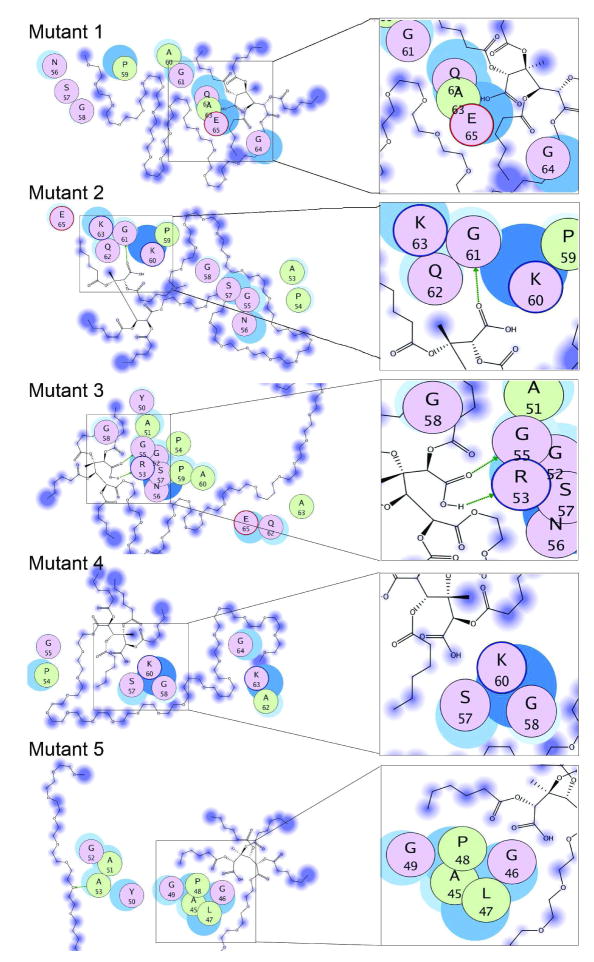
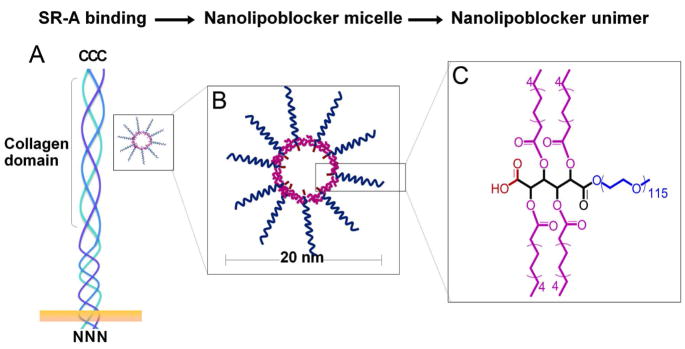
Oxidized low density lipoprotein (oxLDL) uptake by macrophages is mediated by scavenger receptors and leads to unregulated cholesterol accumulation. Micellar nanolipoblockers (NLBs) consist of alkyl chains and polyethylene glycol on mucic acid. NLBs functionalized with anionic groups inhibit oxLDL uptake via the scavenger receptor A (SR-A). Molecular modeling and docking approaches were used to understand the structure-activity relationship (SAR) between NLBs and SR-A. Six NLB models were docked to the SR-A homology model to investigate charge placement and clustering. NLB models with the most favorable binding energy were also the most effective oxLDL inhibitors in THP-1 macrophages. Mutant SR-A models were generated by replacing charged residues with alanine. All charged residues in the region were necessary, with Lys60, Lys63, and Lys66 having the greatest effect on binding. We hypothesize that structural studies aided by theoretical modeling and docking can be used to design promising NLB candidates with optimal binding properties.

摘要

巨噬细胞对氧化型低密度脂蛋白(oxLDL)的摄取由清道夫受体介导,并导致胆固醇不受调控地积累。胶束纳米脂质阻滞剂(NLBs)由烷基链和粘酸上的聚乙二醇组成。用阴离子基团功能化的NLBs通过清道夫受体A(SR-A)抑制oxLDL的摄取。采用分子建模和对接方法来理解NLBs与SR-A之间的构效关系(SAR)。将六个NLB模型与SR-A同源模型对接,以研究电荷分布和聚集情况。结合能最有利的NLB模型也是THP-1巨噬细胞中最有效的oxLDL抑制剂。通过用丙氨酸取代带电残基生成了突变型SR-A模型。该区域中的所有带电残基都是必需的,其中Lys60、Lys63和Lys66对结合的影响最大。我们推测,借助理论建模和对接的结构研究可用于设计具有最佳结合特性的有前景的NLB候选物。
https://cdn.ncbi.nlm.nih.gov/pmc/blobs/3501/2716033/b9896d8f8adb/nihms114777f10.jpg
https://cdn.ncbi.nlm.nih.gov/pmc/blobs/3501/2716033/0d8dbee9cfb5/nihms114777f1.jpg
https://cdn.ncbi.nlm.nih.gov/pmc/blobs/3501/2716033/cb5aeed496fa/nihms114777f2.jpg
https://cdn.ncbi.nlm.nih.gov/pmc/blobs/3501/2716033/ce0b5f82878c/nihms114777f3a.jpg
https://cdn.ncbi.nlm.nih.gov/pmc/blobs/3501/2716033/7ac2c08e8f29/nihms114777f4.jpg
https://cdn.ncbi.nlm.nih.gov/pmc/blobs/3501/2716033/a1da4b65054c/nihms114777f5.jpg
https://cdn.ncbi.nlm.nih.gov/pmc/blobs/3501/2716033/03cf9acec491/nihms114777f6.jpg
https://cdn.ncbi.nlm.nih.gov/pmc/blobs/3501/2716033/f4fb712e34f4/nihms114777f7.jpg
https://cdn.ncbi.nlm.nih.gov/pmc/blobs/3501/2716033/855c1faf3ac5/nihms114777f8.jpg
https://cdn.ncbi.nlm.nih.gov/pmc/blobs/3501/2716033/9baf1fe86921/nihms114777f9.jpg
https://cdn.ncbi.nlm.nih.gov/pmc/blobs/3501/2716033/b9896d8f8adb/nihms114777f10.jpg
https://cdn.ncbi.nlm.nih.gov/pmc/blobs/3501/2716033/0d8dbee9cfb5/nihms114777f1.jpg
https://cdn.ncbi.nlm.nih.gov/pmc/blobs/3501/2716033/cb5aeed496fa/nihms114777f2.jpg
https://cdn.ncbi.nlm.nih.gov/pmc/blobs/3501/2716033/ce0b5f82878c/nihms114777f3a.jpg
https://cdn.ncbi.nlm.nih.gov/pmc/blobs/3501/2716033/7ac2c08e8f29/nihms114777f4.jpg
https://cdn.ncbi.nlm.nih.gov/pmc/blobs/3501/2716033/a1da4b65054c/nihms114777f5.jpg
https://cdn.ncbi.nlm.nih.gov/pmc/blobs/3501/2716033/03cf9acec491/nihms114777f6.jpg
https://cdn.ncbi.nlm.nih.gov/pmc/blobs/3501/2716033/f4fb712e34f4/nihms114777f7.jpg
https://cdn.ncbi.nlm.nih.gov/pmc/blobs/3501/2716033/855c1faf3ac5/nihms114777f8.jpg
https://cdn.ncbi.nlm.nih.gov/pmc/blobs/3501/2716033/9baf1fe86921/nihms114777f9.jpg
https://cdn.ncbi.nlm.nih.gov/pmc/blobs/3501/2716033/b9896d8f8adb/nihms114777f10.jpg

相似文献

1
Structure-activity relations of nanolipoblockers with the atherogenic domain of human macrophage scavenger receptor A.纳米脂质阻滞剂与人类巨噬细胞清道夫受体A致动脉粥样化结构域的构效关系
Biomacromolecules. 2009 Jun 8;10(6):1381-91. doi: 10.1021/bm8014522.
2
Coarse grained molecular dynamics of engineered macromolecules for the inhibition of oxidized low-density lipoprotein uptake by macrophage scavenger receptors.工程化大分子的粗粒分子动力学研究用于抑制巨噬细胞清道夫受体摄取氧化型低密度脂蛋白。
Biomacromolecules. 2013 Aug 12;14(8):2499-509. doi: 10.1021/bm301764x. Epub 2013 Jul 3.
3
OTUB1 facilitates lipid accumulation in oxLDL-induced THP-1 macrophages by stabilizing scavenger receptor-A.OTUB1通过稳定清道夫受体A促进氧化型低密度脂蛋白诱导的THP-1巨噬细胞中的脂质积累。
IUBMB Life. 2025 Mar;77(3):e70012. doi: 10.1002/iub.70012.
4
Carbohydrate composition of amphiphilic macromolecules influences physicochemical properties and binding to atherogenic scavenger receptor A.两亲性大分子的碳水化合物组成影响其理化性质和与动脉粥样硬化性清道夫受体 A 的结合。
Acta Biomater. 2012 Nov;8(11):3956-62. doi: 10.1016/j.actbio.2012.07.022. Epub 2012 Jul 24.
5
Dual use of amphiphilic macromolecules as cholesterol efflux triggers and inhibitors of macrophage athero-inflammation.两亲性大分子作为胆固醇流出触发因子和巨噬细胞动脉粥样炎症抑制剂的双重用途。
Biomaterials. 2011 Nov;32(32):8319-27. doi: 10.1016/j.biomaterials.2011.07.039. Epub 2011 Aug 3.
6
Effect of overexpression of human SR-AI on oxLDL uptake and apoptosis in 293T cells.人源清道夫受体 AI 过表达对 293T 细胞摄取 oxLDL 和凋亡的影响。
Int Immunopharmacol. 2011 Nov;11(11):1752-7. doi: 10.1016/j.intimp.2011.07.001. Epub 2011 Jul 21.
7
Design and validation of a specific scavenger receptor class AI binding peptide for targeting the inflammatory atherosclerotic plaque.设计并验证一种针对炎症性动脉粥样硬化斑块的特异性清道夫受体 AI 结合肽,用于靶向治疗。
Arterioscler Thromb Vasc Biol. 2012 Apr;32(4):971-8. doi: 10.1161/ATVBAHA.111.235358. Epub 2012 Jan 26.
8
Tanshinone IIA attenuates atherosclerosis in ApoE(-/-) mice through down-regulation of scavenger receptor expression.丹参酮 IIA 通过下调清道夫受体表达抑制载脂蛋白 E 基因敲除小鼠动脉粥样硬化。
Eur J Pharmacol. 2011 Jan 10;650(1):275-84. doi: 10.1016/j.ejphar.2010.07.038. Epub 2010 Sep 17.
9
PKCδ signalling regulates SR-A and CD36 expression and foam cell formation.PKCδ 信号转导调节清道夫受体 A 和 CD36 的表达及泡沫细胞的形成。
Cardiovasc Res. 2012 Aug 1;95(3):346-55. doi: 10.1093/cvr/cvs189. Epub 2012 Jun 11.
10
Direct recognition of superparamagnetic nanocrystals by macrophage scavenger receptor SR-AI.巨噬细胞清道夫受体 SR-AI 对超顺磁纳米晶体的直接识别。
ACS Nano. 2013 May 28;7(5):4289-98. doi: 10.1021/nn400769e. Epub 2013 Apr 30.

引用本文的文献

1
Nanotechnology for microglial targeting and inhibition of neuroinflammation underlying Alzheimer's pathology.用于针对小胶质细胞和抑制阿尔茨海默病病理学中神经炎症的纳米技术。
Transl Neurodegener. 2024 Jan 4;13(1):2. doi: 10.1186/s40035-023-00393-7.
2
Recent advance in treatment of atherosclerosis: Key targets and plaque-positioned delivery strategies.动脉粥样硬化治疗的最新进展:关键靶点与斑块定位递送策略。
J Tissue Eng. 2022 Mar 24;13:20417314221088509. doi: 10.1177/20417314221088509. eCollection 2022 Jan-Dec.
3
The Multifaceted Uses and Therapeutic Advantages of Nanoparticles for Atherosclerosis Research.

本文引用的文献

1
All-atom empirical potential for molecular modeling and dynamics studies of proteins.蛋白质分子建模和动力学研究的全原子经验势。
J Phys Chem B. 1998 Apr 30;102(18):3586-616. doi: 10.1021/jp973084f.
2
Nanoscale amphiphilic macromolecules as lipoprotein inhibitors: the role of charge and architecture.纳米级两亲性大分子作为脂蛋白抑制剂:电荷与结构的作用
Int J Nanomedicine. 2007;2(4):697-705.
3
Engineered polymeric nanoparticles for receptor-targeted blockage of oxidized low density lipoprotein uptake and atherogenesis in macrophages.
纳米颗粒在动脉粥样硬化研究中的多方面用途及治疗优势
Materials (Basel). 2018 May 8;11(5):754. doi: 10.3390/ma11050754.
4
Polymer brain-nanotherapeutics for multipronged inhibition of microglial α-synuclein aggregation, activation, and neurotoxicity.用于多靶点抑制小胶质细胞α-突触核蛋白聚集、激活和神经毒性的聚合物脑纳米疗法。
Biomaterials. 2016 Dec;111:179-189. doi: 10.1016/j.biomaterials.2016.10.001. Epub 2016 Oct 4.
5
Amphiphilic macromolecule nanoassemblies suppress smooth muscle cell proliferation and platelet adhesion.两亲性大分子纳米组装体抑制平滑肌细胞增殖和血小板黏附。
Biomaterials. 2016 Apr;84:219-229. doi: 10.1016/j.biomaterials.2015.12.033. Epub 2016 Jan 4.
6
Nanotherapeutics for inhibition of atherogenesis and modulation of inflammation in atherosclerotic plaques.用于抑制动脉粥样硬化形成和调节动脉粥样硬化斑块炎症的纳米疗法。
Cardiovasc Res. 2016 Feb 1;109(2):283-93. doi: 10.1093/cvr/cvv237. Epub 2015 Oct 14.
7
Designing polymers with sugar-based advantages for bioactive delivery applications.设计具有糖基优势的聚合物用于生物活性递送应用。
J Control Release. 2015 Dec 10;219:355-368. doi: 10.1016/j.jconrel.2015.09.053. Epub 2015 Sep 28.
8
Tartaric acid-based amphiphilic macromolecules with ether linkages exhibit enhanced repression of oxidized low density lipoprotein uptake.具有醚键的基于酒石酸的两亲性大分子对氧化型低密度脂蛋白摄取的抑制作用增强。
Biomaterials. 2015 Jun;53:32-9. doi: 10.1016/j.biomaterials.2015.02.038. Epub 2015 Mar 7.
9
Sugar-based amphiphilic nanoparticles arrest atherosclerosis in vivo.基于糖的两亲性纳米颗粒在体内抑制动脉粥样硬化。
Proc Natl Acad Sci U S A. 2015 Mar 3;112(9):2693-8. doi: 10.1073/pnas.1424594112. Epub 2015 Feb 17.
10
Impact of hydrophobic chain composition on amphiphilic macromolecule antiatherogenic bioactivity.疏水链组成对两亲性大分子抗动脉粥样硬化生物活性的影响。
Biomacromolecules. 2014 Sep 8;15(9):3328-37. doi: 10.1021/bm500809f. Epub 2014 Aug 6.
工程化聚合物纳米颗粒用于受体靶向阻断巨噬细胞中氧化低密度脂蛋白的摄取及动脉粥样硬化的发生。
Biomacromolecules. 2006 Jun;7(6):1796-805. doi: 10.1021/bm0600872.
4
Microfibrillar structure of type I collagen in situ.原位I型胶原蛋白的微纤维结构。
Proc Natl Acad Sci U S A. 2006 Jun 13;103(24):9001-5. doi: 10.1073/pnas.0502718103. Epub 2006 Jun 2.
5
Nanoscale anionic macromolecules can inhibit cellular uptake of differentially oxidized LDL.纳米级阴离子大分子可抑制细胞对不同氧化程度的低密度脂蛋白的摄取。
Biomacromolecules. 2006 Feb;7(2):597-603. doi: 10.1021/bm0506905.
6
The Amber biomolecular simulation programs.琥珀生物分子模拟程序。
J Comput Chem. 2005 Dec;26(16):1668-88. doi: 10.1002/jcc.20290.
7
Control of scavenger receptor-mediated endocytosis by novel ligands of different length.不同长度新型配体对清道夫受体介导的内吞作用的调控
Mol Cell Biochem. 2005 Mar;271(1-2):123-32. doi: 10.1007/s11010-005-5756-3.
8
Phosphocholine as a pattern recognition ligand for CD36.磷酸胆碱作为CD36的模式识别配体。
J Lipid Res. 2005 May;46(5):969-76. doi: 10.1194/jlr.M400496-JLR200. Epub 2005 Feb 1.
9
Cell targeting by a generic receptor-targeted polymer nanocontainer platform.通过通用的受体靶向聚合物纳米容器平台进行细胞靶向
J Control Release. 2005 Feb 2;102(2):475-88. doi: 10.1016/j.jconrel.2004.10.014.
10
Nanoscale anionic macromolecules for selective retention of low-density lipoproteins.用于选择性保留低密度脂蛋白的纳米级阴离子大分子。
Biomaterials. 2005 Jun;26(17):3749-58. doi: 10.1016/j.biomaterials.2004.09.038.