Department of Chemistry and Chemical Biology, Rutgers University, Piscataway, NJ 08854, USA.
Acta Biomater. 2012 Nov;8(11):3956-62. doi: 10.1016/j.actbio.2012.07.022. Epub 2012 Jul 24.
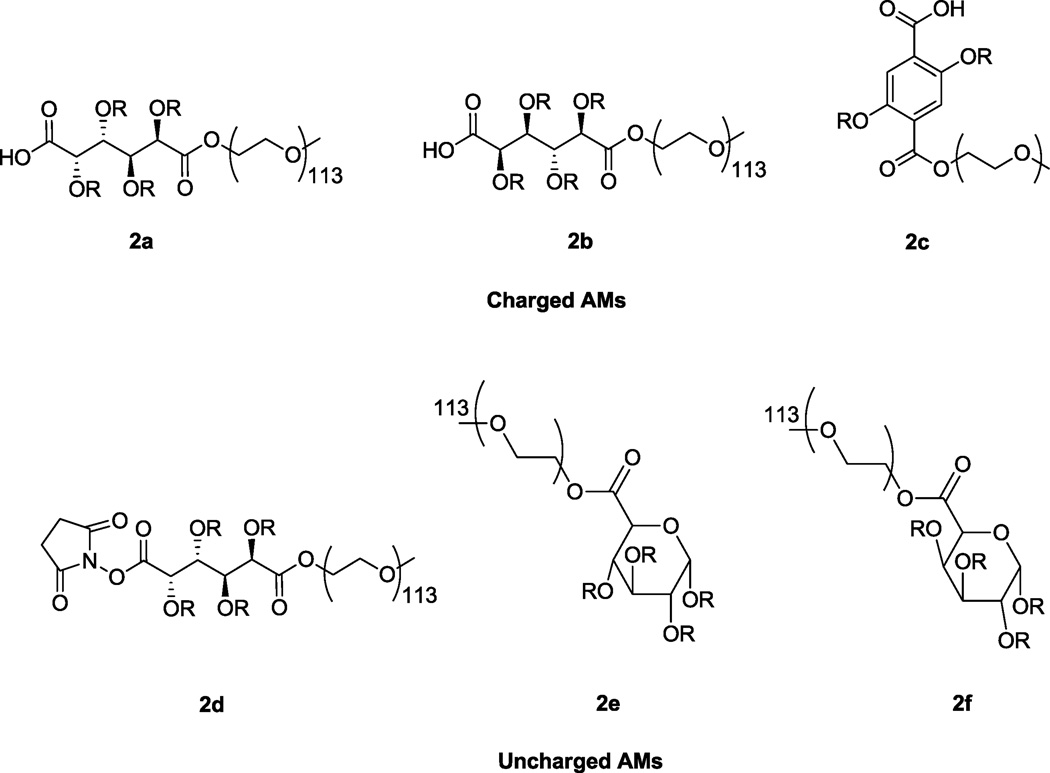
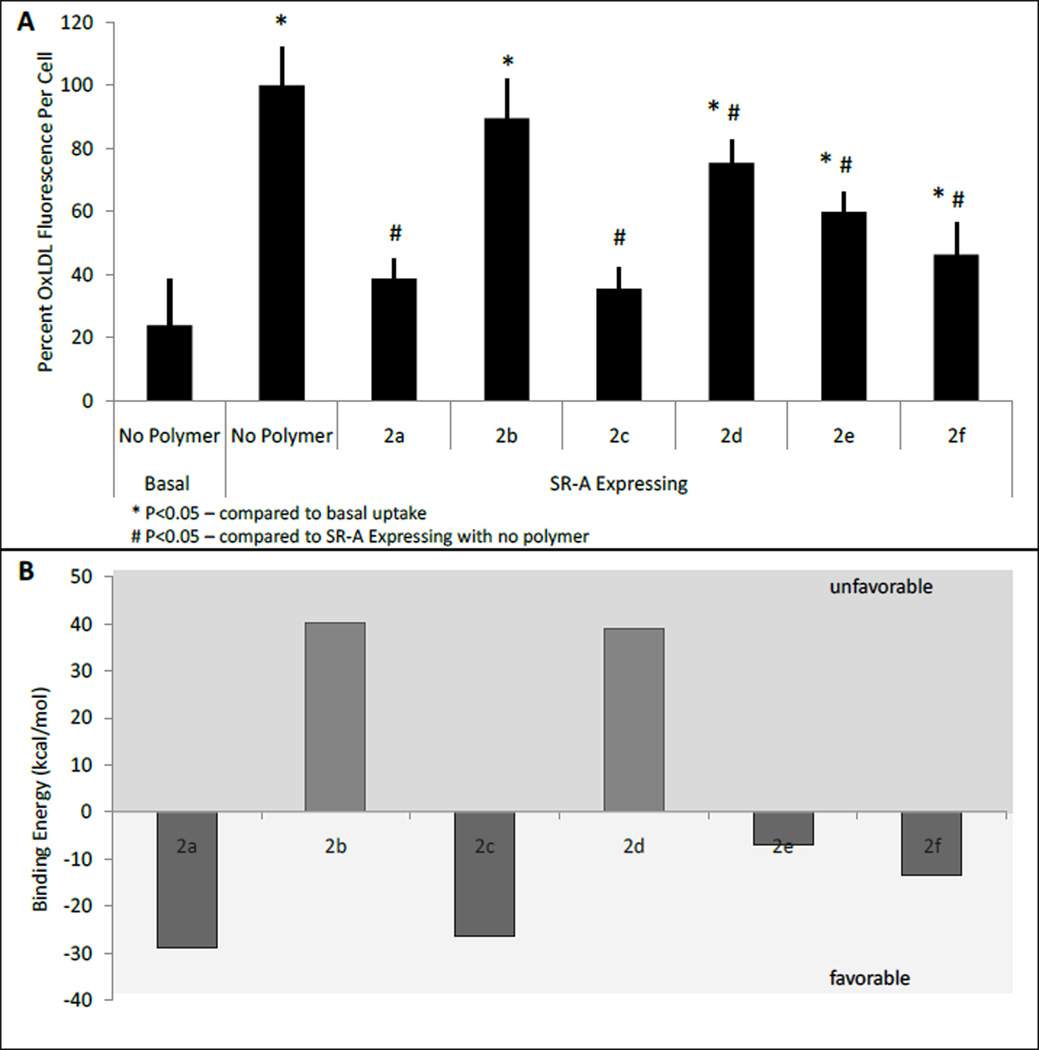
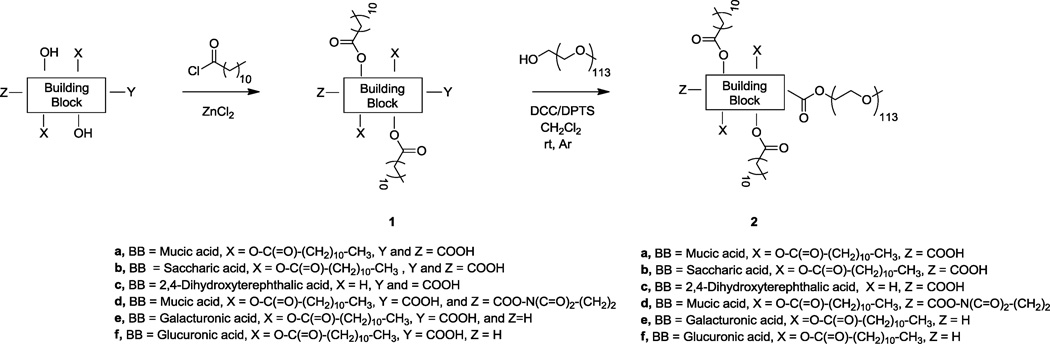
Amphiphilic macromolecules (AMs) based on carbohydrate domains functionalized with poly(ethylene glycol) can inhibit the uptake of oxidized low density lipoprotein (oxLDL) mediated by scavenger receptor A (SR-A) and counteract foam cell formation, the characteristic "atherosclerotic" phenotype. A series of AMs was prepared by altering the carbohydrate chemistry to evaluate the influence of backbone architecture on the physicochemical and biological properties. Upon evaluating the degree of polymer-based inhibition of oxLDL uptake in human embryonic kidney cells expressing SR-A, two AMs (2a and 2c) were found to have the most efficacy. Molecular modeling and docking studies show that these same AMs have the most favorable binding energies and most close interactions with the molecular model of the SR-A collagen-like domain. Thus, minor changes in the AMs' architecture can significantly affect the physicochemical properties and inhibition of oxLDL uptake. These insights can be critical for designing optimal AM-based therapeutics for the management of cardiovascular disease.
基于糖基化的两亲性大分子(AMs)通过聚乙二醇(PEG)功能化,可以抑制清道夫受体 A(SR-A)介导的氧化型低密度脂蛋白(oxLDL)摄取,从而阻止泡沫细胞的形成,这是动脉粥样硬化的特征性表型。通过改变糖化学结构,我们制备了一系列 AMs,以评估主链结构对其理化和生物学性质的影响。在评估表达 SR-A 的人胚肾细胞中聚合物对 oxLDL 摄取的抑制程度时,发现两种 AM(2a 和 2c)具有最高的功效。分子建模和对接研究表明,这两种 AM 与 SR-A 胶原样结构域的分子模型具有最有利的结合能和最紧密的相互作用。因此,AM 结构的微小变化可显著影响其理化性质和 oxLDL 摄取的抑制效果。这些见解对于设计基于 AM 的治疗心血管疾病的最佳治疗方法至关重要。