Xu Jun, Pang Zhiping P, Shin Ok-Ho, Südhof Thomas C
Department of Molecular & Cellular Physiology, Stanford University, Palo Alto, California, USA.
Nat Neurosci. 2009 Jun;12(6):759-66. doi: 10.1038/nn.2320.
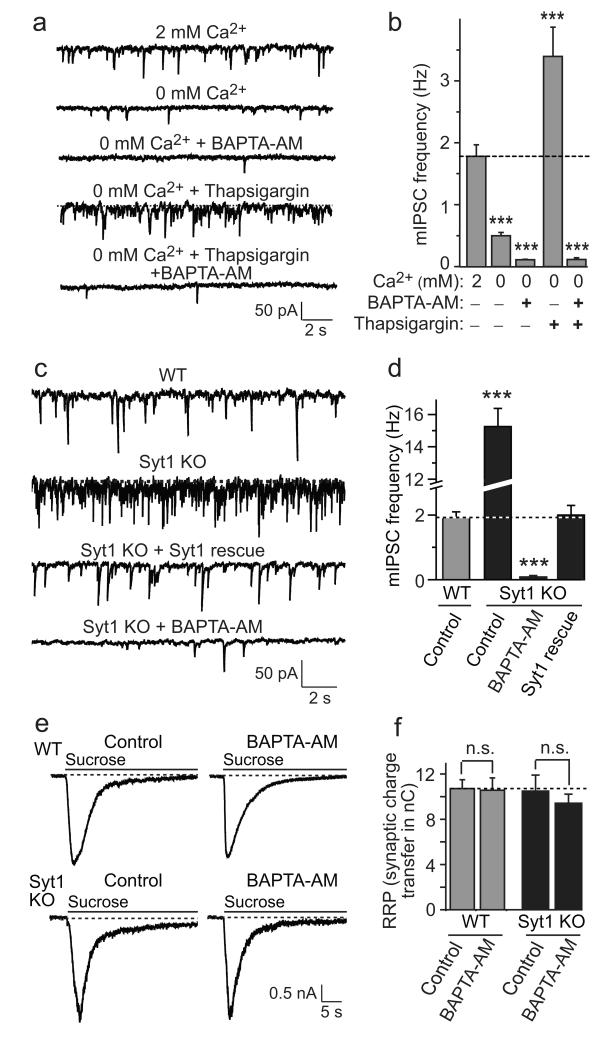
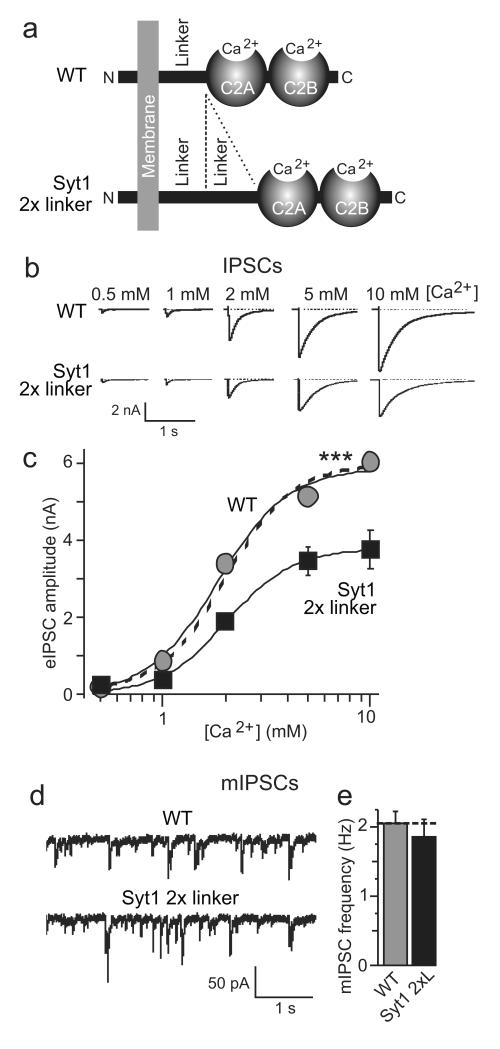
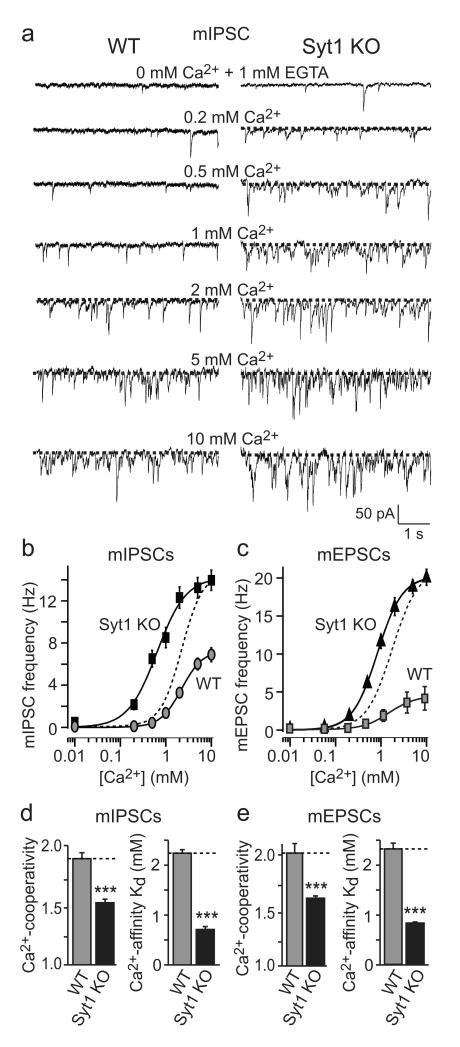
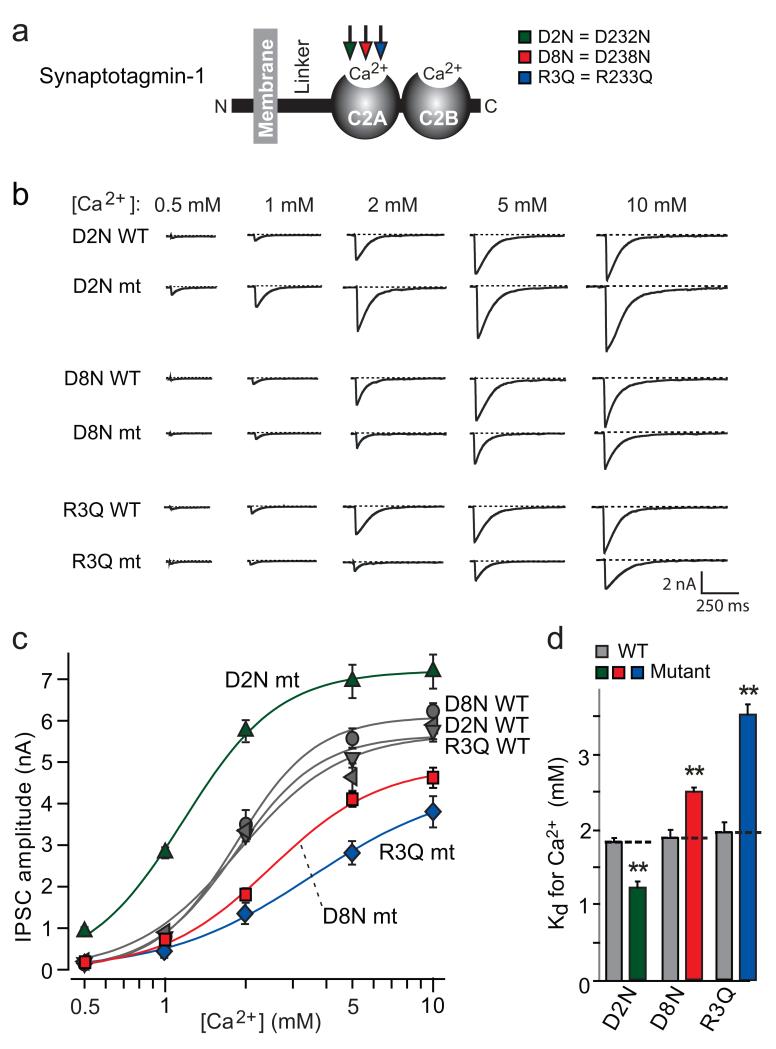
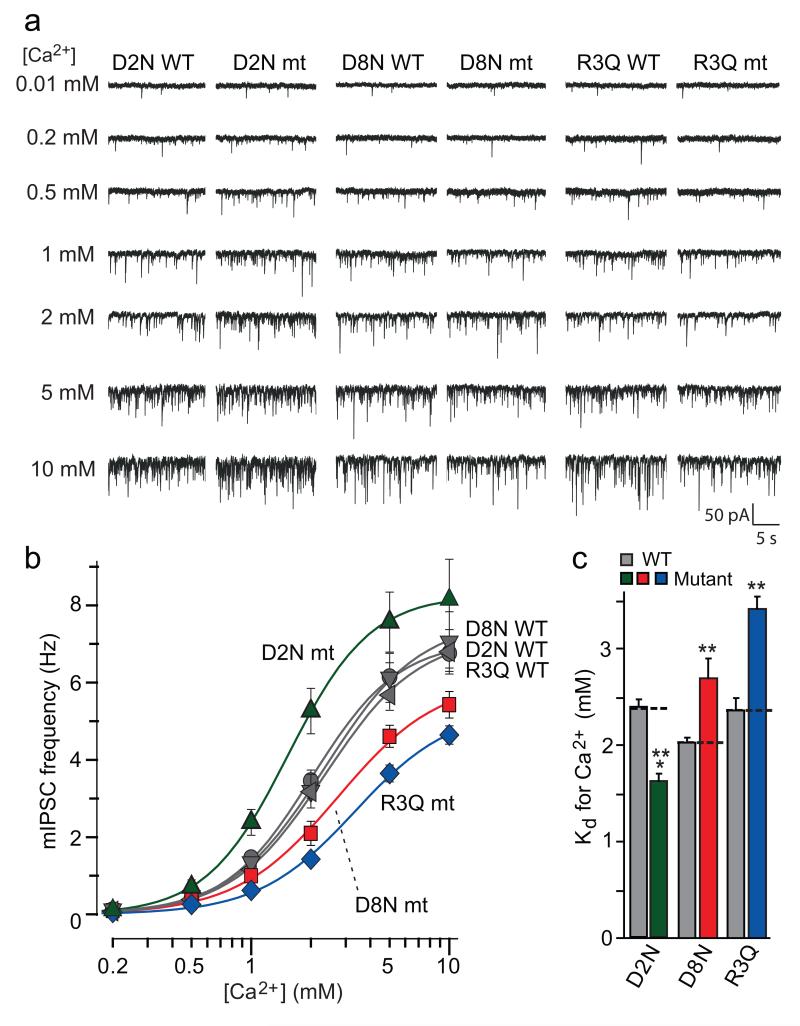
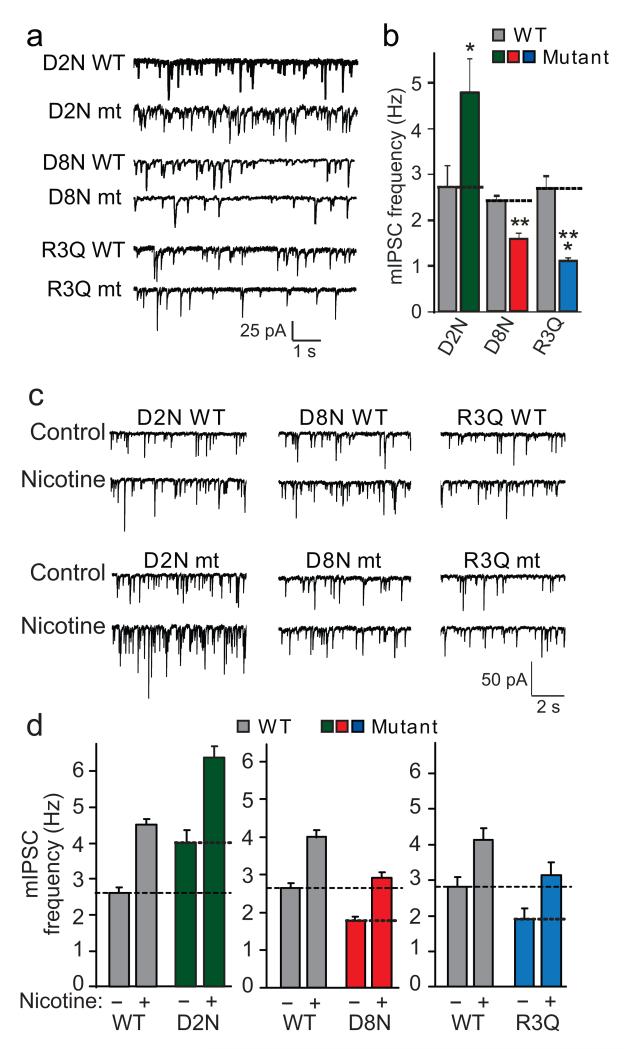
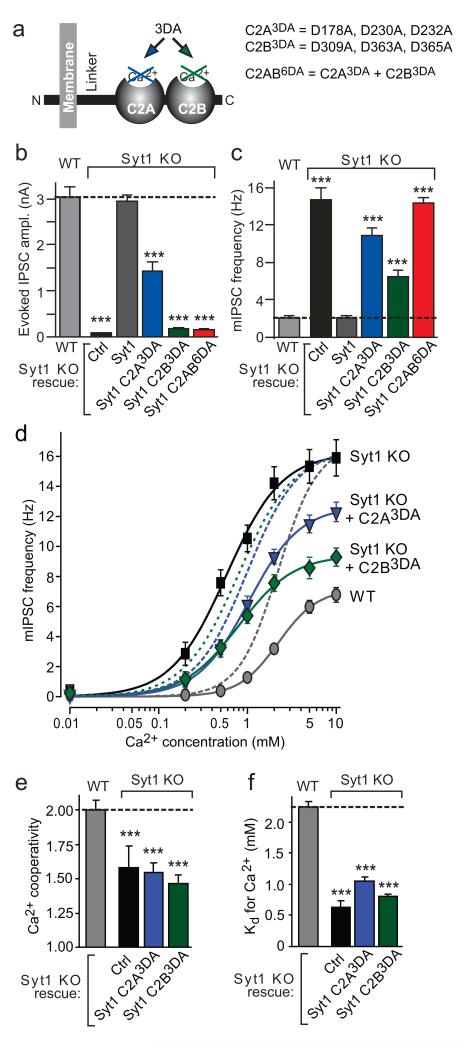
Spontaneous 'mini' release occurs at all synapses, but its nature remains enigmatic. We found that >95% of spontaneous release in murine cortical neurons was induced by Ca2+-binding to synaptotagmin-1 (Syt1), the Ca2+ sensor for fast synchronous neurotransmitter release. Thus, spontaneous and evoked release used the same Ca2+-dependent release mechanism. As a consequence, Syt1 mutations that altered its Ca2+ affinity altered spontaneous and evoked release correspondingly. Paradoxically, Syt1 deletions (as opposed to point mutations) massively increased spontaneous release. This increased spontaneous release remained Ca2+ dependent but was activated at lower Ca2+ concentrations and with a lower Ca2+ cooperativity than synaptotagmin-driven spontaneous release. Thus, in addition to serving as a Ca2+ sensor for spontaneous and evoked release, Syt1 clamped a second, more sensitive Ca2+ sensor for spontaneous release that resembles the Ca2+ sensor for evoked asynchronous release. These data suggest that Syt1 controls both evoked and spontaneous release at a synapse as a simultaneous Ca2+-dependent activator and clamp of exocytosis.
自发性“微小”释放发生在所有突触,但它的本质仍然是个谜。我们发现,小鼠皮层神经元中>95%的自发性释放是由Ca2+与突触结合蛋白-1(Syt1)结合诱导的,Syt1是快速同步神经递质释放的Ca2+传感器。因此,自发性释放和诱发释放使用相同的Ca2+依赖性释放机制。结果,改变其Ca2+亲和力的Syt1突变相应地改变了自发性释放和诱发释放。矛盾的是,Syt1缺失(与点突变相反)会大量增加自发性释放。这种增加的自发性释放仍然依赖Ca2+,但与突触结合蛋白驱动的自发性释放相比,它在较低的Ca2+浓度下被激活,且Ca2+协同性较低。因此,除了作为自发性释放和诱发释放的Ca2+传感器外,Syt1还钳制了另一个更敏感的自发性释放Ca2+传感器,该传感器类似于诱发异步释放的Ca2+传感器。这些数据表明,Syt1作为胞吐作用的同时Ca2+依赖性激活剂和钳制器,控制着突触处的诱发释放和自发性释放。