Deluc Laurent G, Quilici David R, Decendit Alain, Grimplet Jérôme, Wheatley Matthew D, Schlauch Karen A, Mérillon Jean-Michel, Cushman John C, Cramer Grant R
Department of Biochemistry and Molecular Biology, University of Nevada, Reno, NV 89557, USA.
BMC Genomics. 2009 May 8;10:212. doi: 10.1186/1471-2164-10-212.
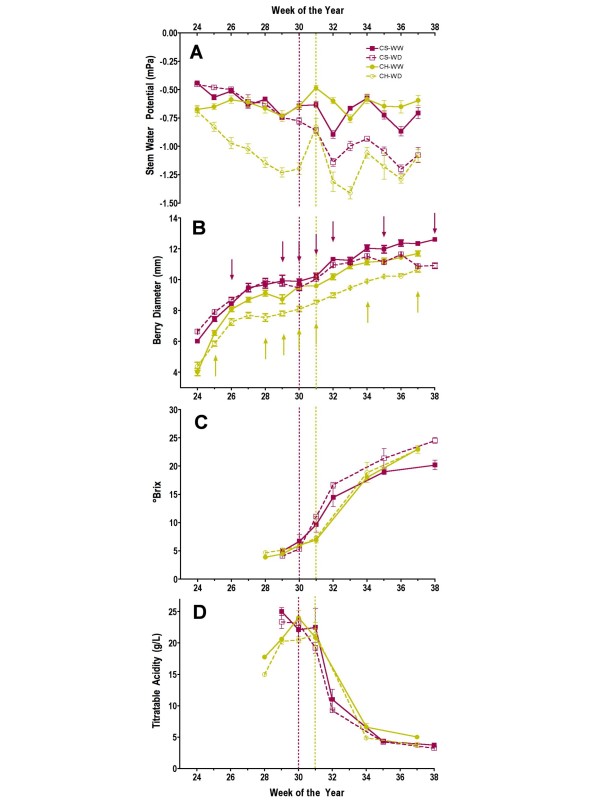
Water deficit has significant effects on grape berry composition resulting in improved wine quality by the enhancement of color, flavors, or aromas. While some pathways or enzymes affected by water deficit have been identified, little is known about the global effects of water deficit on grape berry metabolism.
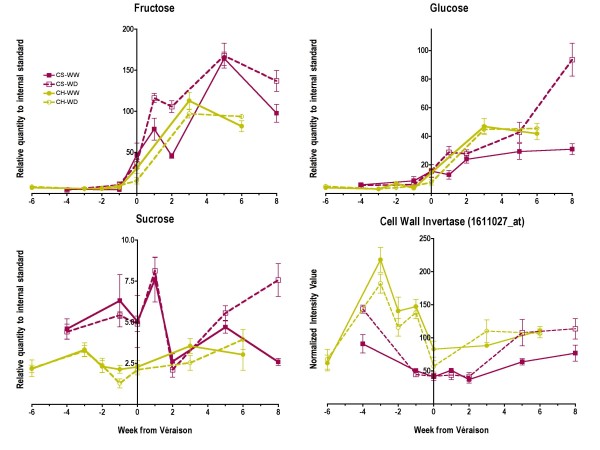
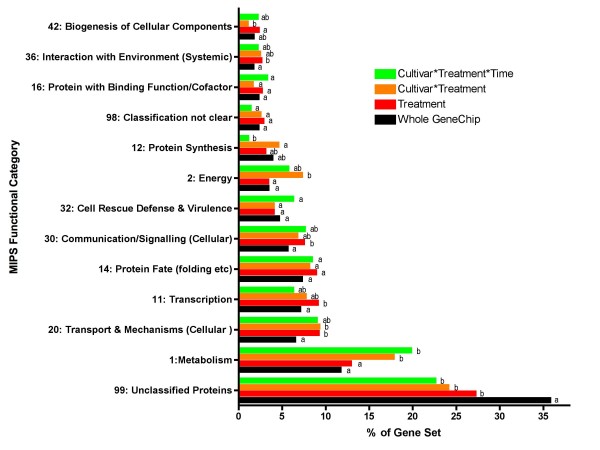
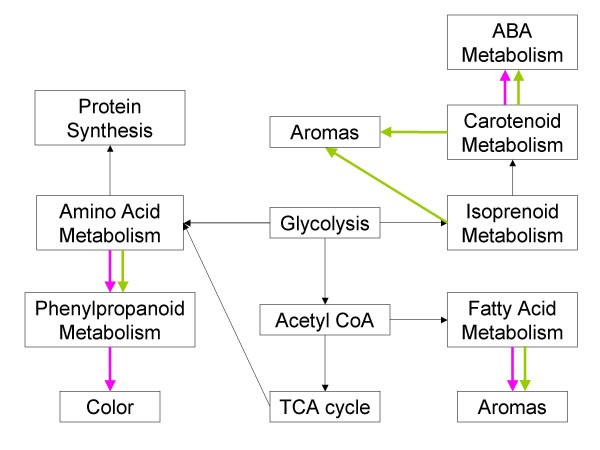
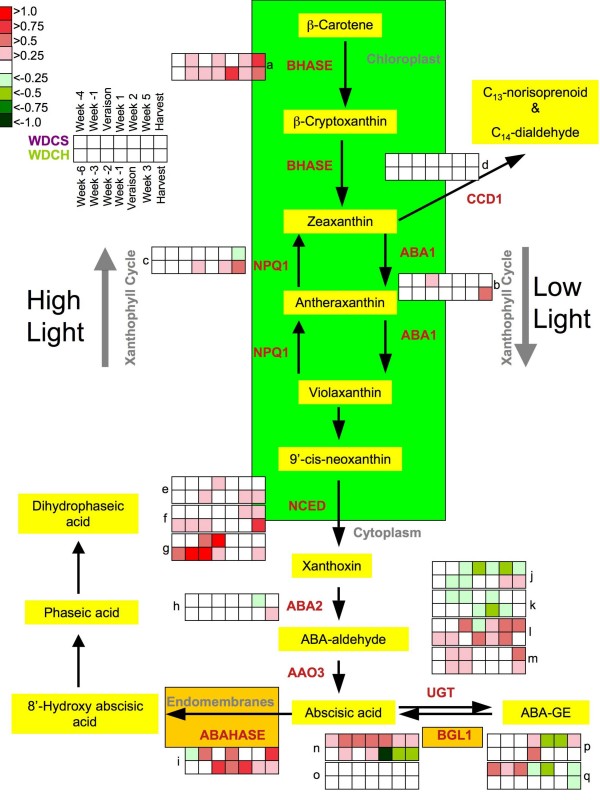
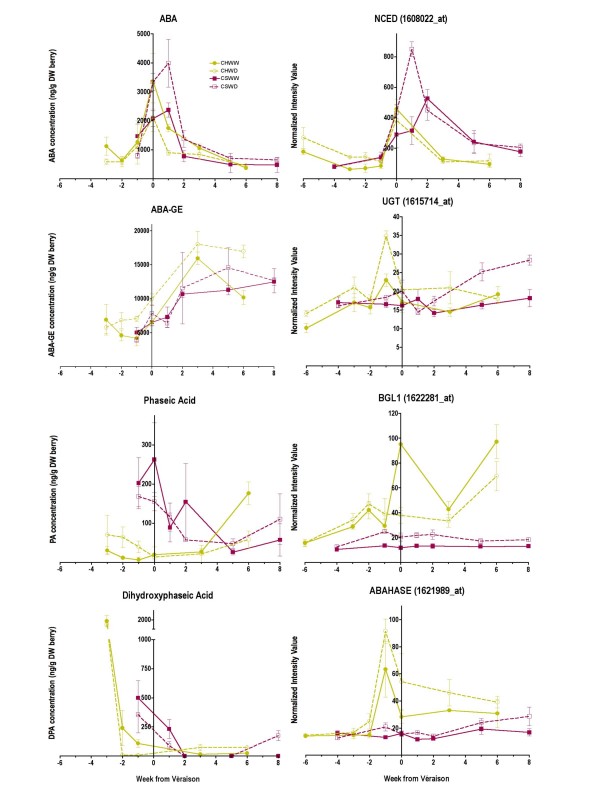
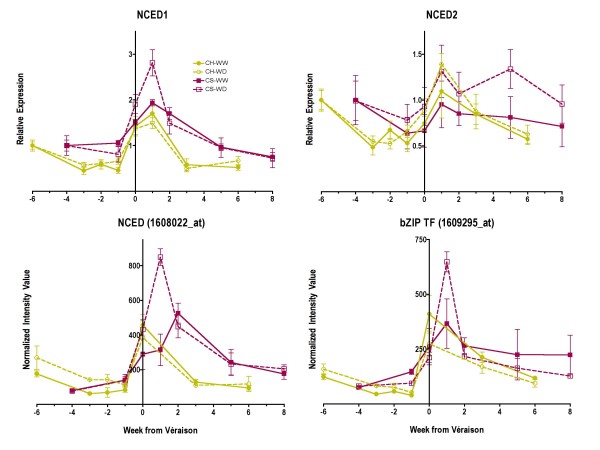
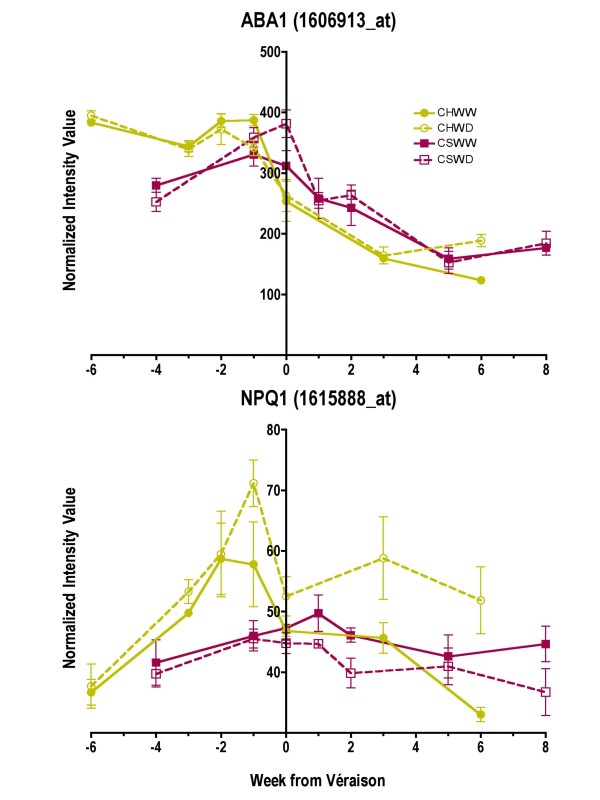
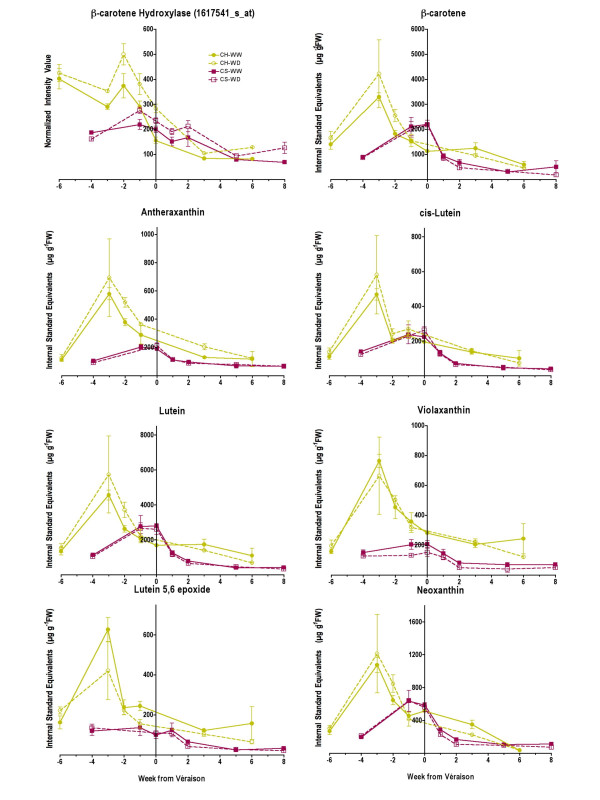
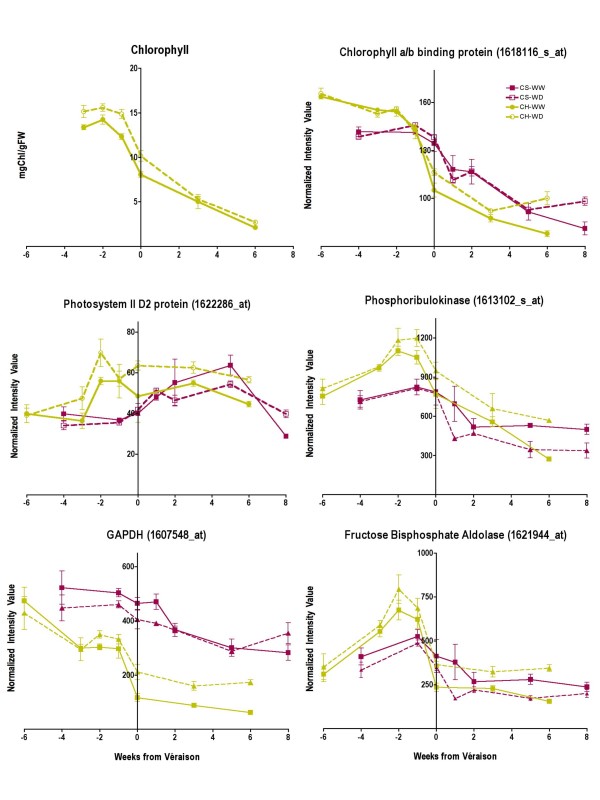
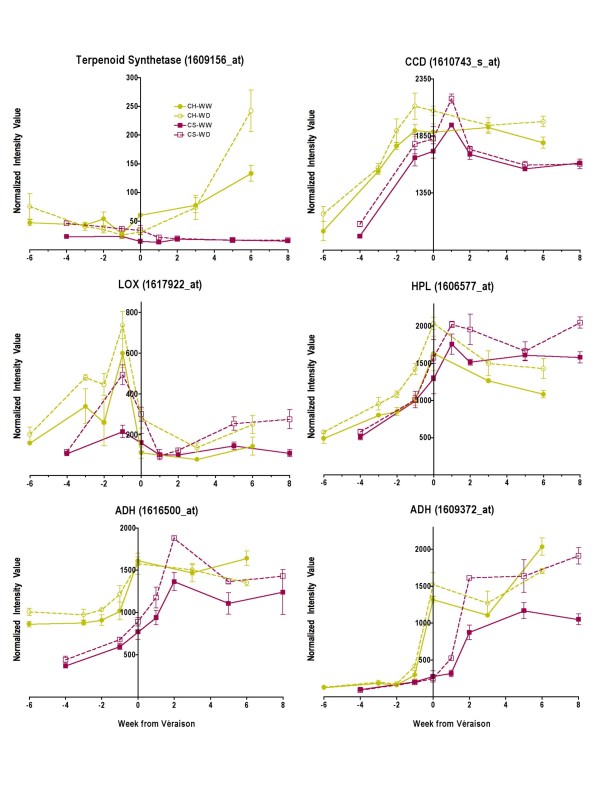
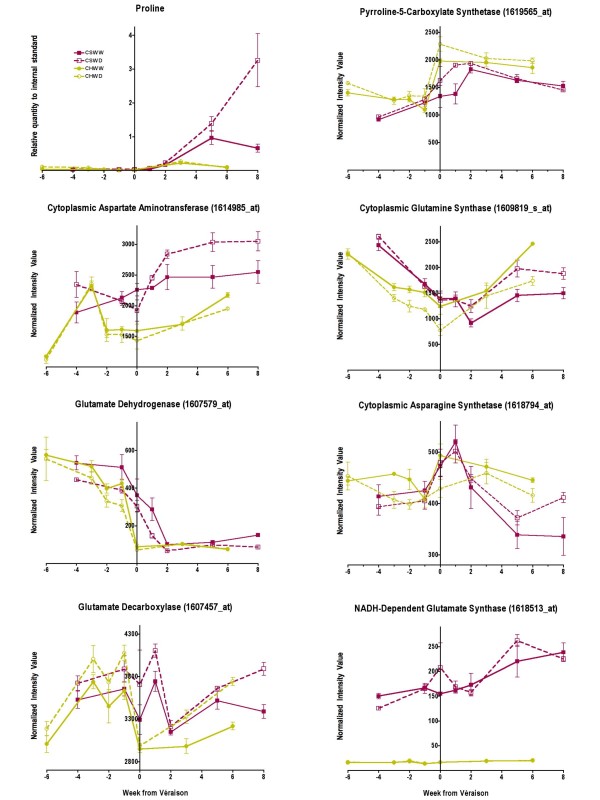
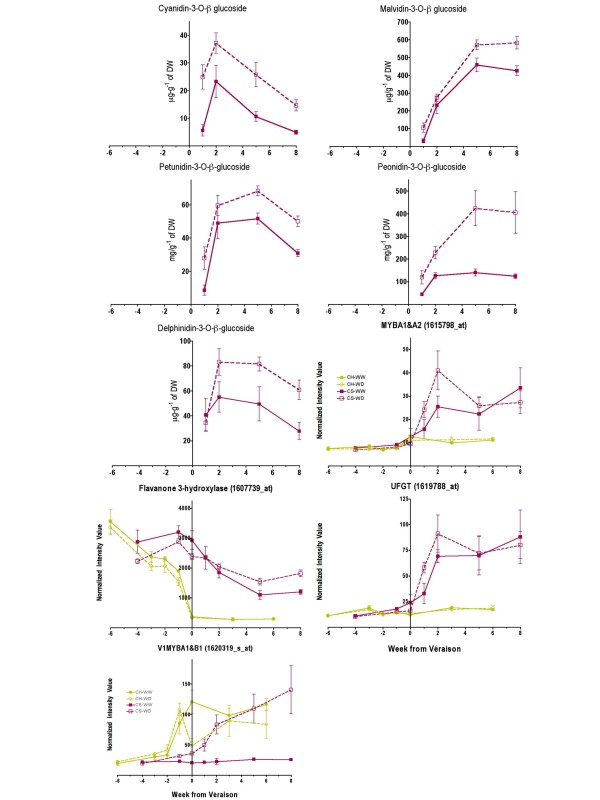
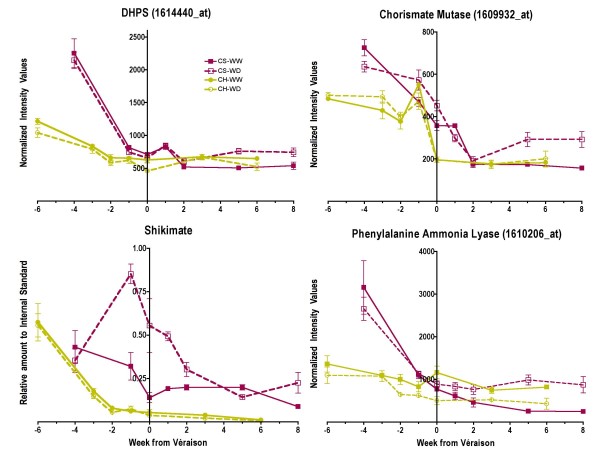
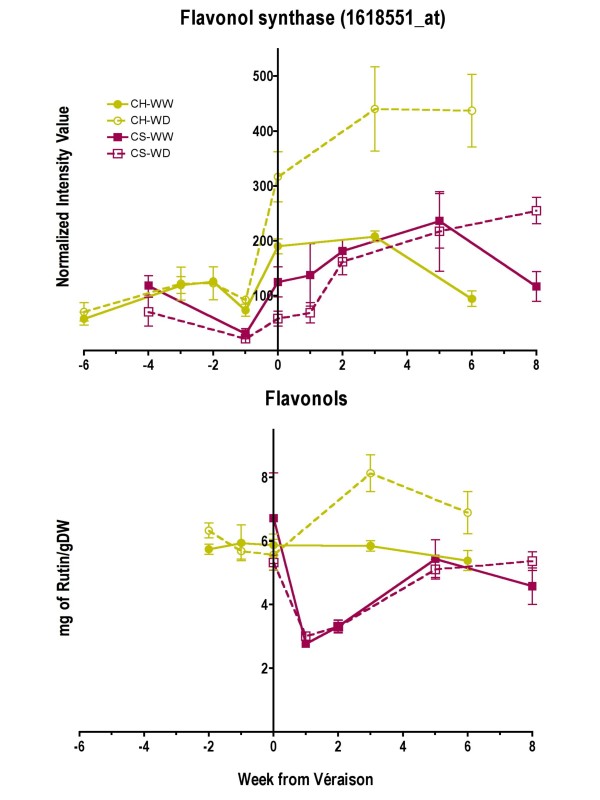
The effects of long-term, seasonal water deficit on berries of Cabernet Sauvignon, a red-wine grape, and Chardonnay, a white-wine grape were analyzed by integrated transcript and metabolite profiling. Over the course of berry development, the steady-state transcript abundance of approximately 6,000 Unigenes differed significantly between the cultivars and the irrigation treatments. Water deficit most affected the phenylpropanoid, ABA, isoprenoid, carotenoid, amino acid and fatty acid metabolic pathways. Targeted metabolites were profiled to confirm putative changes in specific metabolic pathways. Water deficit activated the expression of numerous transcripts associated with glutamate and proline biosynthesis and some committed steps of the phenylpropanoid pathway that increased anthocyanin concentrations in Cabernet Sauvignon. In Chardonnay, water deficit activated parts of the phenylpropanoid, energy, carotenoid and isoprenoid metabolic pathways that contribute to increased concentrations of antheraxanthin, flavonols and aroma volatiles. Water deficit affected the ABA metabolic pathway in both cultivars. Berry ABA concentrations were highly correlated with 9-cis-epoxycarotenoid dioxygenase (NCED1) transcript abundance, whereas the mRNA expression of other NCED genes and ABA catabolic and glycosylation processes were largely unaffected. Water deficit nearly doubled ABA concentrations within berries of Cabernet Sauvignon, whereas it decreased ABA in Chardonnay at véraison and shortly thereafter.
The metabolic responses of grapes to water deficit varied with the cultivar and fruit pigmentation. Chardonnay berries, which lack any significant anthocyanin content, exhibited increased photoprotection mechanisms under water deficit conditions. Water deficit increased ABA, proline, sugar and anthocyanin concentrations in Cabernet Sauvignon, but not Chardonnay berries, consistent with the hypothesis that ABA enhanced accumulation of these compounds. Water deficit increased the transcript abundance of lipoxygenase and hydroperoxide lyase in fatty metabolism, a pathway known to affect berry and wine aromas. These changes in metabolism have important impacts on berry flavor and quality characteristics. Several of these metabolites are known to contribute to increased human-health benefits.
水分亏缺对葡萄果实成分有显著影响,可通过增强颜色、风味或香气来提高葡萄酒品质。虽然已经确定了一些受水分亏缺影响的途径或酶,但关于水分亏缺对葡萄果实代谢的整体影响却知之甚少。
通过整合转录本和代谢物谱分析,研究了长期季节性水分亏缺对赤霞珠(一种红葡萄品种)和霞多丽(一种白葡萄品种)果实的影响。在果实发育过程中,两个品种和灌溉处理之间约6000个单基因的稳态转录本丰度存在显著差异。水分亏缺对苯丙烷类、脱落酸(ABA)、类异戊二烯、类胡萝卜素、氨基酸和脂肪酸代谢途径影响最大。对目标代谢物进行分析,以确认特定代谢途径中的推定变化。水分亏缺激活了与谷氨酸和脯氨酸生物合成相关的大量转录本的表达,以及苯丙烷类途径中的一些关键步骤,从而增加了赤霞珠中的花青素浓度。在霞多丽中,水分亏缺激活了苯丙烷类、能量、类胡萝卜素和类异戊二烯代谢途径的部分环节,这些途径有助于增加花药黄质、黄酮醇和香气挥发物的浓度。水分亏缺影响了两个品种的ABA代谢途径。果实ABA浓度与9-顺式环氧类胡萝卜素双加氧酶(NCED1)转录本丰度高度相关,而其他NCED基因的mRNA表达以及ABA分解代谢和糖基化过程在很大程度上未受影响。水分亏缺使赤霞珠果实中的ABA浓度几乎增加了一倍,而在转色期及之后不久,它降低了霞多丽中的ABA含量。
葡萄对水分亏缺的代谢反应因品种和果实色素沉着而异。霞多丽果实缺乏显著的花青素含量,在水分亏缺条件下表现出增强的光保护机制。水分亏缺增加了赤霞珠中的ABA、脯氨酸、糖分和花青素浓度,但未增加霞多丽果实中的这些物质,这与ABA增强这些化合物积累的假设一致。水分亏缺增加了脂肪代谢中脂氧合酶和氢过氧化物裂解酶的转录本丰度,这是一条已知会影响果实和葡萄酒香气的途径。这些代谢变化对果实风味和品质特性有重要影响。其中一些代谢物已知有助于增加对人类健康的益处。