Bonett Ronald M, Chippindale Paul T, Moler Paul E, Van Devender R Wayne, Wake David B
Department of Biological Sciences, University of Tulsa, Tulsa, Oklahoma, USA.
PLoS One. 2009 May 20;4(5):e5615. doi: 10.1371/journal.pone.0005615.
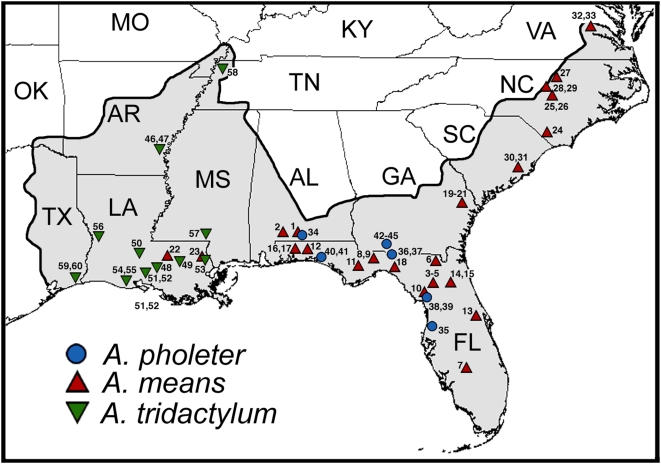
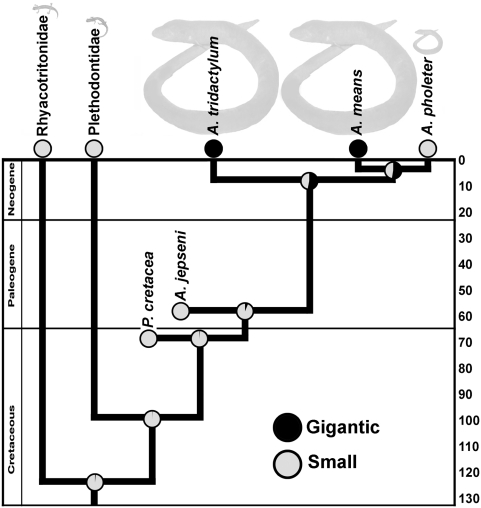
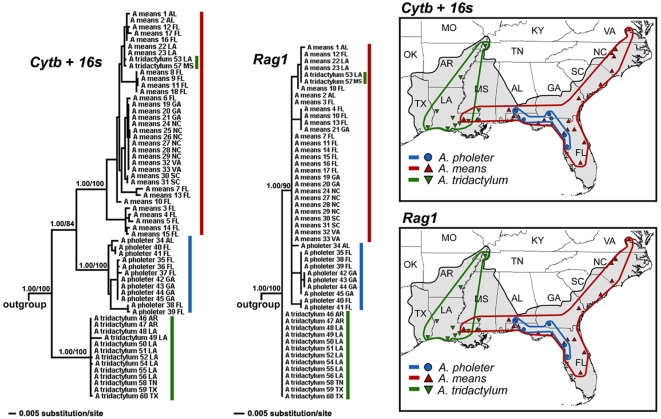
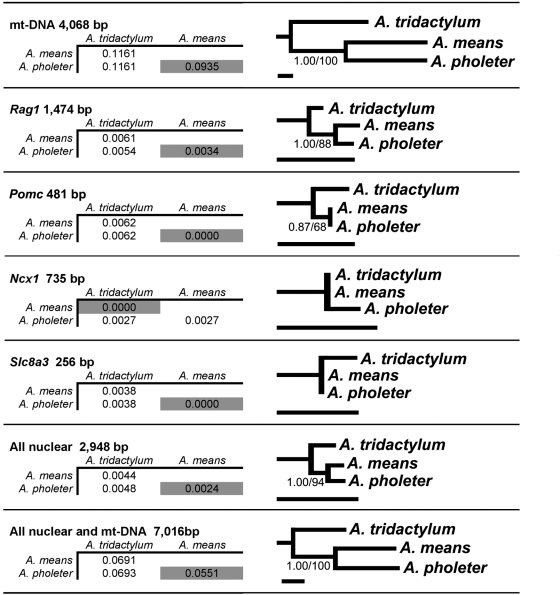
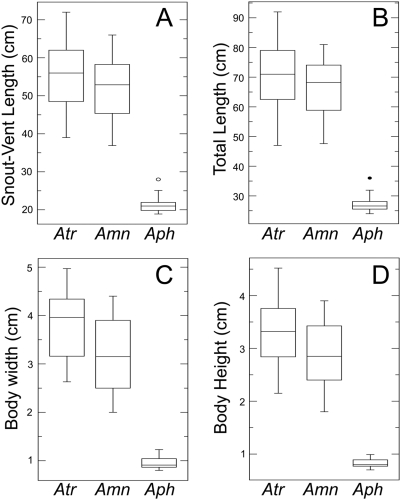
The Amphiumidae contains three species of elongate, permanently aquatic salamanders with four diminutive limbs that append one, two, or three toes. Two of the species, Amphiuma means and A. tridactylum, are among the largest salamanders in the world, reaching lengths of more than one meter, whereas the third species (A. pholeter), extinct amphiumids, and closely related salamander families are relatively small. Amphiuma means and A. tridactylum are widespread species and live in a wide range of lowland aquatic habitats on the Coastal Plain of the southeastern United States, whereas A. pholeter is restricted to very specialized organic muck habitats and is syntopic with A. means. Here we present analyses of sequences of mitochondrial and nuclear loci from across the distribution of the three taxa to assess lineage diversity, relationships, and relative timing of divergence in amphiumid salamanders. In addition we analyze the evolution of gigantism in the clade. Our analyses indicate three lineages that have diverged since the late Miocene, that correspond to the three currently recognized species, but the two gigantic species are not each other's closest relatives. Given that the most closely related salamander families and fossil amphiumids from the Upper Cretaceous and Paleocene are relatively small, our results suggest at least two extreme changes in body size within the Amphuimidae. Gigantic body size either evolved once as the ancestral condition of modern amphiumas, with a subsequent strong size reduction in A. pholeter, or gigantism independently evolved twice in the modern species, A. means and A. tridactylum. These patterns are concordant with differences in habitat breadth and range size among lineages, and have implications for reproductive isolation and diversification of amphiumid salamanders.
鳗螈科包含三种细长的、终生水生的蝾螈,它们有四条短小的肢体,每条肢体有一、二或三个脚趾。其中两种,即大鳗螈和三趾鳗螈,是世界上最大的蝾螈之一,体长超过一米,而第三种(小鳗螈)、已灭绝的鳗螈类以及与之亲缘关系密切的蝾螈科相对较小。大鳗螈和三趾鳗螈分布广泛,生活在美国东南部沿海平原的各种低地水生栖息地,而小鳗螈则局限于非常特殊的有机腐殖质栖息地,与大鳗螈同域分布。在此,我们展示了对这三个分类单元分布范围内线粒体和核基因座序列的分析,以评估鳗螈科蝾螈的谱系多样性、亲缘关系和相对分化时间。此外,我们还分析了该类群中巨型化的演化。我们的分析表明,自中新世晚期以来已经分化出三个谱系,它们对应于目前认可的三个物种,但这两种大型物种并非彼此最亲近的亲属。鉴于上白垩统和古新世最密切相关的蝾螈科和化石鳗螈类相对较小,我们的结果表明鳗螈科至少经历了两次体型的极端变化。巨型体型要么是作为现代鳗螈的祖先状态一次演化而来,随后小鳗螈的体型大幅缩小,要么是在现代物种大鳗螈和三趾鳗螈中独立演化了两次。这些模式与各谱系间栖息地广度和分布范围大小的差异相一致,对鳗螈科蝾螈的生殖隔离和物种多样化具有启示意义。