Saric Jasmina, Li Jia V, Wang Yulan, Keiser Jennifer, Veselkov Kirill, Dirnhofer Stephan, Yap Ivan K S, Nicholson Jeremy K, Holmes Elaine, Utzinger Jürg
Department of Public Health and Epidemiology, Swiss Tropical Institute, Basel, Switzerland.
J Proteome Res. 2009 Aug;8(8):3899-911. doi: 10.1021/pr900185s.
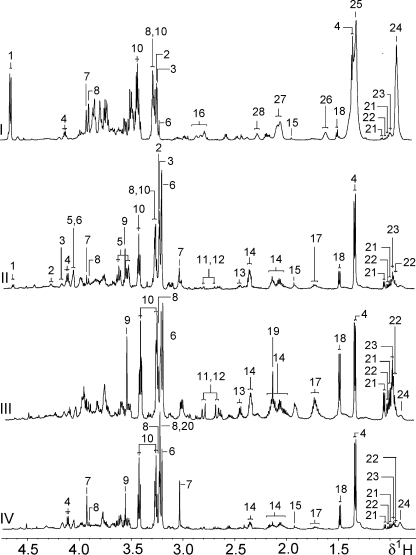
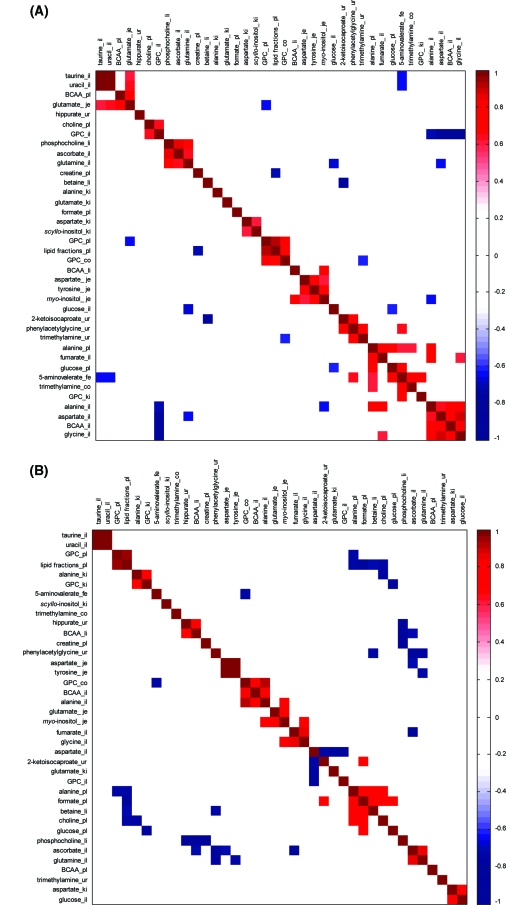
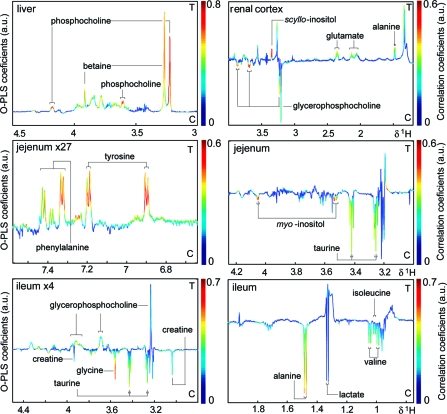
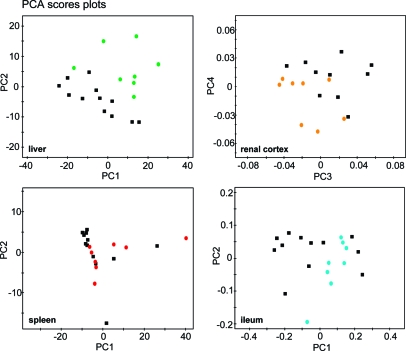
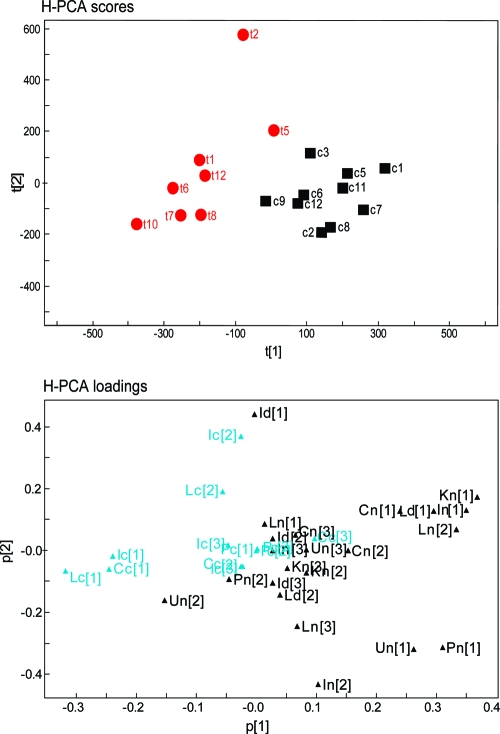
Metabolic profiling of host tissues and biofluids during parasitic infections can reveal new biomarker information and aid the elucidation of mechanisms of disease. The multicompartmental metabolic effects of an experimental Echinostoma caproni infection have been characterized in 12 outbred female mice infected orally with 30 E. caproni metacercariae each, using a further 12 uninfected animals as a control group. Mice were killed 36 days postinfection and brain, intestine (colon, ileum, jejeunum), kidney, liver, and spleen were removed. Metabolic profiles of tissue samples were measured using high-resolution magic angle spinning (1)H NMR spectroscopy and biofluids measured by applying conventional (1)H NMR spectroscopy. Spectral data were analyzed via principal component analysis, partial least-squares-derived methods and hierarchical projection analyses. Infection-induced metabolic changes in the tissues were correlated with altered metabolite concentrations in the biofluids (urine, plasma, fecal water) using hierarchical modeling and correlation analyses. Metabolic descriptors of infection were identified in liver, renal cortex, intestinal tissues but not in spleen, brain or renal medulla. The main physiological change observed in the mouse was malabsorption in the small intestine, which was evidenced by decreased levels of various amino acids in the ileum, for example, alanine, taurine, glutamine, and branched chain amino acids. Furthermore, altered gut microbial activity or composition was reflected by increased levels of trimethylamine in the colon. Our modeling approach facilitated in-depth appraisal of the covariation of the metabolic profiles of different biological matrices and found that urine and plasma most closely reflected changes in ileal compartments. In conclusion, an E. caproni infection not only results in direct localized (ileum and jejenum) effects, but also causes remote metabolic changes (colon and several peripheral organs), and therefore describes the panorganismal metabolic response of the infection.
寄生虫感染期间宿主组织和生物体液的代谢谱分析能够揭示新的生物标志物信息,并有助于阐明疾病机制。在12只远交系雌性小鼠中,通过口服感染30只卡氏棘口吸虫囊蚴,研究了实验性卡氏棘口吸虫感染的多室代谢效应,另外12只未感染动物作为对照组。感染后36天处死小鼠,取出脑、肠(结肠、回肠、空肠)、肾、肝和脾。使用高分辨率魔角旋转(1)H NMR光谱法测量组织样品的代谢谱,应用常规(1)H NMR光谱法测量生物体液。通过主成分分析、偏最小二乘法衍生方法和层次投影分析对光谱数据进行分析。使用层次建模和相关性分析,将组织中感染诱导的代谢变化与生物体液(尿液、血浆、粪水)中代谢物浓度的改变相关联。在肝脏、肾皮质、肠道组织中鉴定出感染的代谢描述符,但在脾脏、脑或肾髓质中未鉴定出。在小鼠中观察到的主要生理变化是小肠吸收不良,这通过回肠中各种氨基酸水平的降低得到证明,例如丙氨酸、牛磺酸、谷氨酰胺和支链氨基酸。此外,结肠中三甲胺水平的升高反映了肠道微生物活性或组成的改变。我们的建模方法有助于深入评估不同生物基质代谢谱的协变,发现尿液和血浆最能反映回肠区室的变化。总之,卡氏棘口吸虫感染不仅导致直接的局部(回肠和空肠)效应,还会引起远处的代谢变化(结肠和几个外周器官),因此描述了感染的全生物体代谢反应。