Li Bing, Reynolds Joseph M, Stout Robert D, Bernlohr David A, Suttles Jill
Department of Microbiology and Immunology, School of Medicine, University of Louisville, Louisville, KY 40292, USA.
J Immunol. 2009 Jun 15;182(12):7625-33. doi: 10.4049/jimmunol.0804192.
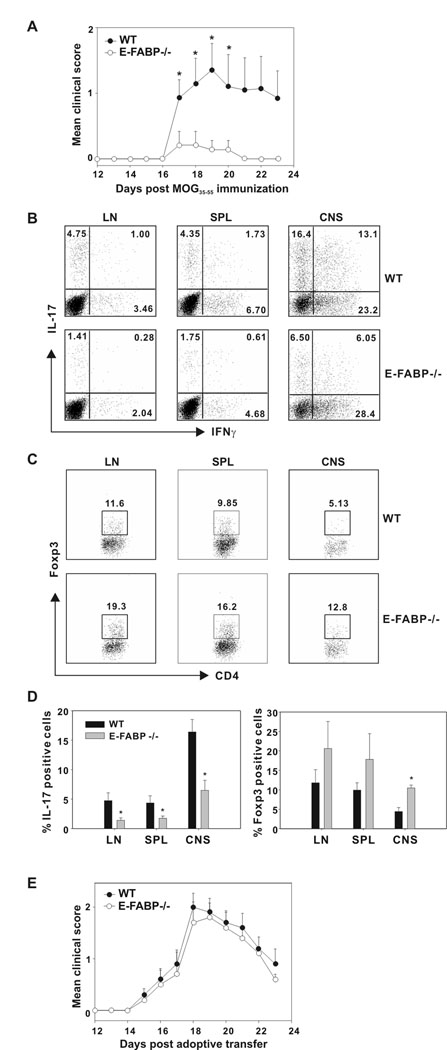
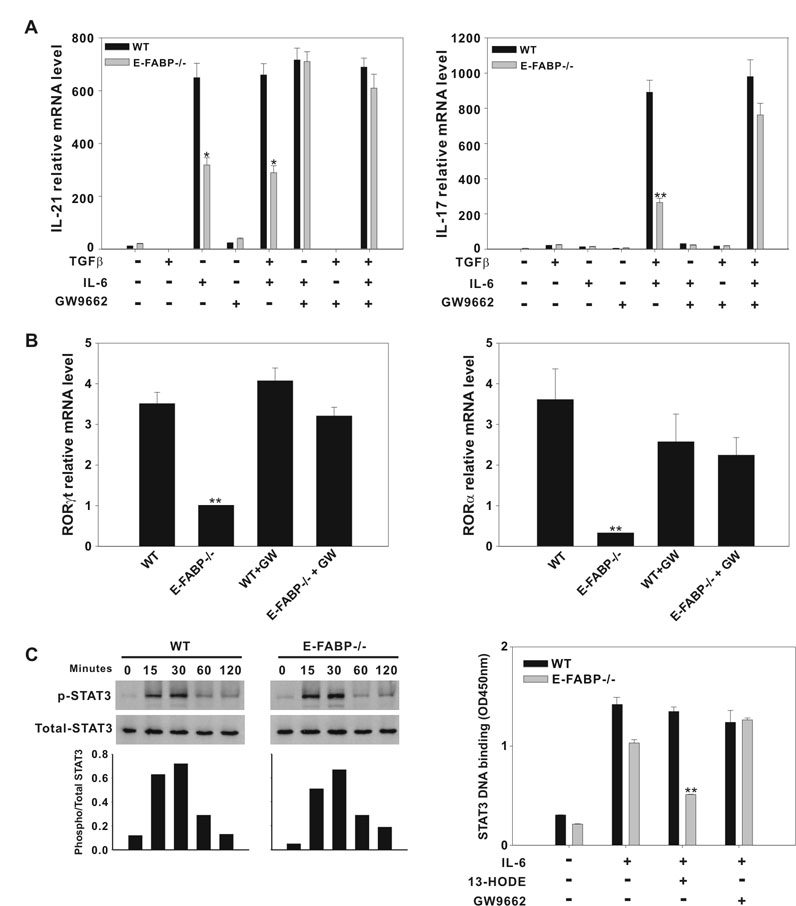
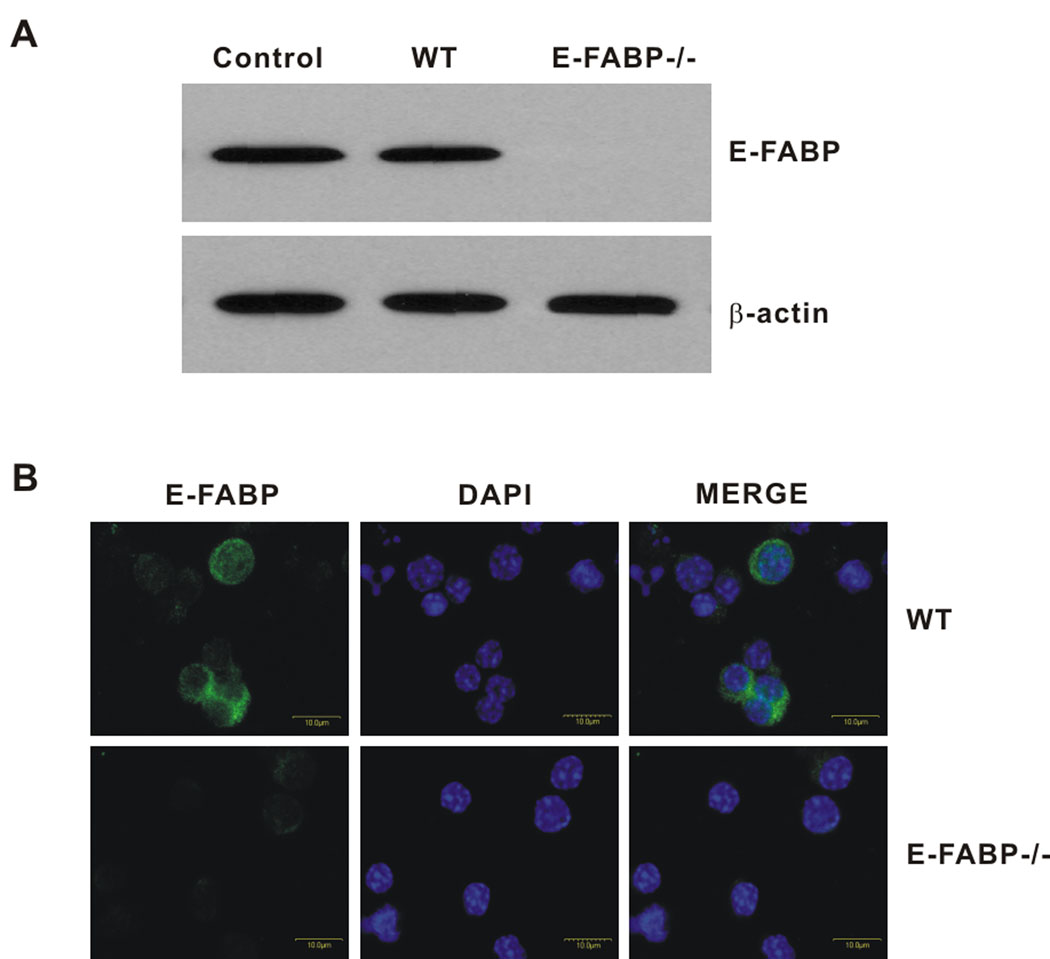
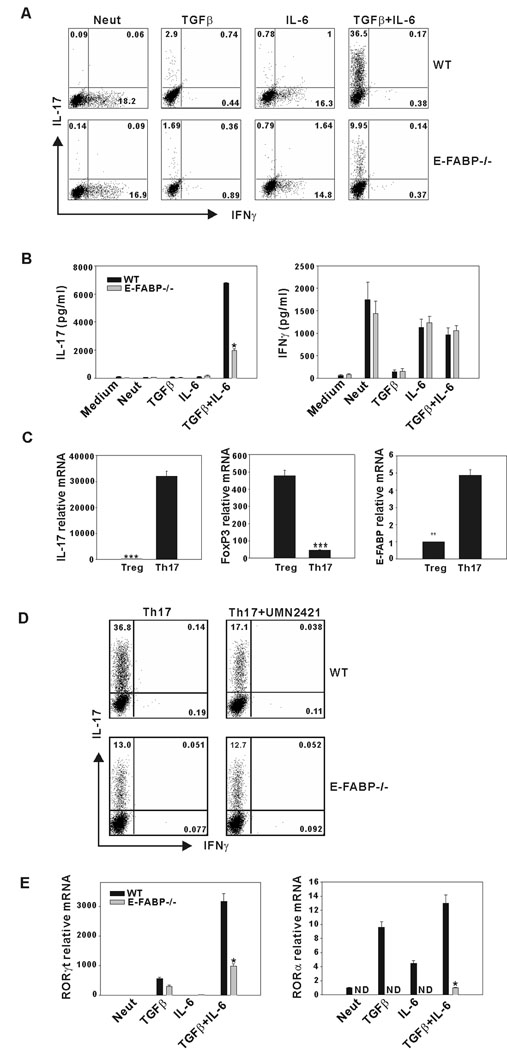
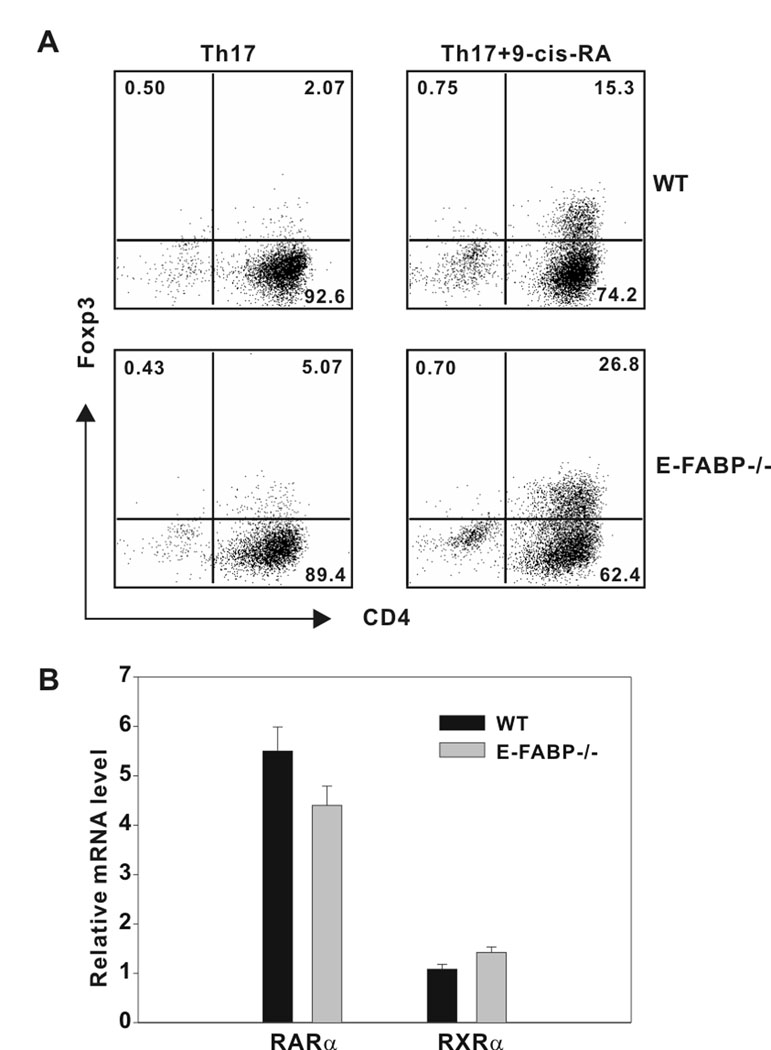
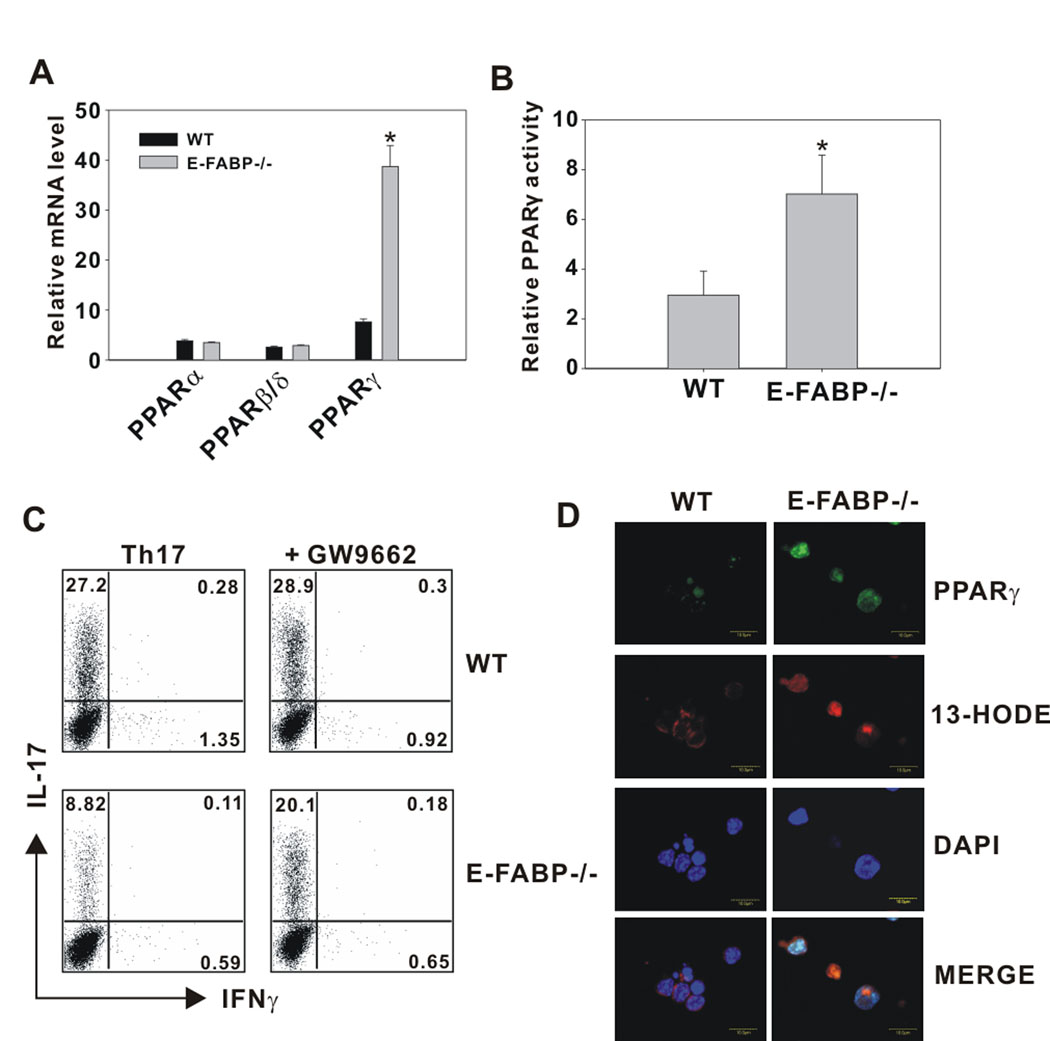
Epidermal fatty acid-binding protein, E-FABP, a lipid chaperone, has been shown to regulate the inflammatory function of macrophages and dendritic cells. Herein, we demonstrate that T cell expression of E-FABP promotes Th17 differentiation, while counterregulating development of FoxP3(+) regulatory T cells (Tregs). In response to immunization with myelin oligodendrocyte glycoprotein peptide (MOG(35-55)), E-FABP-deficient mice generated reduced levels of Th17 cells and elevated levels of Tregs, as compared with wild-type mice. Likewise, naive CD4(+) T cells isolated from E-FABP-deficient mice showed reduced expression of IL-17 and enhanced expression of FoxP3, in vitro, when subjected to Th17 or Treg polarizing conditions, respectively. It has been demonstrated previously that IL-21, induced by IL-6, stimulates the expression of the nuclear receptors retinoic acid-related orphan receptor (ROR)gammat and RORalpha, which in turn induce expression of IL-17. We found that the impaired Th17 differentiation by E-FABP-deficient CD4(+) T cells was associated with lower levels of IL-21 expression in response to IL-6, as well as reduced expression of RORgammat and RORalpha. However, E-FABP-deficient CD4(+) T cells expressed significantly higher levels of the nuclear receptor peroxisome proliferator-activating receptor (PPAR)gamma than did wild-type CD4(+) T cells, and treatment with the PPARgamma antagonist GW9662 restored expression of IL-21, RORgammat, RORalpha, and IL-17 by E-FABP-deficient T cells to wild-type levels. The negative influence of E-FABP deficiency on IL-17 expression was attributed to PPARgamma-mediated suppression of IL-6-induced STAT3 activity. Thus, taken together, our data indicate that expression of E-FABP by CD4(+) T cells contributes to the control of IL-6 stimulation of the IL-21/ROR/IL-17 pathway and to the Th17/Treg counterbalance.
表皮脂肪酸结合蛋白(E-FABP)作为一种脂质伴侣,已被证明可调节巨噬细胞和树突状细胞的炎症功能。在此,我们证明E-FABP在T细胞中的表达促进Th17分化,同时对FoxP3(+)调节性T细胞(Tregs)的发育起反向调节作用。与野生型小鼠相比,在用髓鞘少突胶质细胞糖蛋白肽(MOG(35-55))免疫后,E-FABP缺陷型小鼠产生的Th17细胞水平降低,Tregs水平升高。同样,从E-FABP缺陷型小鼠分离出的初始CD4(+) T细胞,在体外分别处于Th17或Treg极化条件下时表现出IL-17表达降低和FoxP3表达增强。先前已证明,IL-6诱导的IL-21刺激核受体视黄酸相关孤儿受体(ROR)γt和RORα的表达,进而诱导IL-17的表达。我们发现,E-FABP缺陷型CD4(+) T细胞中Th17分化受损与对IL-6反应时IL-21表达水平较低以及RORγt和RORα表达降低有关。然而,E-FABP缺陷型CD4(+) T细胞表达的核受体过氧化物酶体增殖物激活受体(PPAR)γ水平明显高于野生型CD4(+) T细胞,用PPARγ拮抗剂GW9662处理可将E-FABP缺陷型T细胞的IL-21、RORγt、RORα和IL-17表达恢复到野生型水平。E-FABP缺陷对IL-17表达的负面影响归因于PPARγ介导的对IL-6诱导的STAT3活性的抑制。因此,综合来看,我们的数据表明CD4(+) T细胞中E-FABP的表达有助于控制IL-6对IL-21/ROR/IL-17途径的刺激以及Th17/Treg平衡。