Osathanon Thanaphum, Giachelli Cecilia M, Somerman Martha J
Department of Oral Biology, School of Dentistry, University of Washington, Seattle, WA 98195, USA.
Biomaterials. 2009 Sep;30(27):4513-21. doi: 10.1016/j.biomaterials.2009.05.022. Epub 2009 Jun 6.
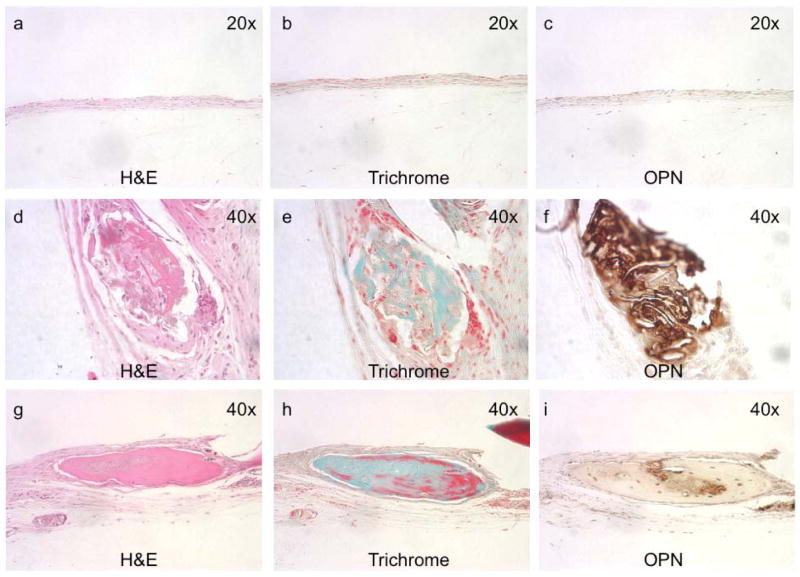
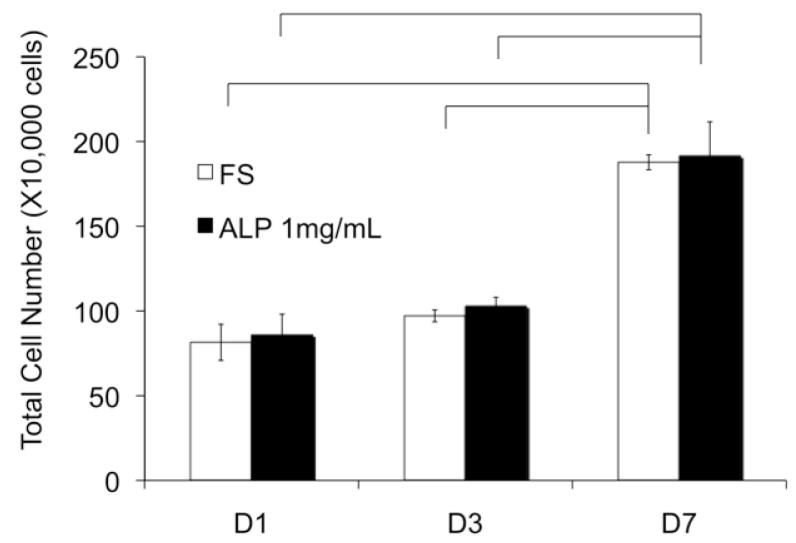
Alkaline phosphatase (ALP) promotes bone formation by degrading inorganic pyrophosphate (PP(i)), an inhibitor of hydroxyapatite formation, and generating inorganic phosphate (P(i)), an inducer of hydroxyapatite formation. P(i) is a crucial molecule in differentiation and mineralization of osteoblasts. In this study, a method to immobilize ALP on fibrin scaffolds with tightly controllable pore size and pore interconnection was developed, and the biological properties of these scaffolds were characterized both in vitro and in vivo. Microporous, nanofibrous fibrin scaffolds (FS) were fabricated using a sphere-templating method. ALP was covalently immobilized on the fibrin scaffolds using 1-ethyl-3-(dimethylaminopropyl)carbodiimide hydrochloride (EDC). Scanning electron microscopic observation (SEM) showed that mineral was deposited on immobilized alkaline phosphatase fibrin scaffolds (immobilized ALP/FS) when incubated in medium supplemented with beta-glycerophosphate, suggesting that the immobilized ALP was active. Primary calvarial cells attached, spread and formed multiple layers on the surface of the scaffolds. Mineral deposition was also observed when calvarial cells were seeded on immobilized ALP/FS. Furthermore, cells seeded on immobilized ALP/FS exhibited higher osteoblast marker gene expression compared to control FS. Upon implantation in mouse calvarial defects, both the immobilized ALP/FS and FS alone treated group had higher bone volume in the defect compared to the empty defect control. Furthermore, bone formation in the immobilized ALP/FS treated group was statistically significant compared to FS alone group. However, the response was not robust.
碱性磷酸酶(ALP)通过降解无机焦磷酸(PP(i))(羟基磷灰石形成的抑制剂)并生成无机磷酸盐(P(i))(羟基磷灰石形成的诱导剂)来促进骨形成。P(i)是成骨细胞分化和矿化过程中的关键分子。在本研究中,开发了一种将ALP固定在孔径和孔互连紧密可控的纤维蛋白支架上的方法,并在体外和体内对这些支架的生物学特性进行了表征。使用球形模板法制备了微孔、纳米纤维状纤维蛋白支架(FS)。使用1-乙基-3-(二甲基氨基丙基)碳二亚胺盐酸盐(EDC)将ALP共价固定在纤维蛋白支架上。扫描电子显微镜观察(SEM)表明,当在补充有β-甘油磷酸的培养基中孵育时,矿物质沉积在固定化碱性磷酸酶纤维蛋白支架(固定化ALP/FS)上,这表明固定化的ALP具有活性。原代颅骨细胞附着、铺展并在支架表面形成多层。当将颅骨细胞接种在固定化ALP/FS上时也观察到矿物质沉积。此外,与对照FS相比,接种在固定化ALP/FS上的细胞表现出更高的成骨细胞标记基因表达。在植入小鼠颅骨缺损后,与空白缺损对照组相比,固定化ALP/FS组和单独的FS治疗组在缺损处的骨体积更高。此外,与单独的FS组相比,固定化ALP/FS治疗组的骨形成具有统计学意义。然而,反应并不强烈。