Coombes Brooke K, Bisset Leanne, Connelly Luke B, Brooks Peter, Vicenzino Bill
The University of Queensland, Division of Physiotherapy, School of Health and Rehabilitation Sciences, St Lucia, QLD, 4072, Australia.
BMC Musculoskelet Disord. 2009 Jun 24;10:76. doi: 10.1186/1471-2474-10-76.
Corticosteroid injection and physiotherapy are two commonly prescribed interventions for management of lateral epicondylalgia. Corticosteroid injections are the most clinically efficacious in the short term but are associated with high recurrence rates and delayed recovery, while physiotherapy is similar to injections at 6 weeks but with significantly lower recurrence rates. Whilst practitioners frequently recommend combining physiotherapy and injection to overcome harmful effects and improve outcomes, study of the benefits of this combination of treatments is lacking. Clinicians are also faced with the paradox that the powerful anti-inflammatory corticosteroid injections work well, albeit in the short term, for a non-inflammatory condition like lateral epicondylalgia. Surprisingly, these injections have not been rigorously tested against placebo injections. This study primarily addresses both of these issues.
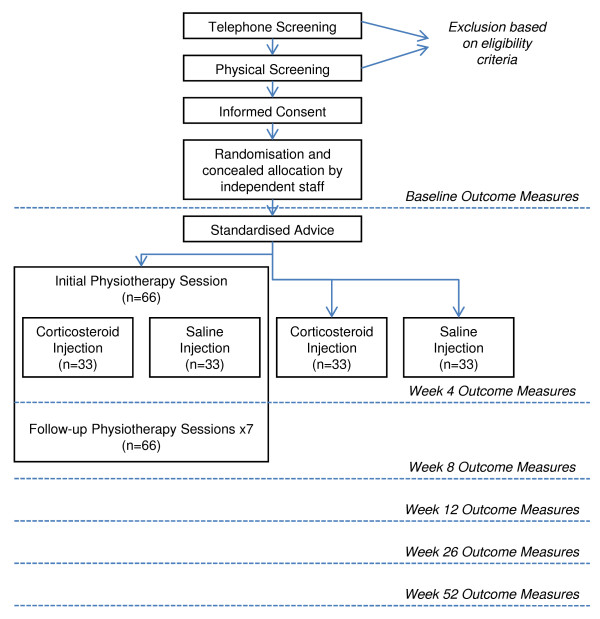
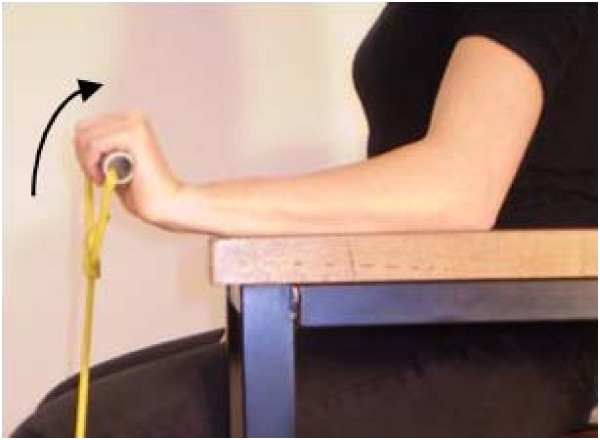
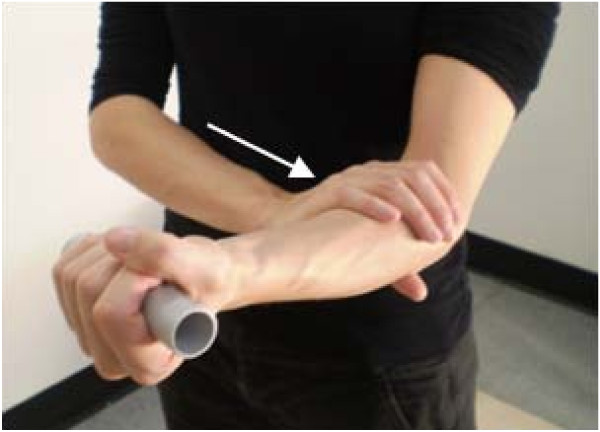
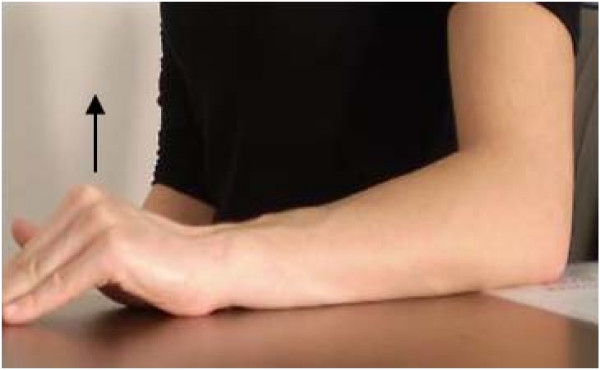
A randomised placebo-controlled clinical trial with a 2 x 2 factorial design will evaluate the clinical efficacy, cost-effectiveness and recurrence rates of adding physiotherapy to an injection. In addition, the clinical efficacy and adverse effects of corticosteroid injection beyond that of a placebo saline injection will be studied. 132 participants with a diagnosis of lateral epicondylalgia will be randomly assigned by concealed allocation to one of four treatment groups - corticosteroid injection, saline injection, corticosteroid injection with physiotherapy or saline injection with physiotherapy. Physiotherapy will comprise 8 sessions of elbow manipulation and exercise over an 8 week period. Blinded follow-up assessments will be conducted at baseline, 4, 8, 12, 26 and 52 weeks after randomisation. The primary outcome will be a participant rating of global improvement, from which measures of success and recurrence will be derived. Analyses will be conducted on an intention-to-treat basis using linear mixed and logistic regression models. Healthcare costs will be collected from a societal perspective, and along with willingness-to-pay and quality of life data will facilitate cost-effectiveness and cost-benefit analyses.
This trial will utilise high quality trial methodologies in accordance with CONSORT guidelines. Findings from this study will assist in the development of evidence based practice recommendations and potentially the optimisation of resource allocation for rehabilitating lateral epicondylalgia.
Australian New Zealand Clinical Trials Register ACTRN12609000051246.
皮质类固醇注射和物理治疗是治疗外侧上髁炎最常用的两种干预措施。皮质类固醇注射在短期内临床疗效最佳,但复发率高且恢复延迟,而物理治疗在6周时效果与注射相似,但复发率显著较低。尽管从业者经常建议将物理治疗和注射相结合以克服有害影响并改善治疗效果,但缺乏对这种联合治疗益处的研究。临床医生还面临一个矛盾,即强效抗炎皮质类固醇注射剂对外侧上髁炎这种非炎症性疾病效果良好,尽管只是短期有效。令人惊讶的是,这些注射剂尚未与安慰剂注射剂进行严格对比测试。本研究主要解决这两个问题。
一项采用2×2析因设计的随机安慰剂对照临床试验将评估在注射基础上加用物理治疗的临床疗效、成本效益和复发率。此外,还将研究皮质类固醇注射相对于安慰剂盐水注射的临床疗效和不良反应。132名诊断为外侧上髁炎的参与者将通过隐蔽分配随机分为四个治疗组之一——皮质类固醇注射组、盐水注射组、皮质类固醇注射联合物理治疗组或盐水注射联合物理治疗组。物理治疗将包括在8周内进行8次肘部手法治疗和锻炼。随机分组后,在基线、第4、8、12、26和52周进行盲法随访评估。主要结局将是参与者对整体改善的评分,由此得出成功和复发的衡量指标。将使用线性混合模型和逻辑回归模型进行意向性分析。将从社会角度收集医疗费用,并与支付意愿和生活质量数据一起用于成本效益和成本效益分析。
本试验将按照CONSORT指南采用高质量的试验方法。本研究的结果将有助于制定基于证据的实践建议,并可能优化外侧上髁炎康复的资源分配。
澳大利亚新西兰临床试验注册中心ACTRN12609000051246。