Mason Mike J, Fan Guoping, Plath Kathrin, Zhou Qing, Horvath Steve
Statistics, University of California, Los Angeles, CA 90095, USA.
BMC Genomics. 2009 Jul 20;10:327. doi: 10.1186/1471-2164-10-327.
Recent work has revealed that a core group of transcription factors (TFs) regulates the key characteristics of embryonic stem (ES) cells: pluripotency and self-renewal. Current efforts focus on identifying genes that play important roles in maintaining pluripotency and self-renewal in ES cells and aim to understand the interactions among these genes. To that end, we investigated the use of unsigned and signed network analysis to identify pluripotency and differentiation related genes.
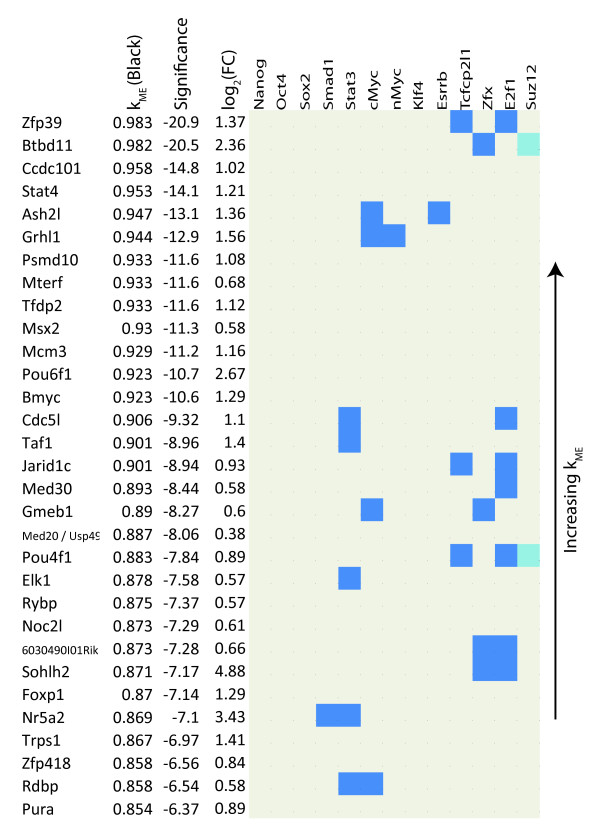
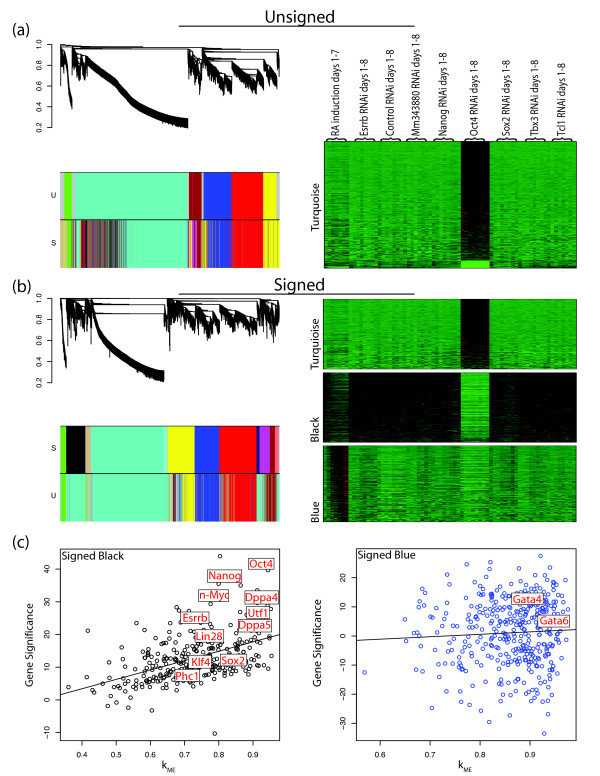
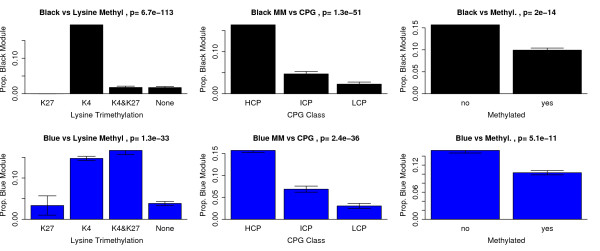
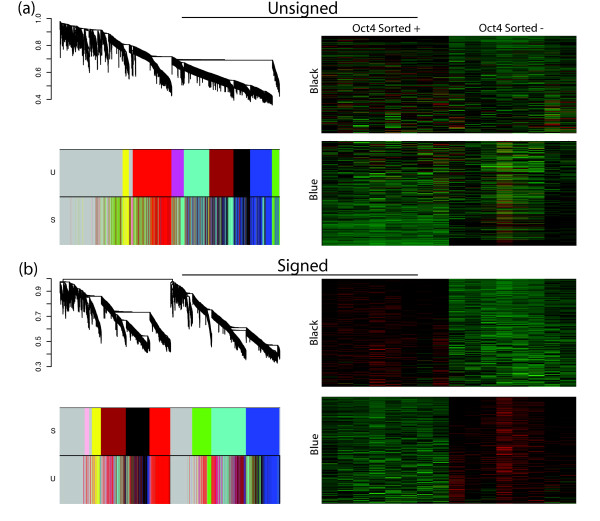
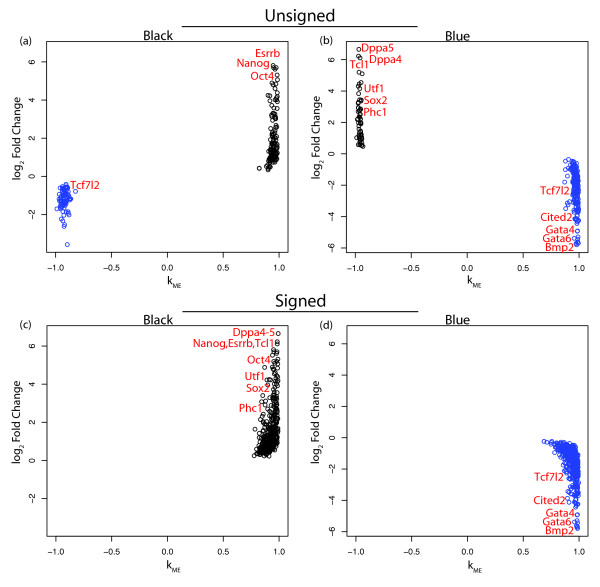
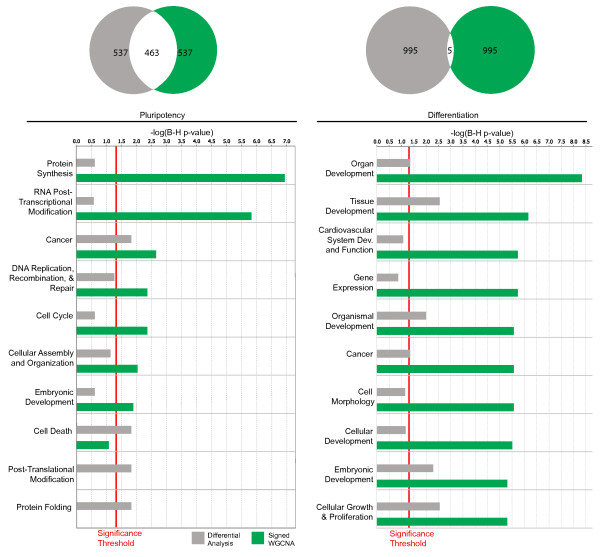
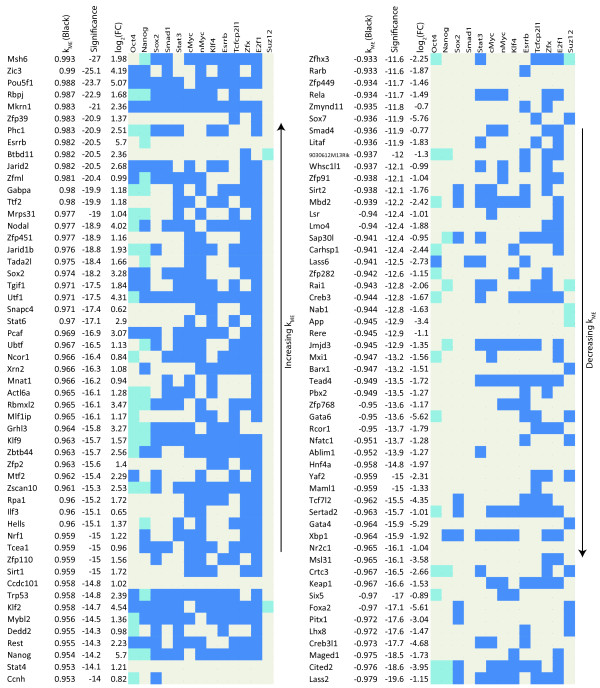
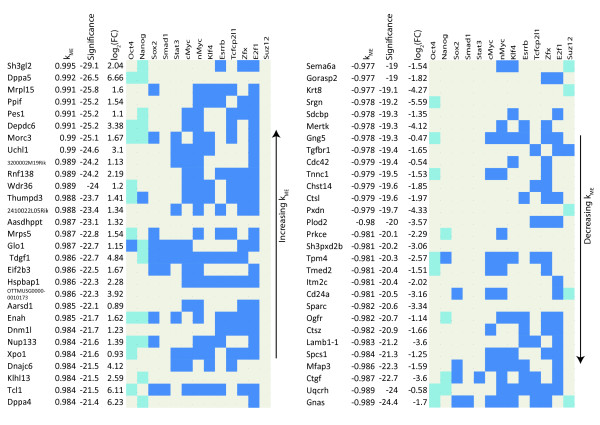
We show that signed networks provide a better systems level understanding of the regulatory mechanisms of ES cells than unsigned networks, using two independent murine ES cell expression data sets. Specifically, using signed weighted gene co-expression network analysis (WGCNA), we found a pluripotency module and a differentiation module, which are not identified in unsigned networks. We confirmed the importance of these modules by incorporating genome-wide TF binding data for key ES cell regulators. Interestingly, we find that the pluripotency module is enriched with genes related to DNA damage repair and mitochondrial function in addition to transcriptional regulation. Using a connectivity measure of module membership, we not only identify known regulators of ES cells but also show that Mrpl15, Msh6, Nrf1, Nup133, Ppif, Rbpj, Sh3gl2, and Zfp39, among other genes, have important roles in maintaining ES cell pluripotency and self-renewal. We also report highly significant relationships between module membership and epigenetic modifications (histone modifications and promoter CpG methylation status), which are known to play a role in controlling gene expression during ES cell self-renewal and differentiation.
Our systems biologic re-analysis of gene expression, transcription factor binding, epigenetic and gene ontology data provides a novel integrative view of ES cell biology.
近期研究表明,一组核心转录因子(TFs)调控着胚胎干细胞(ES细胞)的关键特性:多能性和自我更新能力。目前的研究工作聚焦于鉴定在维持ES细胞多能性和自我更新中发挥重要作用的基因,并致力于理解这些基因之间的相互作用。为此,我们研究了使用无符号和有符号网络分析来鉴定多能性和分化相关基因。
我们利用两个独立的小鼠ES细胞表达数据集表明,与无符号网络相比,有符号网络能在系统层面更好地理解ES细胞的调控机制。具体而言,通过有符号加权基因共表达网络分析(WGCNA),我们发现了一个多能性模块和一个分化模块,而无符号网络中并未识别出这些模块。我们通过纳入关键ES细胞调节因子的全基因组TF结合数据,证实了这些模块的重要性。有趣的是,我们发现除了转录调控外,多能性模块还富含与DNA损伤修复和线粒体功能相关的基因。使用模块成员的连通性度量,我们不仅鉴定出了已知的ES细胞调节因子,还表明Mrpl15、Msh6、Nrf1、Nup133、Ppif、Rbpj、Sh3gl2和Zfp39等基因在维持ES细胞多能性和自我更新中发挥着重要作用。我们还报告了模块成员与表观遗传修饰(组蛋白修饰和启动子CpG甲基化状态)之间高度显著的关系,已知这些表观遗传修饰在ES细胞自我更新和分化过程中控制基因表达方面发挥作用。
我们对基因表达、转录因子结合、表观遗传和基因本体数据进行的系统生物学重新分析,为ES细胞生物学提供了一种全新的综合视角。