Simone Nicole L, Soule Benjamin P, Ly David, Saleh Anthony D, Savage Jason E, Degraff William, Cook John, Harris Curtis C, Gius David, Mitchell James B
Radiation Oncology Branch, Center for Cancer Research, National Cancer Institute, NIH, Bethesda, MD, USA.
PLoS One. 2009 Jul 27;4(7):e6377. doi: 10.1371/journal.pone.0006377.
MicroRNAs (miRNAs) are small, highly conserved, non-coding RNA that alter protein expression and regulate multiple intracellular processes, including those involved in the response to cellular stress. Alterations in miRNA expression may occur following exposure to several stress-inducing anticancer agents including ionizing radiation, etoposide, and hydrogen peroxide (H(2)O(2)).
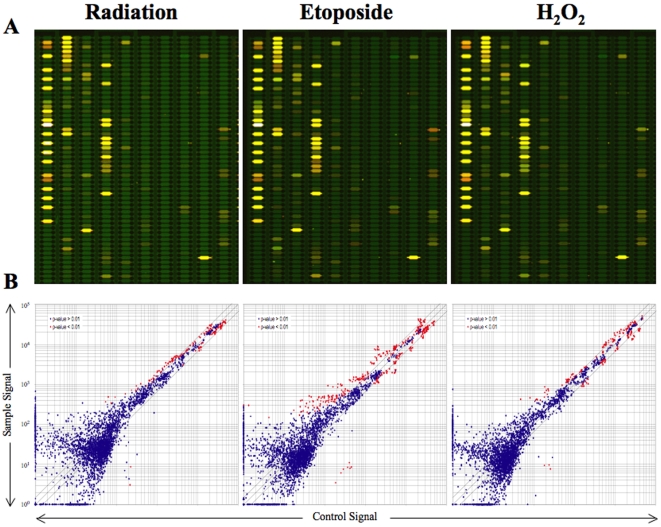
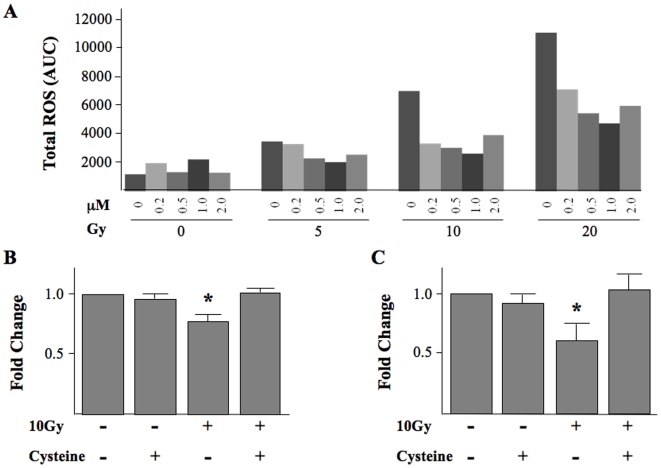
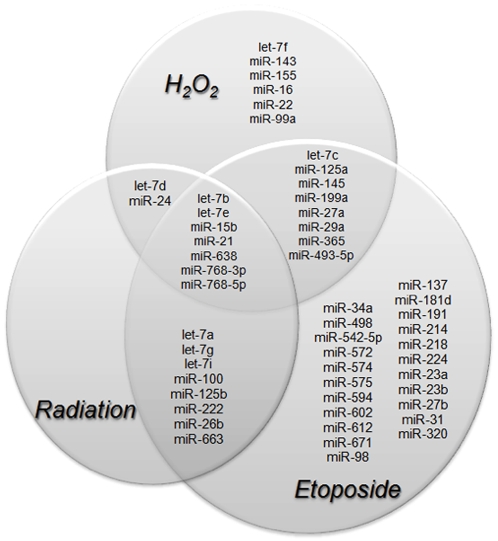
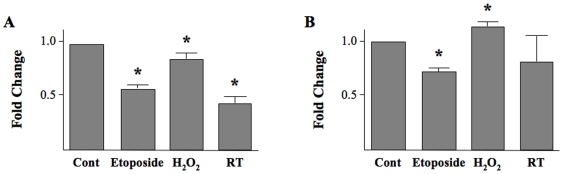
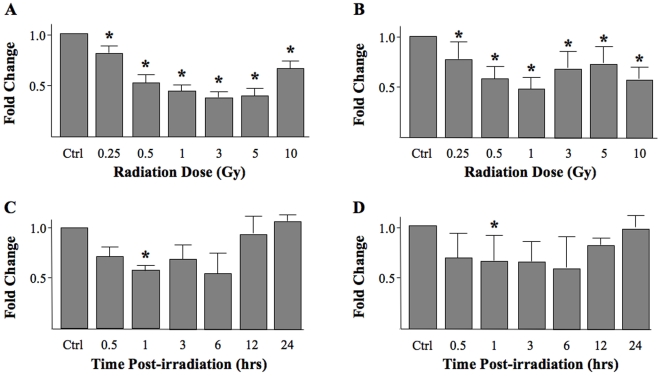
METHODOLOGY/PRINCIPAL FINDINGS: Normal human fibroblasts were exposed to radiation, H(2)O(2), or etoposide at doses determined by clonogenic cell survival curves. Total RNA was extracted and miRNA expression was determined by microarray. Time course and radiation dose responses were determined using RT-PCR for individual miRNA species. Changes in miRNA expression were observed for 17 miRNA species following exposure to radiation, 23 after H(2)O(2) treatment, and 45 after etoposide treatment. Substantial overlap between the miRNA expression changes between agents was observed suggesting a signature miRNA response to cell stress. Changes in the expression of selected miRNA species varied in response to radiation dose and time. Finally, production of reactive oxygen species (ROS) increased with increasing doses of radiation and pre-treatment with the thiol antioxidant cysteine decreased both ROS production and the miRNA response to radiation.
These results demonstrate a common miRNA expression signature in response to exogenous genotoxic agents including radiation, H(2)O(2), and etoposide. Additionally, pre-treatment with cysteine prevented radiation-induced alterations in miRNA expression which suggests that miRNAs are responsive to oxidative stress. Taken together, these results imply that miRNAs play a role in cellular defense against exogenous stress and are involved in the generalized cellular response to genotoxic oxidative stress.
微小RNA(miRNA)是小的、高度保守的非编码RNA,可改变蛋白质表达并调节多种细胞内过程,包括那些参与细胞应激反应的过程。暴露于几种应激诱导的抗癌药物(包括电离辐射、依托泊苷和过氧化氢(H₂O₂))后,miRNA表达可能会发生改变。
方法/主要发现:将正常人成纤维细胞暴露于由克隆形成细胞存活曲线确定剂量的辐射、H₂O₂或依托泊苷中。提取总RNA并通过微阵列测定miRNA表达。使用针对单个miRNA种类的逆转录聚合酶链反应(RT-PCR)确定时间进程和辐射剂量反应。暴露于辐射后观察到17种miRNA种类的miRNA表达发生变化,H₂O₂处理后为23种,依托泊苷处理后为45种。观察到不同药物之间miRNA表达变化存在大量重叠,表明存在对细胞应激的特征性miRNA反应。所选miRNA种类的表达变化随辐射剂量和时间而变化。最后,活性氧(ROS)的产生随着辐射剂量的增加而增加,用硫醇抗氧化剂半胱氨酸预处理可降低ROS产生以及miRNA对辐射的反应。
这些结果证明了对外源基因毒性剂(包括辐射、H₂O₂和依托泊苷)的共同miRNA表达特征。此外,用半胱氨酸预处理可防止辐射诱导的miRNA表达改变,这表明miRNA对氧化应激有反应。综上所述,这些结果表明miRNA在细胞对外源应激的防御中起作用,并参与对基因毒性氧化应激的普遍细胞反应。