Global Health Sciences, University of California San Francisco, San Francisco, CA, USA.
Hum Resour Health. 2009 Jul 27;7:64. doi: 10.1186/1478-4491-7-64.
Providing basic surgical and emergency care in rural settings is essential, particularly in Tanzania, where the mortality burden addressable by emergency and surgical interventions has been estimated at 40%. However, the shortages of teaching faculty and insufficient learning resources have hampered the traditionally intensive surgical training apprenticeships. The Muhimbili University of Health and Allied Sciences consequently has experienced suboptimal preparation for graduates practising surgery in the field and a drop in medical graduates willing to become surgeons. To address the decline in circumstances, the first step was to enhance technical skills in general surgery and emergency procedures for senior medical students by designing and implementing a surgical skills practicum using locally developed simulation models.
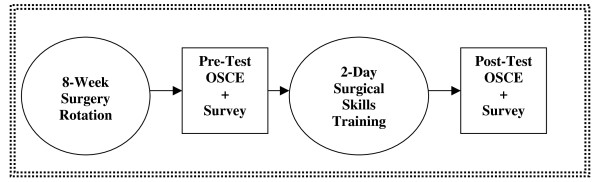
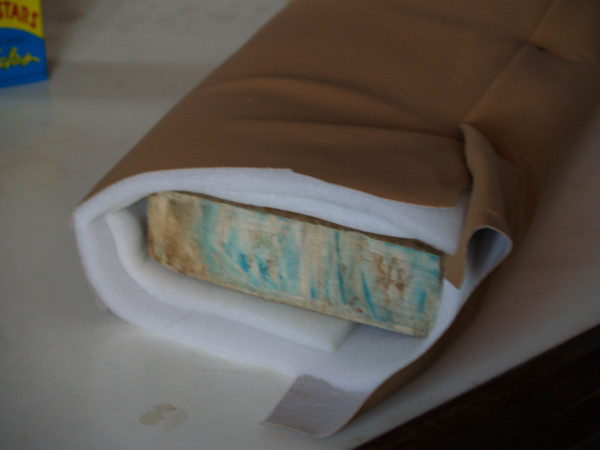
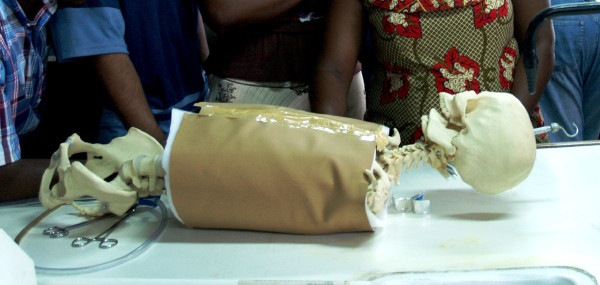
A two-day training course in nine different emergency procedures and surgical skills based on the Canadian Network for International Surgery curriculum was developed. Simulation models for the surgical skills were created with locally available materials. The curriculum was pilot-tested with a cohort of 60 senior medical students who had completed their surgery rotation at Muhimbili University. Two measures were used to evaluate surgical skill performance: Objective Structured Clinical Examinations and surveys of self-perceived performance administered pre- and post-training.
Thirty-six students participated in the study. Prior to the training, no student was able to correctly perform a surgical hand tie, only one student was able to correctly perform adult intubation and three students were able to correctly scrub, gown and glove. Performance improved after training, demonstrated by Objective Structured Clinical Examination scores that rose from 6/30 to 15/30. Students perceived great benefit from practical skills training. The cost of the training using low-tech simulation was four United States dollars per student.
Simulation is valued to gain experience in practising surgical skills prior to working with patients. In the context of resource-limited settings, an additional benefit is that of learning skills not otherwise obtainable. Further testing of this approach will determine its applicability to other resource-limited settings seeking to develop skill-based surgical and emergency procedure apprenticeships. Additionally, skill sustainability and readiness for actual surgical and emergency experiences need to be assessed.
在农村地区提供基本的外科和急救护理至关重要,特别是在坦桑尼亚,据估计,通过紧急和外科干预可以解决 40%的死亡率负担。然而,教学师资短缺和学习资源不足阻碍了传统的密集型外科培训学徒制。因此,穆希比利大学的健康和联合科学专业的毕业生在实践中准备不足,愿意成为外科医生的医学毕业生人数也有所下降。为了解决这种情况,第一步是通过设计和实施使用本地开发的模拟模型的外科技能实践课程,提高高年级医学生的普通外科和急救程序的技术技能。
根据加拿大国际外科学网络课程,开发了为期两天的九个不同的急救程序和外科技能培训课程。使用本地可用材料创建外科技能模拟模型。该课程在完成穆希比利大学外科轮转的 60 名高年级医学生中进行了试点测试。使用客观结构化临床考试和培训前后自我效能感调查两种措施来评估外科技能表现。
36 名学生参加了这项研究。在培训之前,没有学生能够正确地进行外科手术结扎,只有一名学生能够正确地进行成人插管,三名学生能够正确地进行洗手、穿衣和戴手套。培训后,学生的表现有所提高,客观结构化临床考试成绩从 6/30 上升到 15/30。学生认为实践技能培训非常有帮助。使用低技术模拟进行培训的费用为每名学生 4 美元。
模拟在与患者合作之前获得实践外科技能的经验是有价值的。在资源有限的环境中,另一个好处是可以学习其他无法获得的技能。进一步测试这种方法将确定其在其他寻求发展基于技能的外科和急救程序学徒制的资源有限的环境中的适用性。此外,还需要评估技能的可持续性和对外科和急救实际经验的准备情况。