Salta Evgenia, Panagiotidis Cynthia, Teliousis Konstantinos, Petrakis Spyros, Eleftheriadis Eleftherios, Arapoglou Fotis, Grigoriadis Nikolaos, Nicolaou Anna, Kaldrymidou Eleni, Krey Grigorios, Sklaviadis Theodoros
Department of Pharmacology, Aristotle University of Thessaloniki, Thessaloniki, Greece.
PLoS One. 2009 Jul 28;4(7):e6175. doi: 10.1371/journal.pone.0006175.
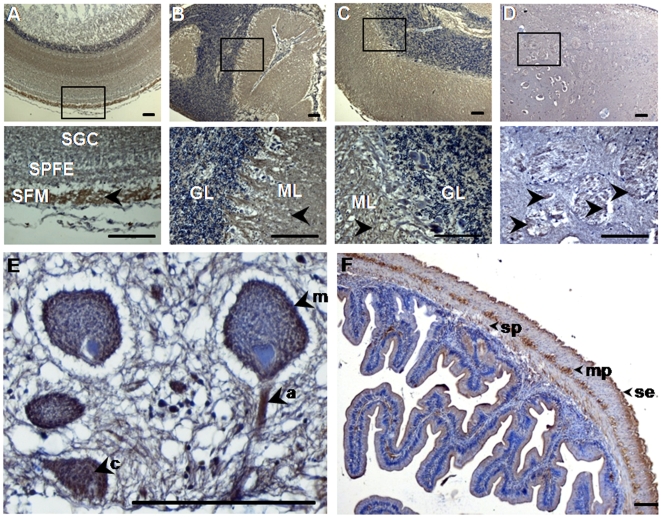
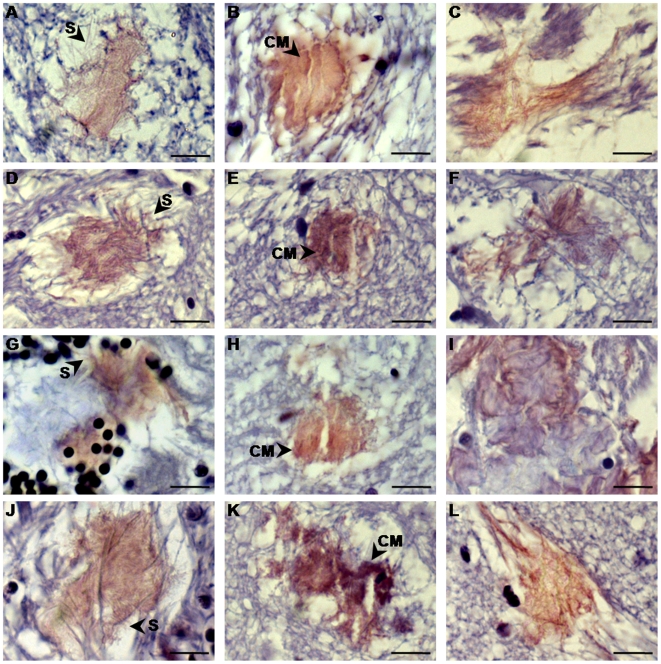
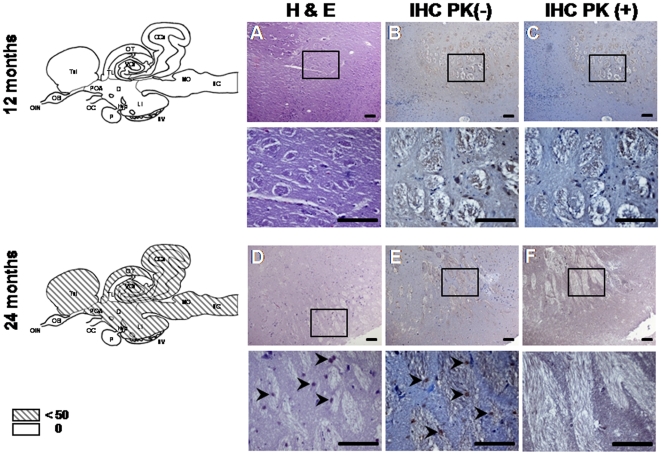
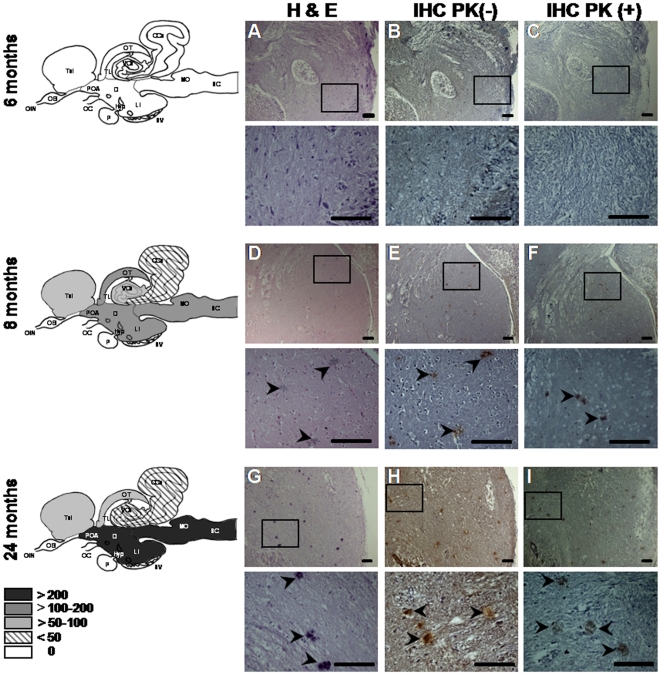
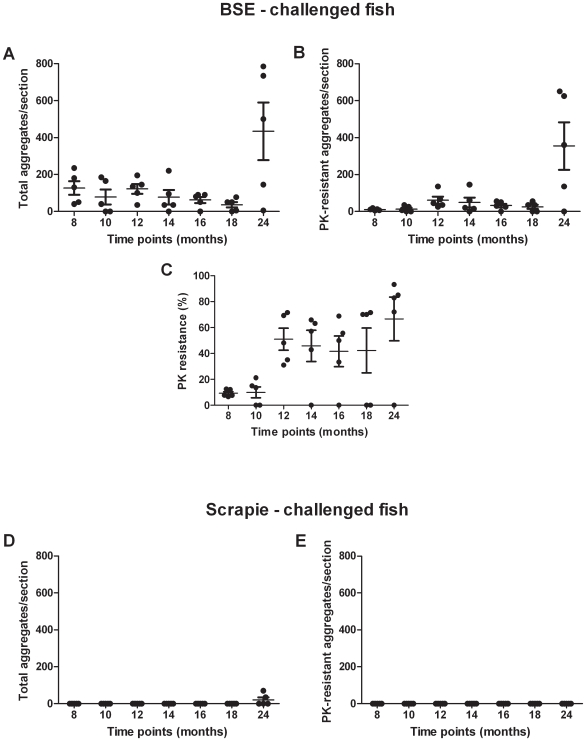
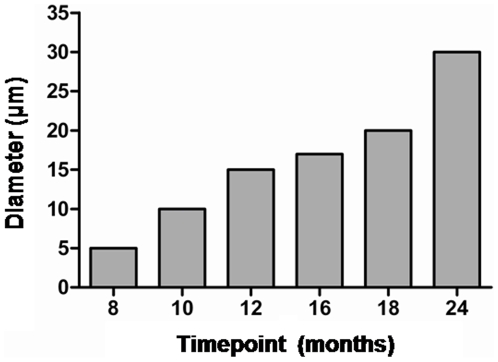
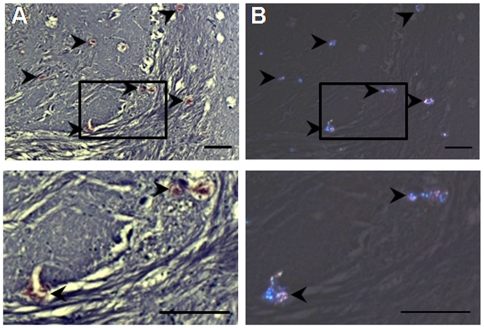
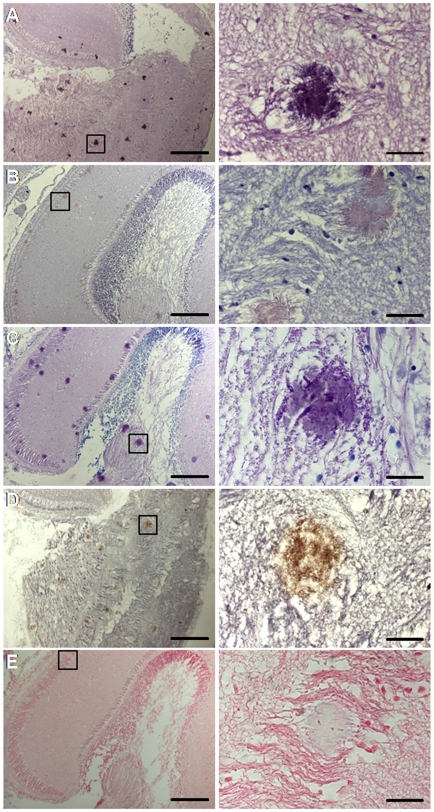
In transmissible spongiform encephalopathies (TSEs), a group of fatal neurodegenerative disorders affecting many species, the key event in disease pathogenesis is the accumulation of an abnormal conformational isoform (PrP(Sc)) of the host-encoded cellular prion protein (PrP(C)). While the precise mechanism of the PrP(C) to PrP(Sc) conversion is not understood, it is clear that host PrP(C) expression is a prerequisite for effective infectious prion propagation. Although there have been many studies on TSEs in mammalian species, little is known about TSE pathogenesis in fish. Here we show that while gilthead sea bream (Sparus aurata) orally challenged with brain homogenates prepared either from a BSE infected cow or from scrapie infected sheep developed no clinical prion disease, the brains of TSE-fed fish sampled two years after challenge did show signs of neurodegeneration and accumulation of deposits that reacted positively with antibodies raised against sea bream PrP. The control groups, fed with brains from uninfected animals, showed no such signs. Remarkably, the deposits developed much more rapidly and extensively in fish inoculated with BSE-infected material than in the ones challenged with the scrapie-infected brain homogenate, with numerous deposits being proteinase K-resistant. These plaque-like aggregates exhibited congophilia and birefringence in polarized light, consistent with an amyloid-like component. The neurodegeneration and abnormal deposition in the brains of fish challenged with prion, especially BSE, raises concerns about the potential risk to public health. As fish aquaculture is an economically important industry providing high protein nutrition for humans and other mammalian species, the prospect of farmed fish being contaminated with infectious mammalian PrP(Sc), or of a prion disease developing in farmed fish is alarming and requires further evaluation.
在传染性海绵状脑病(TSEs)中,这是一组影响许多物种的致命神经退行性疾病,疾病发病机制中的关键事件是宿主编码的细胞朊蛋白(PrP(C))的异常构象异构体(PrP(Sc))的积累。虽然PrP(C)向PrP(Sc)转化的确切机制尚不清楚,但很明显宿主PrP(C)的表达是有效的传染性朊病毒传播的先决条件。尽管已经对哺乳动物物种的TSEs进行了许多研究,但对鱼类TSE发病机制知之甚少。在这里我们表明,用来自感染牛海绵状脑病(BSE)的牛或感染羊瘙痒病的羊制备的脑匀浆经口攻击的金头鲷(Sparus aurata)没有出现临床朊病毒疾病,但在攻击两年后取样的经TSE喂食的鱼的大脑确实显示出神经退行性变的迹象以及与针对金头鲷PrP产生的抗体呈阳性反应的沉积物的积累。喂食未感染动物大脑的对照组没有出现此类迹象。值得注意的是,在用感染BSE的材料接种的鱼中,沉积物的形成比用感染羊瘙痒病的脑匀浆攻击的鱼中发展得更快、更广泛,有许多沉积物对蛋白酶K具有抗性。这些斑块样聚集体在偏振光下表现出嗜刚果红性和双折射,与淀粉样成分一致。用朊病毒攻击的鱼,尤其是BSE攻击的鱼的大脑中的神经退行性变和异常沉积引发了对公共卫生潜在风险的担忧。由于鱼类养殖是一个对经济很重要的产业,为人类和其他哺乳动物物种提供高蛋白营养,养殖鱼类被传染性哺乳动物PrP(Sc)污染或养殖鱼类中发生朊病毒疾病的前景令人担忧,需要进一步评估。