Liao Jiahn-Haur, Lee Jiahn-Shing, Wu Shih-Hsiung, Chiou Shyh-Horng
Institute of Biological Chemistry, Academia Sinica, Taipei, Taiwan.
Mol Vis. 2009 Jul 28;15:1429-44.
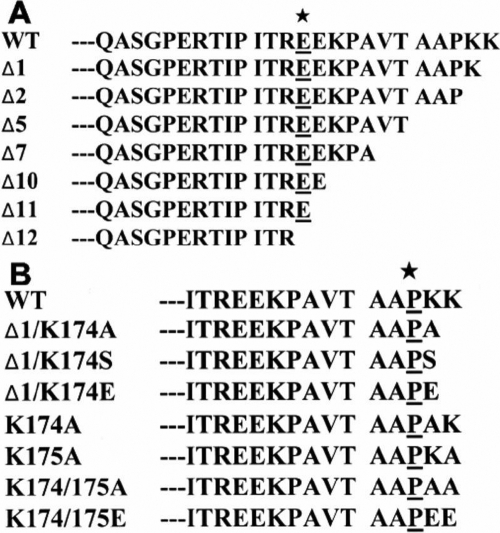
The COOH-terminal extension segment of alphaB-crystallin, a member of small heat shock protein (sHSP) family, appears to be a flexible polypeptide segment susceptible to proteolytic truncation and modifications under physiological conditions. To investigate its role on the structure and chaperone-like activity, we constructed various mutants of porcine alphaB-crystallin with either COOH-terminal serial truncations or site-specific mutagenesis on the last two residues.
The structures of these mutants were analyzed by circular dichroism (CD) spectroscopy, fluorescence spectra, mass spectrometry, Gel-permeation FPLC, and dynamic light-scattering spectrophotometry. Chaperone activity assays were performed under thermal and non-thermal stresses. The stability of proteins was examined by turbidity assays and CD spectra.
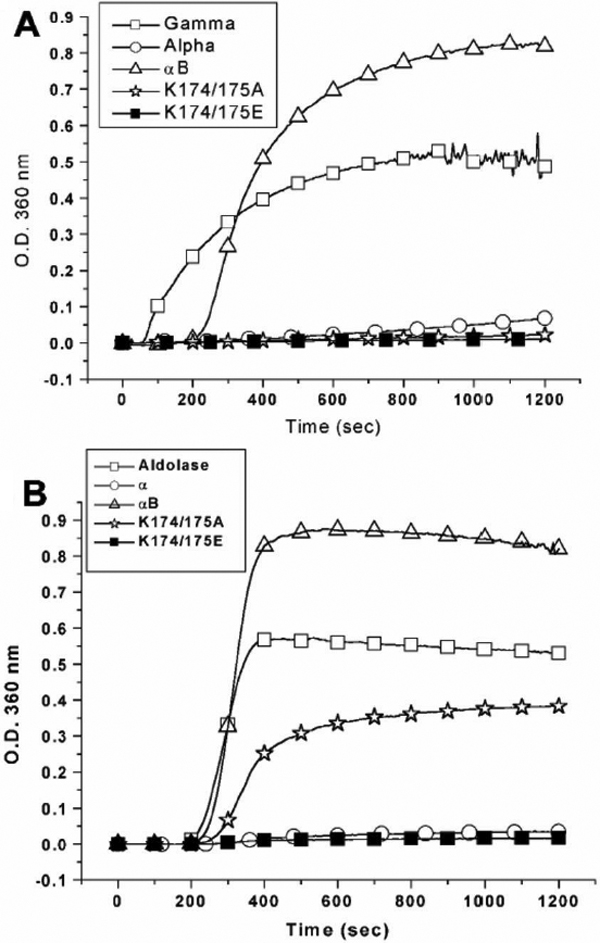
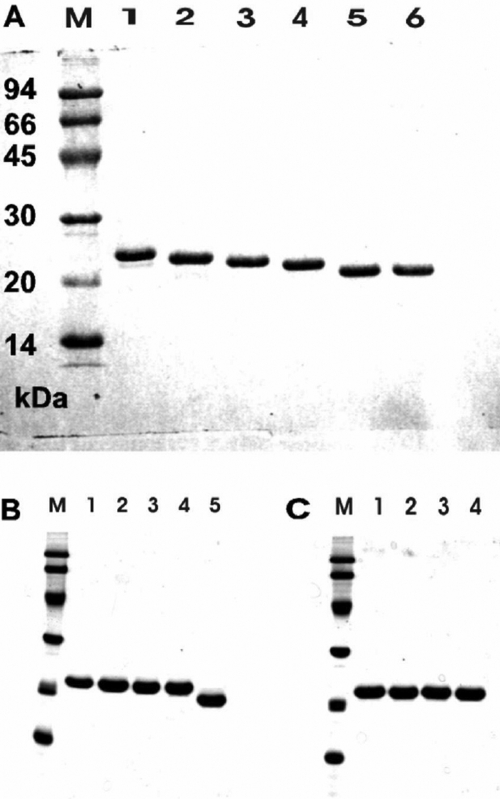
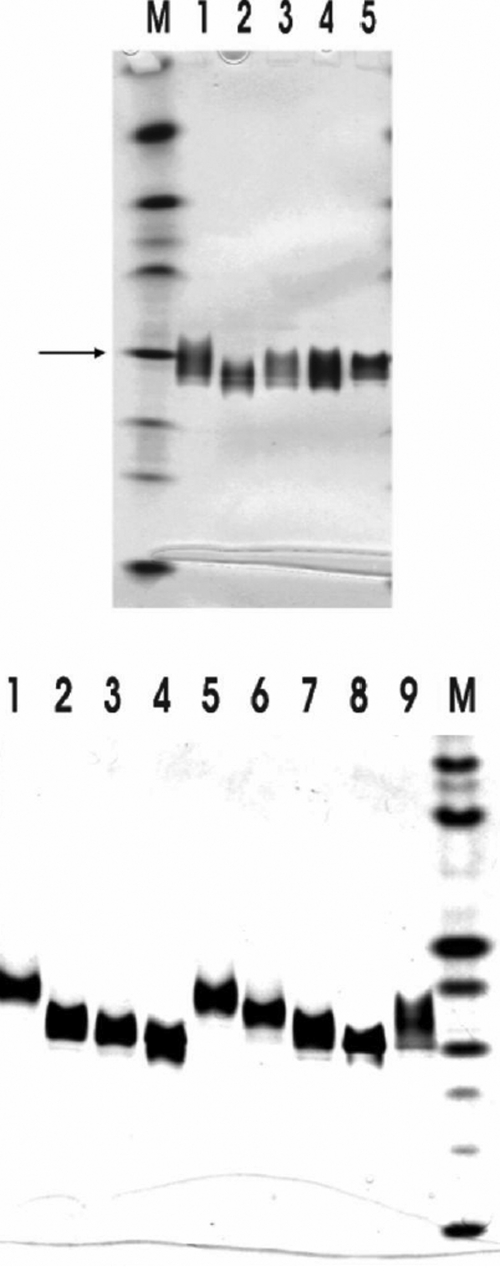
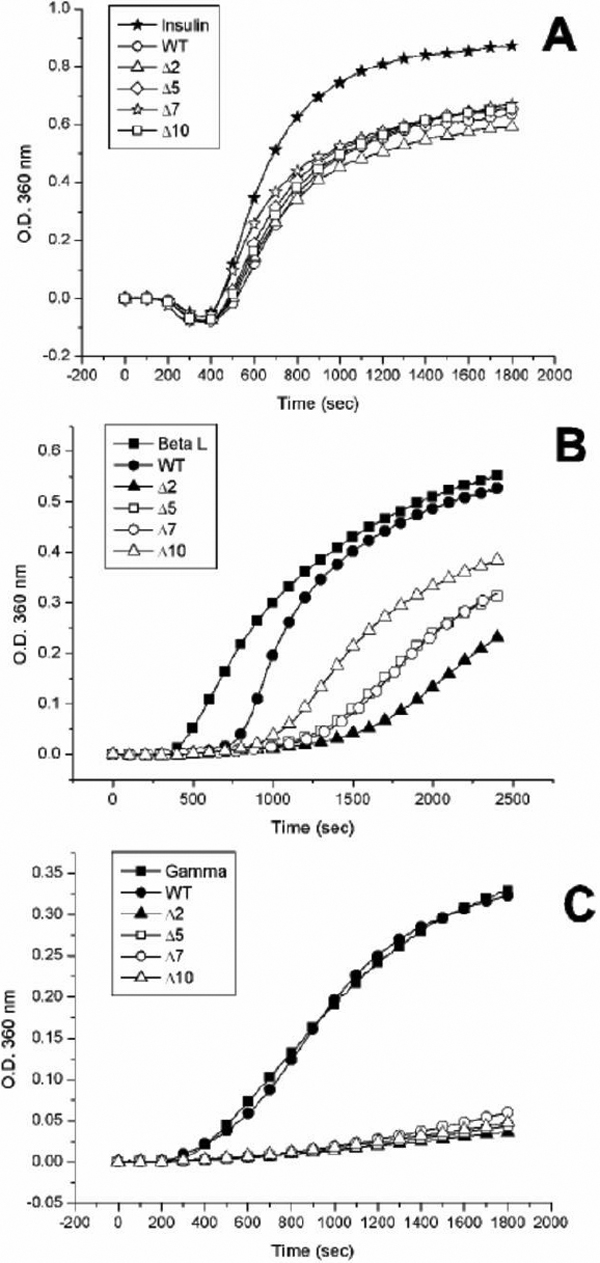
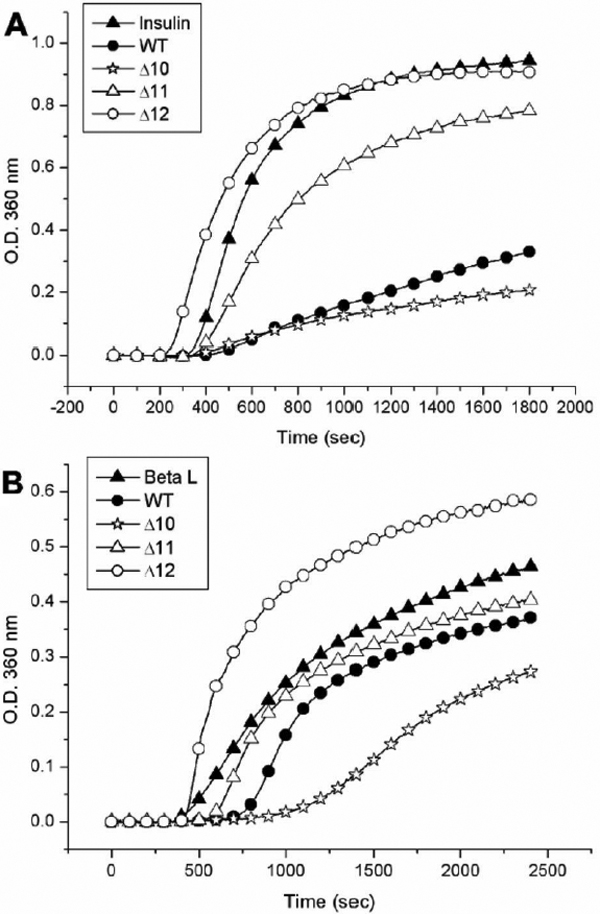
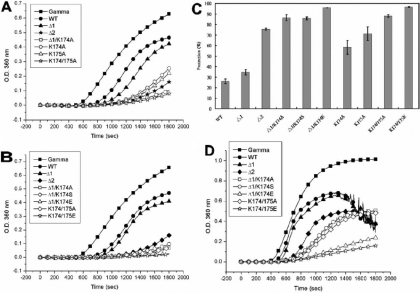
All mutants showed similar secondary and tertiary structural features to the wild-type alphaB-crystallin as revealed by circular dichroism. However, truncations of the COOH-terminal segment generated crystallin aggregates with a molecular size slightly smaller than that of the wild-type alphaB-crystallin. The deletion of 12 residues from the COOH-terminal end greatly reduced the solubility, thermostability, and chaperone activity of alphaB-crystallin. On the contrary, the truncation of only 10 residues or less resulted in increased thermostability and enhanced anti-aggregation chaperone activity of alphaB-crystallin, with a maximal effect occurring on elimination of the last two residues. Moreover, displacing the last two lysines with glutamates or other neutral amino acids tended to show even higher chaperone activity than the deletion mutants.
Our study clearly demonstrated that both the length and electrostatic charge of the COOH-terminal segment play crucial roles in governing the structural stability and chaperone activity of alphaB-crystallin.
αB-晶状体蛋白是小热休克蛋白(sHSP)家族的成员,其羧基末端延伸片段似乎是一个柔性多肽片段,在生理条件下易受蛋白水解截断和修饰。为了研究其对结构和伴侣样活性的作用,我们构建了猪αB-晶状体蛋白的各种突变体,这些突变体要么是羧基末端的系列截断,要么是对最后两个残基进行位点特异性诱变。
通过圆二色性(CD)光谱、荧光光谱、质谱、凝胶渗透快速蛋白质液相色谱和动态光散射分光光度法分析这些突变体的结构。在热应激和非热应激条件下进行伴侣活性测定。通过浊度测定和CD光谱检查蛋白质的稳定性。
圆二色性显示,所有突变体的二级和三级结构特征与野生型αB-晶状体蛋白相似。然而,羧基末端片段的截断产生了分子大小略小于野生型αB-晶状体蛋白的晶状体蛋白聚集体。从羧基末端缺失12个残基大大降低了αB-晶状体蛋白的溶解度、热稳定性和伴侣活性。相反,仅截断10个或更少的残基导致αB-晶状体蛋白的热稳定性增加和抗聚集伴侣活性增强,最大效果出现在去除最后两个残基时。此外,用谷氨酸或其他中性氨基酸取代最后两个赖氨酸往往比缺失突变体表现出更高的伴侣活性。
我们的研究清楚地表明,羧基末端片段的长度和静电荷在控制αB-晶状体蛋白的结构稳定性和伴侣活性方面都起着关键作用。