Walton Eric F, Wu Rong-Mei, Richardson Annette C, Davy Marcus, Hellens Roger P, Thodey Kate, Janssen Bart J, Gleave Andrew P, Rae Georgina M, Wood Marion, Schaffer Robert J
The New Zealand Institute for Plant and Food Research Limited, Mt Albert, Auckland, New Zealand.
J Exp Bot. 2009;60(13):3835-48. doi: 10.1093/jxb/erp231. Epub 2009 Aug 3.
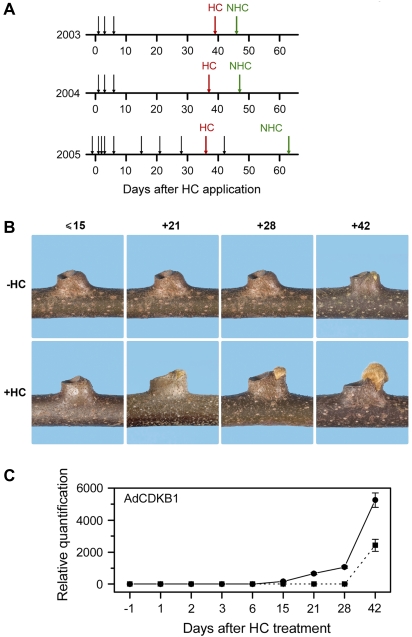
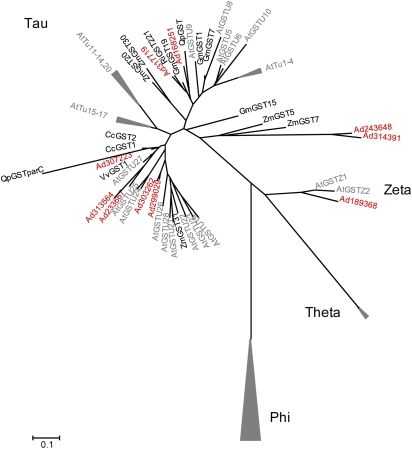
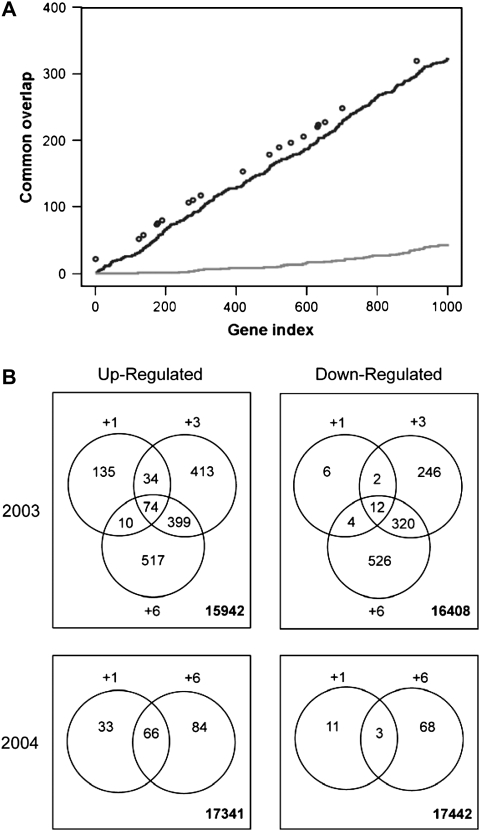
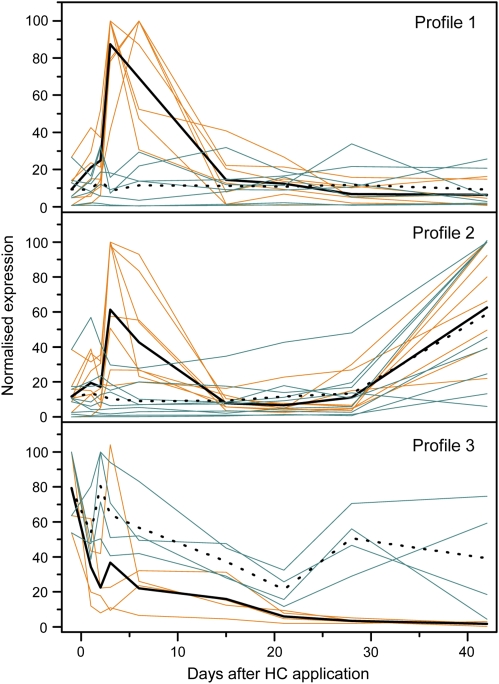
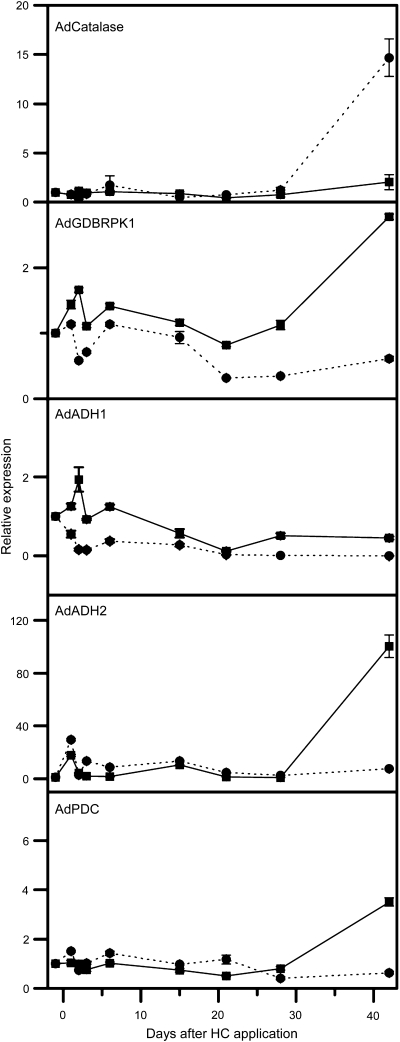
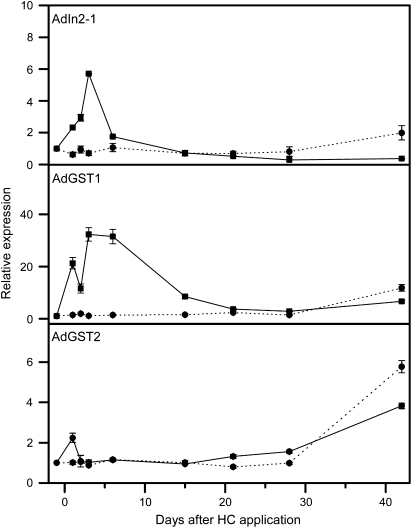
Budbreak in kiwifruit (Actinidia deliciosa) can be poor in locations that have warm winters with insufficient winter chilling. Kiwifruit vines are often treated with the dormancy-breaking chemical hydrogen cyanamide (HC) to increase and synchronize budbreak. This treatment also offers a tool to understand the processes involved in budbreak. A genomics approach is presented here to increase our understanding of budbreak in kiwifruit. Most genes identified following HC application appear to be associated with responses to stress, but a number of genes appear to be associated with the reactivation of growth. Three patterns of gene expression were identified: Profile 1, an HC-induced transient activation; Profile 2, an HC-induced transient activation followed by a growth-related activation; and Profile 3, HC- and growth-repressed. One group of genes that was rapidly up-regulated in response to HC was the glutathione S-transferase (GST) class of genes, which have been associated with stress and signalling. Previous budbreak studies, in three other species, also report up-regulated GST expression. Phylogenetic analysis of these GSTs showed that they clustered into two sub-clades, suggesting a strong correlation between their expression and budbreak across species.
在冬季温暖且低温不足的地区,奇异果(美味猕猴桃)的萌芽情况可能不佳。奇异果藤蔓常使用打破休眠的化学物质氰胺(HC)进行处理,以增加萌芽并使其同步。这种处理方法还为了解萌芽过程提供了一种手段。本文提出了一种基因组学方法,以增进我们对奇异果萌芽的理解。施用HC后鉴定出的大多数基因似乎与应激反应有关,但也有一些基因似乎与生长的重新激活有关。鉴定出了三种基因表达模式:模式1,HC诱导的瞬时激活;模式2,HC诱导的瞬时激活,随后是与生长相关的激活;模式3,HC和生长抑制。一组响应HC而迅速上调的基因是谷胱甘肽S-转移酶(GST)类基因,这些基因与应激和信号传导有关。之前在其他三个物种中进行的萌芽研究也报告了GST表达上调。对这些GST进行系统发育分析表明,它们聚为两个亚分支,这表明它们的表达与跨物种的萌芽之间存在很强的相关性。