Punj Vasu, Matta Hittu, Schamus Sandra, Chaudhary Preet M
Department of Medicine, Division of Hematology-Oncology, Hillman Cancer Center, University of Pittsburgh Cancer Institute, University of Pittsburgh, Pittsburgh, PA, USA.
BMC Med Genomics. 2009 Aug 6;2:50. doi: 10.1186/1755-8794-2-50.
Kaposi's sarcoma (KS) associated herpesvirus (KSHV) is the etiological agent of KS, a neoplasm characterized by proliferating spindle cells, extensive neoangiogenesis and a prominent inflammatory infiltrate. Infection of blood vascular endothelial cells with KSHV in vitro results in their spindle cell transformation, which is accompanied by increased expression of inflammatory chemokines and cytokines, and acquisition of lymphatic endothelial markers. Mimicking the effect of viral infection, ectopic expression of KSHV-encoded latent protein vFLIP K13 is sufficient to induce spindle transformation of vascular endothelial cells. However, the effect of K13 expression on global gene expression and induction of lymphatic endothelial markers in vascular endothelial cells has not been studied.
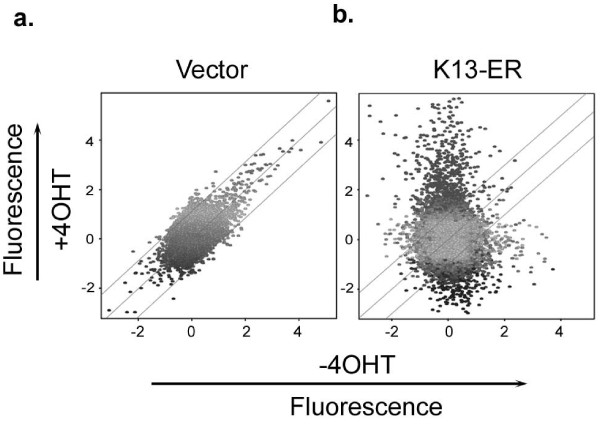
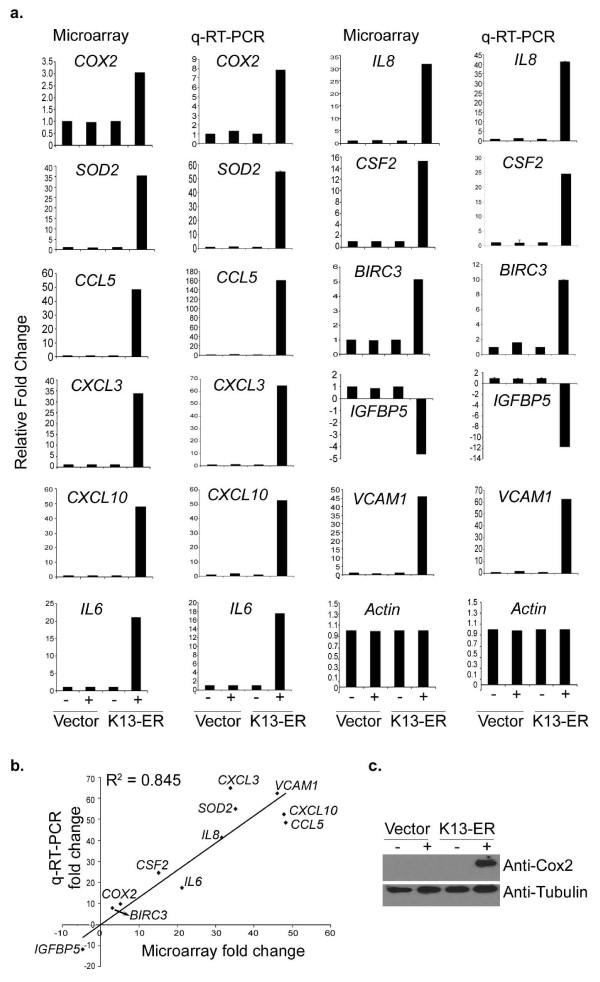
We used gene array analysis to determine change in global gene expression induced by K13 in human vascular endothelial cells (HUVECs). Results of microarray analysis were validated by quantitative RT-PCR, immunoblotting and a multiplex cytokine array.
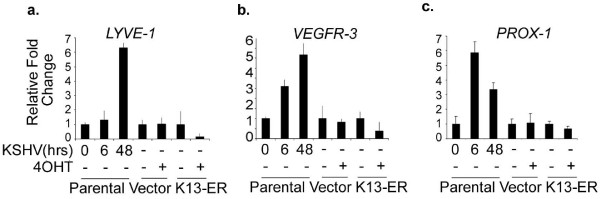
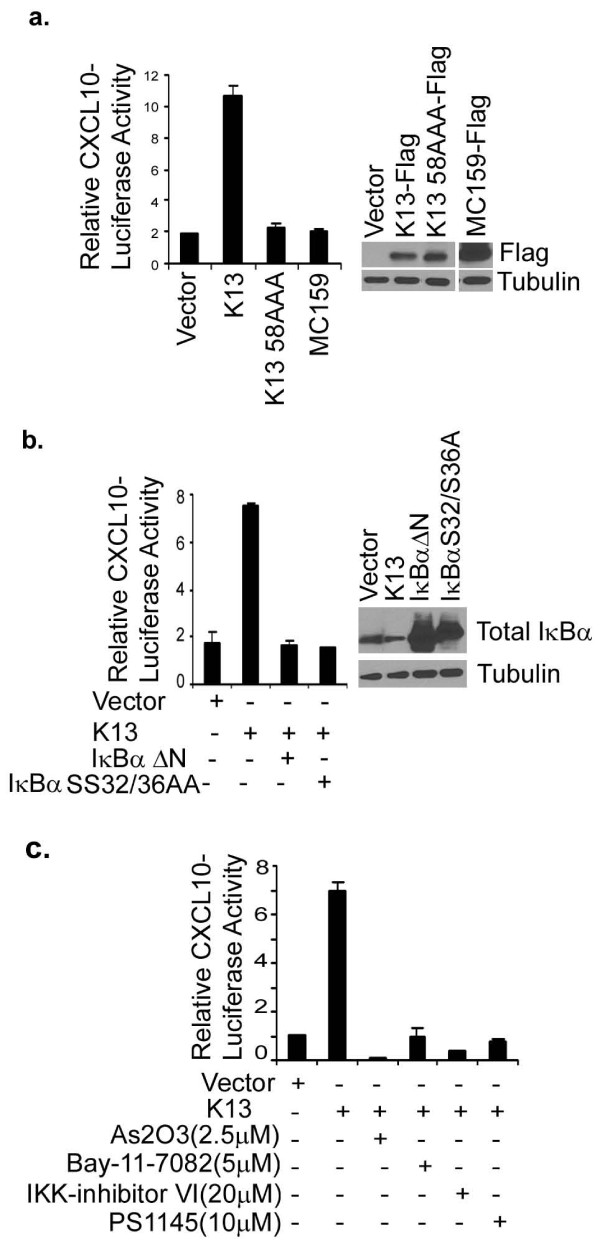
K13 affected the expression of several genes whose expression is known to be modulated by KSHV infection, including genes involved in immune and inflammatory responses, anti-apoptosis, stress response, and angiogenesis. The NF-kappaB pathway was the major signaling pathway affected by K13 expression, and genetic and pharmacological inhibitors of this pathway effectively blocked K13-induced transcriptional activation of the promoter of CXCL10, one of the chemokines whose expression was highly upregulated by K13. However, K13, failed to induce expression of lymphatic markers in blood vascular endothelial cells.
While K13 may account for change in the expression of a majority of genes observed following KSHV infection, it is not sufficient for inducing lymphatic reprogramming of blood vascular endothelial cells.
卡波西肉瘤相关疱疹病毒(KSHV)是卡波西肉瘤的病原体,卡波西肉瘤是一种以梭形细胞增殖、广泛新生血管形成和显著炎症浸润为特征的肿瘤。体外KSHV感染血管内皮细胞会导致其梭形细胞转化,同时伴有炎症趋化因子和细胞因子表达增加以及淋巴管内皮标志物的获得。模仿病毒感染的效果,KSHV编码的潜伏蛋白vFLIP K13的异位表达足以诱导血管内皮细胞的梭形转化。然而,K13表达对血管内皮细胞中全局基因表达和淋巴管内皮标志物诱导的影响尚未得到研究。
我们使用基因芯片分析来确定K13在人血管内皮细胞(HUVECs)中诱导的全局基因表达变化。通过定量逆转录聚合酶链反应、免疫印迹和多重细胞因子阵列对芯片分析结果进行验证。
K13影响了几个已知受KSHV感染调节的基因的表达,包括参与免疫和炎症反应、抗凋亡、应激反应和血管生成的基因。核因子κB途径是受K13表达影响的主要信号通路,该途径的基因和药物抑制剂有效地阻断了K13诱导的CXCL10启动子的转录激活,CXCL10是一种趋化因子,其表达被K13高度上调。然而,K13未能诱导血管内皮细胞中淋巴管标志物的表达。
虽然K13可能解释了KSHV感染后观察到的大多数基因表达变化,但它不足以诱导血管内皮细胞的淋巴管重编程。