Sychev Zoi E, Hu Alex, DiMaio Terri A, Gitter Anthony, Camp Nathan D, Noble William S, Wolf-Yadlin Alejandro, Lagunoff Michael
Molecular and Cellular Biology Program, University of Washington, Seattle, Washington, United States of America.
Department of Microbiology, University of Washington, Seattle, Washington, United States of America.
PLoS Pathog. 2017 Mar 3;13(3):e1006256. doi: 10.1371/journal.ppat.1006256. eCollection 2017 Mar.
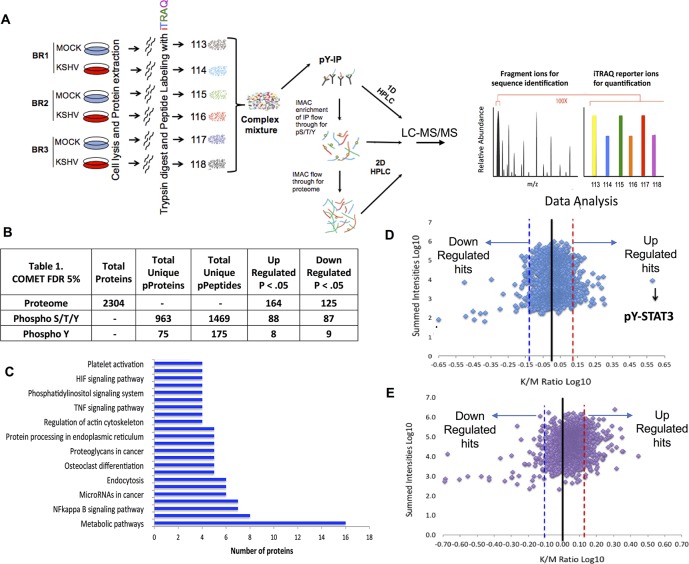
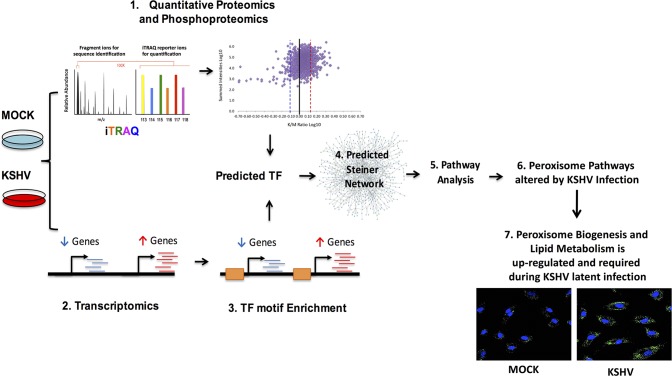
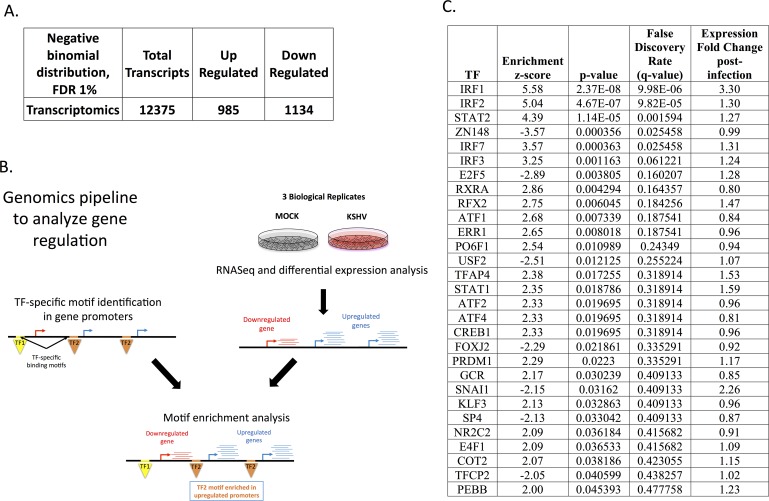
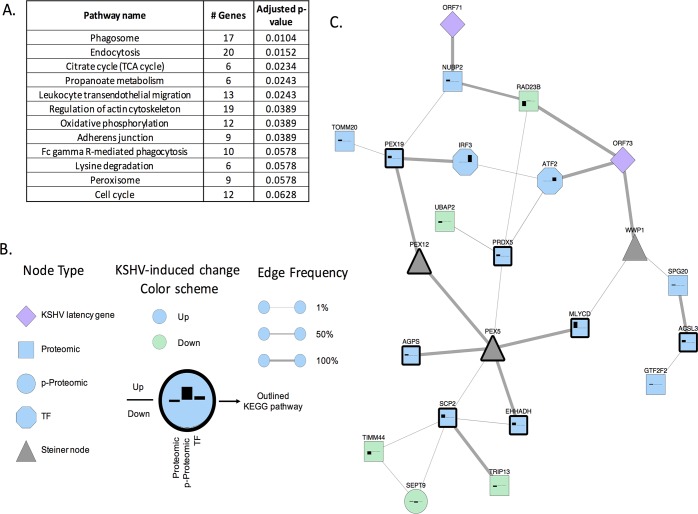
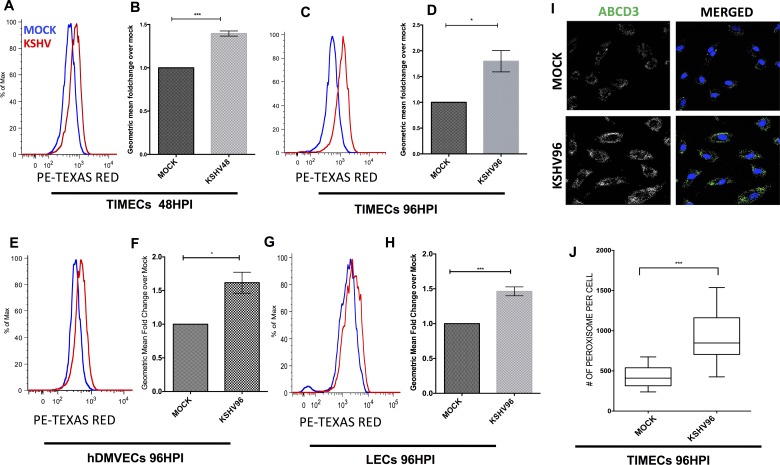
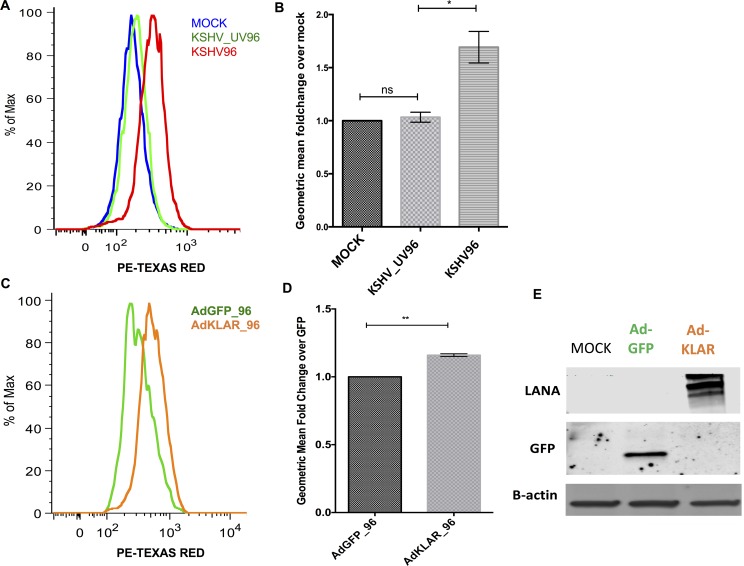
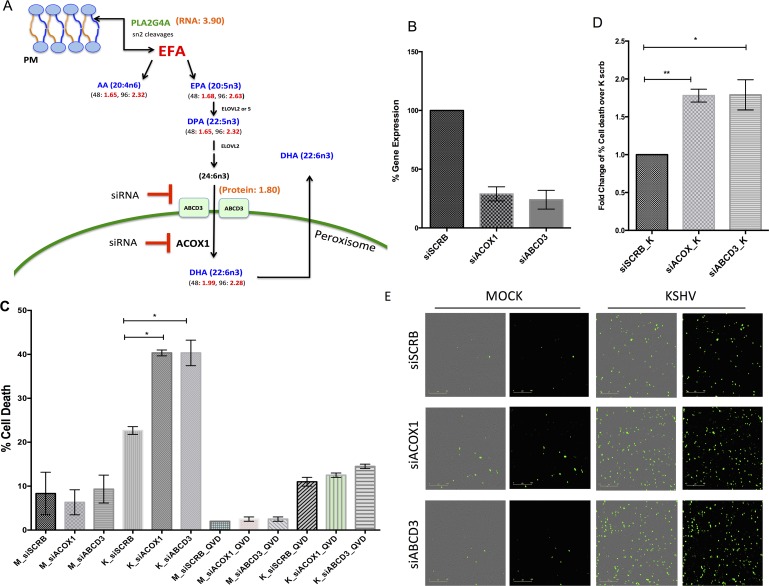
Kaposi's Sarcoma associated Herpesvirus (KSHV), an oncogenic, human gamma-herpesvirus, is the etiological agent of Kaposi's Sarcoma the most common tumor of AIDS patients world-wide. KSHV is predominantly latent in the main KS tumor cell, the spindle cell, a cell of endothelial origin. KSHV modulates numerous host cell-signaling pathways to activate endothelial cells including major metabolic pathways involved in lipid metabolism. To identify the underlying cellular mechanisms of KSHV alteration of host signaling and endothelial cell activation, we identified changes in the host proteome, phosphoproteome and transcriptome landscape following KSHV infection of endothelial cells. A Steiner forest algorithm was used to integrate the global data sets and, together with transcriptome based predicted transcription factor activity, cellular networks altered by latent KSHV were predicted. Several interesting pathways were identified, including peroxisome biogenesis. To validate the predictions, we showed that KSHV latent infection increases the number of peroxisomes per cell. Additionally, proteins involved in peroxisomal lipid metabolism of very long chain fatty acids, including ABCD3 and ACOX1, are required for the survival of latently infected cells. In summary, novel cellular pathways altered during herpesvirus latency that could not be predicted by a single systems biology platform, were identified by integrated proteomics and transcriptomics data analysis and when correlated with our metabolomics data revealed that peroxisome lipid metabolism is essential for KSHV latent infection of endothelial cells.
卡波西肉瘤相关疱疹病毒(KSHV)是一种致癌的人类γ疱疹病毒,是卡波西肉瘤的病原体,卡波西肉瘤是全球艾滋病患者中最常见的肿瘤。KSHV主要潜伏在主要的卡波西肉瘤肿瘤细胞——纺锤状细胞中,纺锤状细胞是一种内皮起源的细胞。KSHV调节众多宿主细胞信号通路以激活内皮细胞,包括参与脂质代谢的主要代谢途径。为了确定KSHV改变宿主信号和内皮细胞激活的潜在细胞机制,我们确定了内皮细胞感染KSHV后宿主蛋白质组、磷酸化蛋白质组和转录组图谱的变化。使用斯坦纳森林算法整合全局数据集,并结合基于转录组预测的转录因子活性,预测潜伏性KSHV改变的细胞网络。确定了几个有趣的途径,包括过氧化物酶体生物发生。为了验证这些预测,我们表明KSHV潜伏感染增加了每个细胞中的过氧化物酶体数量。此外,参与超长链脂肪酸过氧化物酶体脂质代谢的蛋白质,包括ABCD3和ACOX1,是潜伏感染细胞存活所必需的。总之,通过整合蛋白质组学和转录组学数据分析,发现了疱疹病毒潜伏期间改变的新细胞途径,这些途径无法通过单一系统生物学平台预测,并且与我们的代谢组学数据相关联时,揭示过氧化物酶体脂质代谢对于内皮细胞的KSHV潜伏感染至关重要。