Chang Ming-Ling, Yeh Chau-Ting, Lin Deng-Yn, Ho Yu-Pin, Hsu Chen-Ming, Bissell D Montgomery
Liver Research Center and Department of Hepatogastroenterology, Chang Gung Memorial Hospital; Chang Gung University, College of Medicine, Taoyuan, Taiwan, Republic of China.
BMC Med Genomics. 2009 Aug 8;2:51. doi: 10.1186/1755-8794-2-51.
The pathogenesis of inflammation and fibrosis in chronic hepatitis C virus (HCV) infection remains unclear. Transgenic mice with constitutive HCV core over-expression display steatosis only. While the reasons for this are unclear, it may be important that core protein production in these models begins during gestation, in contrast to human hepatitis C virus infection, which occurs post-natally and typically in adults.
To more realistically model the effect of core protein production in the adult liver, we developed a mouse with conditional expression of HCV core and examined the effect of core protein production in the adult liver.
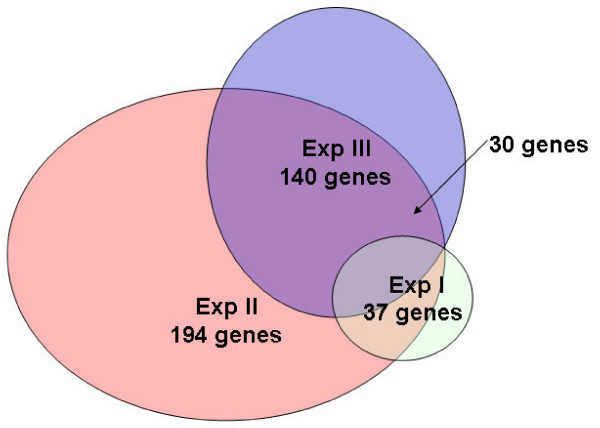
Liver biopsy samples from transgenic mice with tetracycline(tet)-regulated conditional core protein expression were evaluated immunohistologically. Microarray analysis of HCV core transgenic mice with steatohepatitis pointed to a role of the complement pathway. This was further explored by blocking complement activation by in vivo administration of CD55 (decay accelerating factor for complement), which inhibits activation of C3.
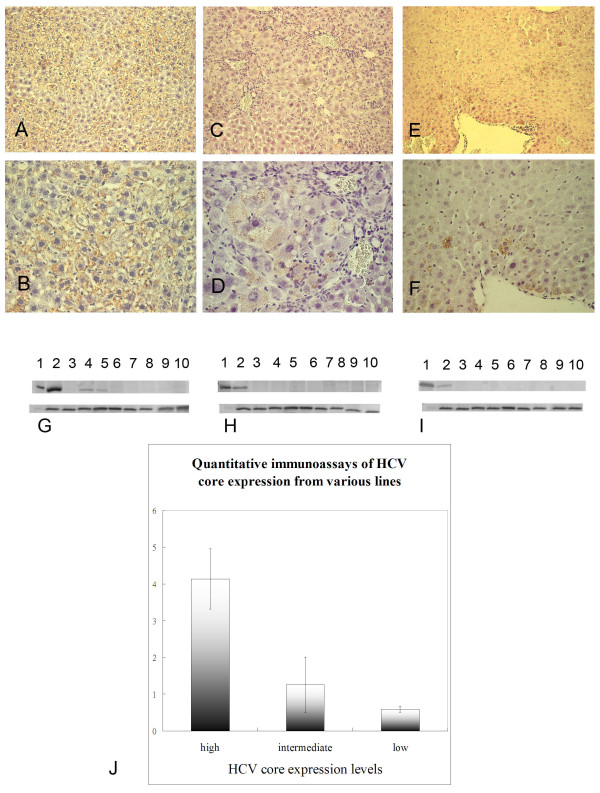
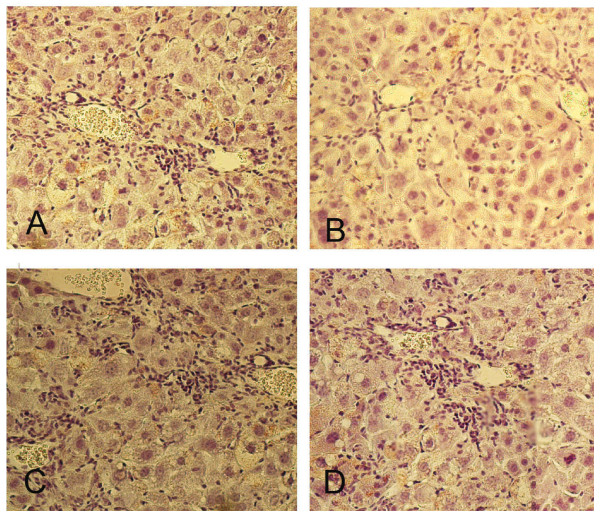
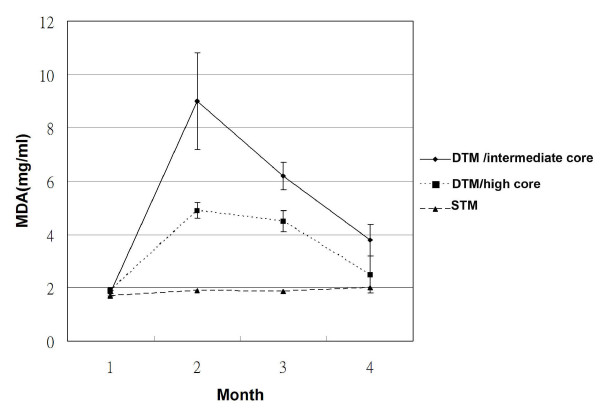
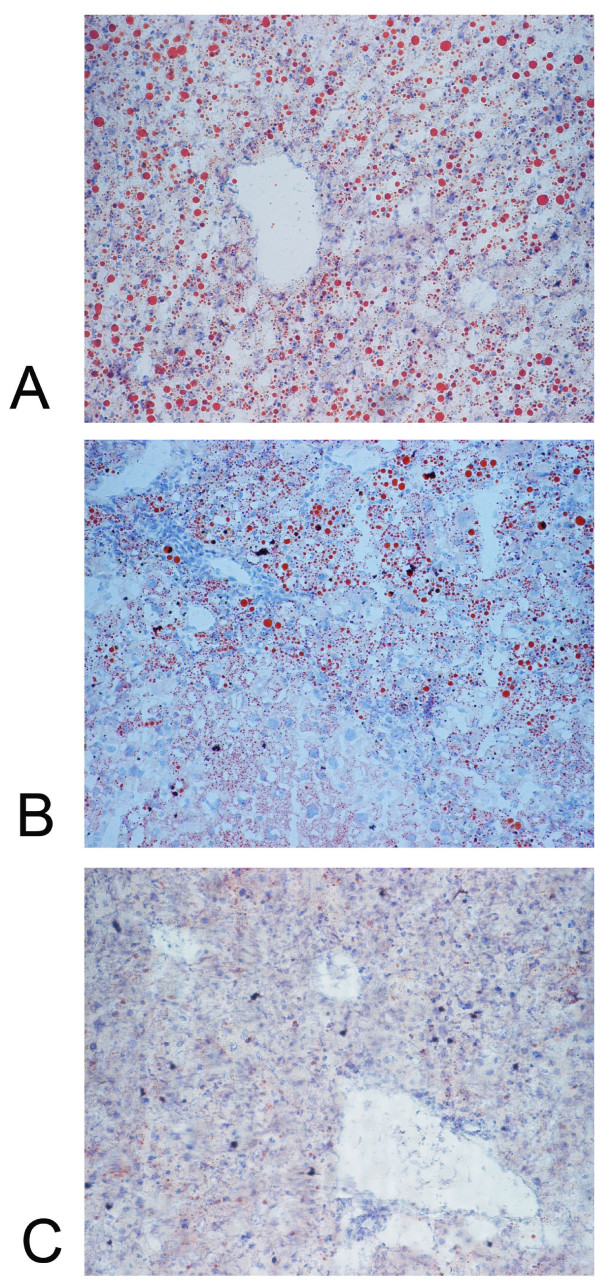
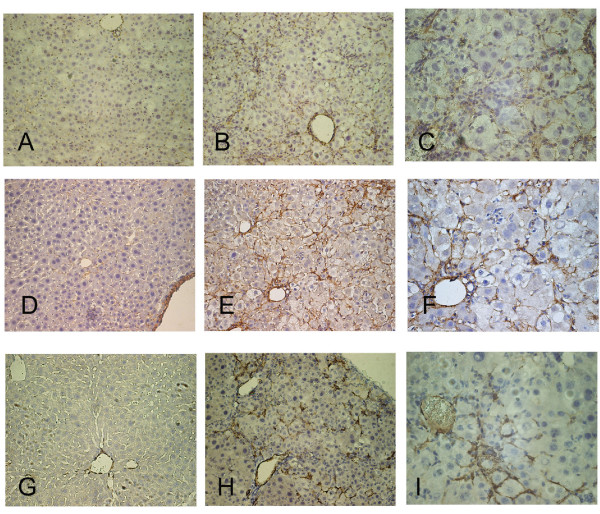
Transgenic mice exhibited low, intermediate, or high HCV core protein expression when fed a permissive diet of standard chow. Aside from hepatic steatosis, hepatic inflammation and fibrosis were seen in mice with intermediate levels of core protein. Microarray analyses of inflamed liver demonstrated activation of both the complement (C3 up-regulation) and coagulation pathways (fibrinogen B up-regulation). Administration of CD55 reduced hepatic inflammation.
Transgenic mice that conditionally express intermediate HCV core protein develop inflammation, steatosis, and fibrosis. These effects mediated by HCV core are reduced by administration of CD55, a regulator of the complement pathway. The model may be valuable in investigating the pathogenesis of liver inflammation in chronic hepatitis C.
慢性丙型肝炎病毒(HCV)感染中炎症和纤维化的发病机制仍不清楚。持续过表达HCV核心蛋白的转基因小鼠仅表现出脂肪变性。虽然其原因尚不清楚,但可能重要的是,这些模型中核心蛋白的产生始于妊娠期,这与人类丙型肝炎病毒感染不同,后者发生在出生后,且通常发生在成年人中。
为了更真实地模拟核心蛋白在成年肝脏中产生的影响,我们构建了一种可条件性表达HCV核心蛋白的小鼠,并研究了核心蛋白在成年肝脏中产生的影响。
对四环素(tet)调控的条件性核心蛋白表达转基因小鼠的肝活检样本进行免疫组织学评估。对患有脂肪性肝炎的HCV核心转基因小鼠进行微阵列分析,结果表明补体途径发挥了作用。通过体内给予CD55(补体衰变加速因子)阻断补体激活来进一步探究这一作用,CD55可抑制C3的激活。
当给转基因小鼠喂食标准饲料的允许性饮食时,它们表现出低、中或高HCV核心蛋白表达。除了肝脂肪变性外,核心蛋白水平中等的小鼠还出现了肝脏炎症和纤维化。对发炎肝脏的微阵列分析显示补体(C3上调)和凝血途径(纤维蛋白原B上调)均被激活。给予CD55可减轻肝脏炎症。
可条件性表达中等水平HCV核心蛋白的转基因小鼠会出现炎症、脂肪变性和纤维化。HCV核心介导的这些效应可通过给予补体途径调节剂CD55而减轻。该模型对于研究慢性丙型肝炎肝脏炎症的发病机制可能具有重要价值。