Agius Elaine, Lacy Katie E, Vukmanovic-Stejic Milica, Jagger Ann L, Papageorgiou Anna-Pia, Hall Sue, Reed John R, Curnow S John, Fuentes-Duculan Judilyn, Buckley Christopher D, Salmon Mike, Taams Leonie S, Krueger James, Greenwood John, Klein Nigel, Rustin Malcolm H A, Akbar Arne N
Department of Immunology, Division of Infection and Immunity, University College London, London, W1T 4JF, England, UK.
J Exp Med. 2009 Aug 31;206(9):1929-40. doi: 10.1084/jem.20090896. Epub 2009 Aug 10.
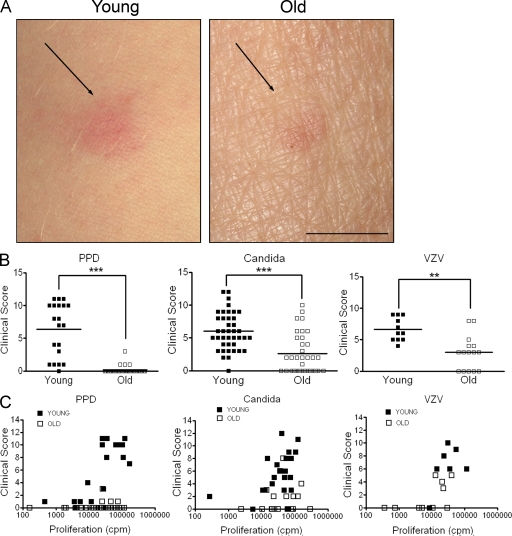
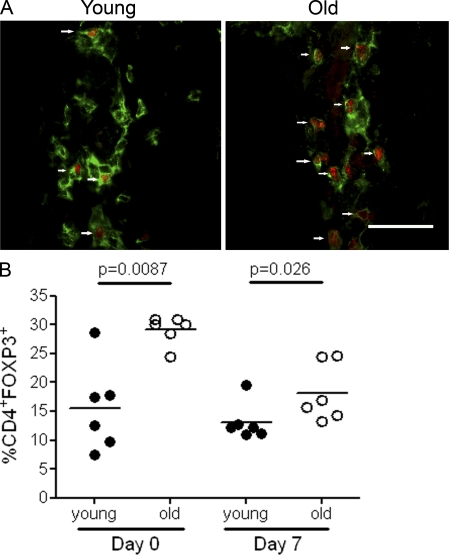
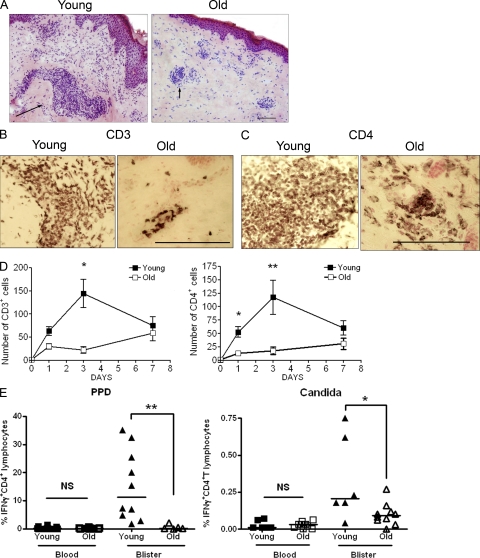
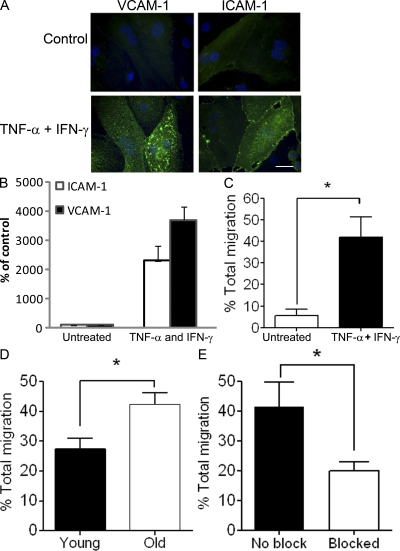
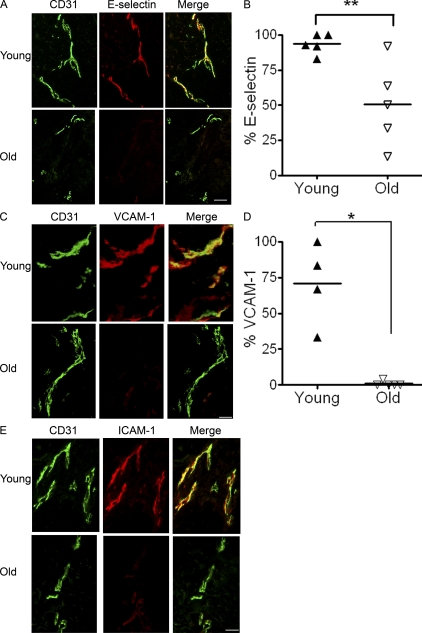
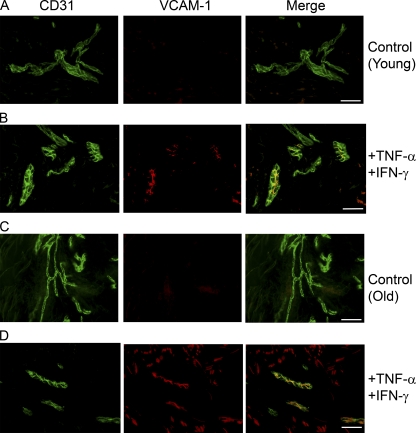
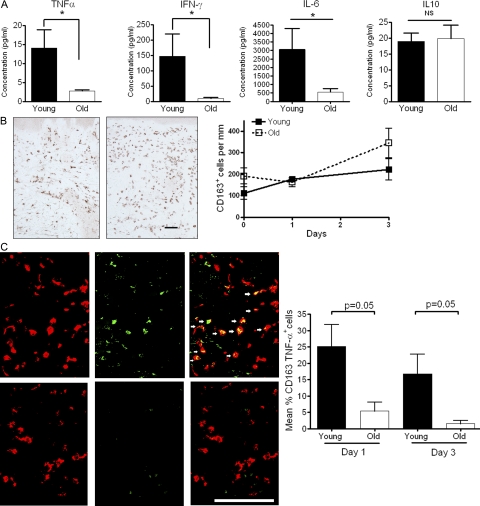
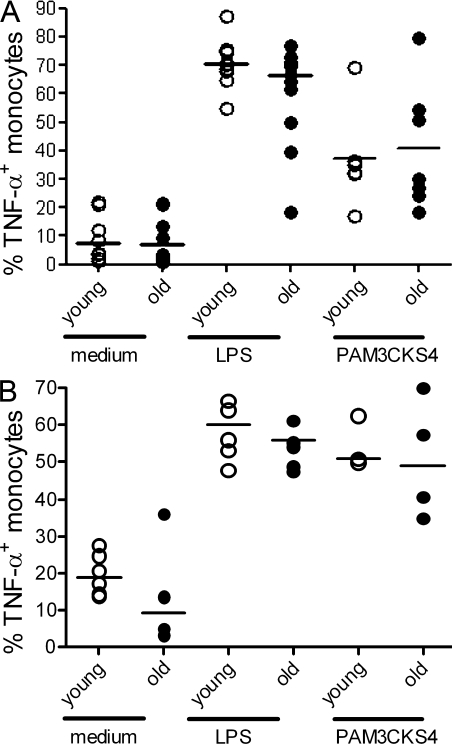
Immunity declines during aging, however the mechanisms involved in this decline are not known. In this study, we show that cutaneous delayed type hypersensitivity (DTH) responses to recall antigens are significantly decreased in older individuals. However, this is not related to CC chemokine receptor 4, cutaneous lymphocyte-associated antigen, or CD11a expression by CD4(+) T cells or their physical capacity for migration. Instead, there is defective activation of dermal blood vessels in older subject that results from decreased TNF-alpha secretion by macrophages. This prevents memory T cell entry into the skin after antigen challenge. However, isolated cutaneous macrophages from these subjects can be induced to secrete TNF-alpha after stimulation with Toll-like receptor (TLR) 1/2 or TLR 4 ligands in vitro, indicating that the defect is reversible. The decreased conditioning of tissue microenvironments by macrophage-derived cytokines may therefore lead to defective immunosurveillance by memory T cells. This may be a predisposing factor for the development of malignancy and infection in the skin during aging.
免疫力在衰老过程中会下降,然而导致这种下降的机制尚不清楚。在本研究中,我们发现老年个体对回忆抗原的皮肤迟发型超敏反应(DTH)显著降低。然而,这与CC趋化因子受体4、皮肤淋巴细胞相关抗原或CD4(+) T细胞的CD11a表达或其迁移的物理能力无关。相反,老年受试者真皮血管的激活存在缺陷,这是由巨噬细胞分泌的肿瘤坏死因子-α(TNF-α)减少所致。这阻止了抗原刺激后记忆T细胞进入皮肤。然而,在体外使用Toll样受体(TLR)1/2或TLR 4配体刺激后,这些受试者分离出的皮肤巨噬细胞可被诱导分泌TNF-α,表明该缺陷是可逆的。因此,巨噬细胞衍生的细胞因子对组织微环境的调节作用降低可能导致记忆T细胞的免疫监视缺陷。这可能是衰老过程中皮肤发生恶性肿瘤和感染的一个易感因素。