• 文献检索
  • 文档翻译
  • 深度研究
  • 学术资讯
  • Suppr Zotero 插件Zotero 插件
  • 邀请有礼
  • 套餐&价格
  • 历史记录
应用&插件
Suppr Zotero 插件Zotero 插件浏览器插件Mac 客户端Windows 客户端微信小程序
定价
高级版会员购买积分包购买API积分包
服务
文献检索文档翻译深度研究API 文档MCP 服务
关于我们
关于 Suppr公司介绍联系我们用户协议隐私条款
关注我们

Suppr 超能文献

核心技术专利:CN118964589B侵权必究
粤ICP备2023148730 号-1Suppr @ 2026

文献检索

告别复杂PubMed语法,用中文像聊天一样搜索,搜遍4000万医学文献。AI智能推荐,让科研检索更轻松。

立即免费搜索

文件翻译

保留排版,准确专业,支持PDF/Word/PPT等文件格式,支持 12+语言互译。

免费翻译文档

深度研究

AI帮你快速写综述,25分钟生成高质量综述,智能提取关键信息,辅助科研写作。

立即免费体验

选择性信息搜寻:消费者对结直肠癌筛查的循证信息的回避能否用认知失调理论来解释?

Selective information seeking: can consumers' avoidance of evidence-based information on colorectal cancer screening be explained by the theory of cognitive dissonance?

作者信息

Steckelberg Anke, Kasper Jürgen, Mühlhauser Ingrid

机构信息

University of Hamburg, Unit of Health Sciences and Education, Hamburg, Germany.

出版信息

Ger Med Sci. 2007 Aug 27;5:Doc05.

PMID:19675713
原文链接:https://pmc.ncbi.nlm.nih.gov/articles/PMC2703235/
Abstract

BACKGROUND

Evidence-based patient information (EBPI) is a prerequisite for informed decision-making. However, presentation of EBPI may lead to irrational reactions causing avoidance, minimisation and devaluation of the information.

OBJECTIVE

To explore whether the theory of cognitive dissonance is applicable to medical decision-making and useful to explain these phenomena.

SETTING AND PARTICIPANTS

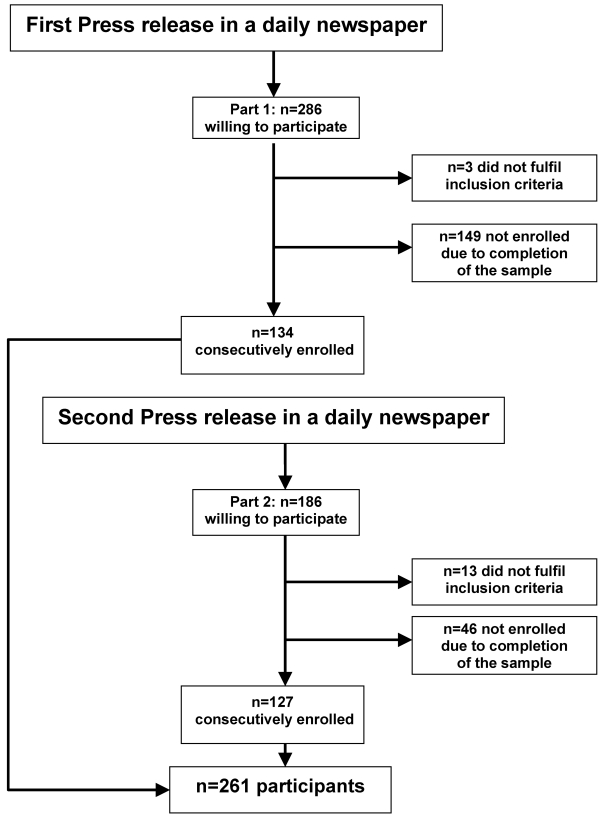
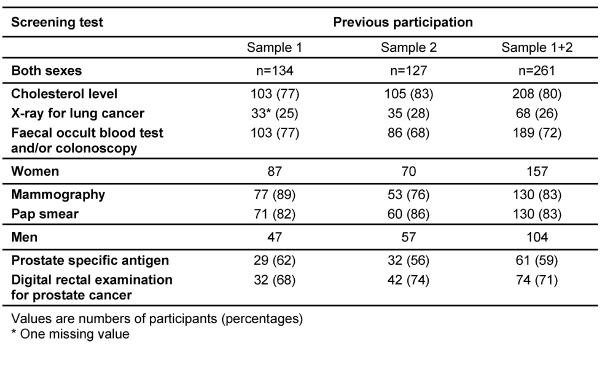
261 volunteers from Hamburg (157 women), >or=50 years old without diagnosis of colorectal cancer. DESIGN AND VARIABLES: Within an experiment we simulated information seeking on colorectal cancer screening. Consumers' attitudes towards screening were surveyed using a rating scale from -5 (participate in no way) to +5 (participate unconditionally) (independent variable). Using a cover story, participants were asked to sort 5 article headlines according to their reading preferences. The headlines simulated the pro to contra variety of contents to be found in print media about colorectal cancer screening. The dependent variable was the sequence of article headlines.

RESULTS

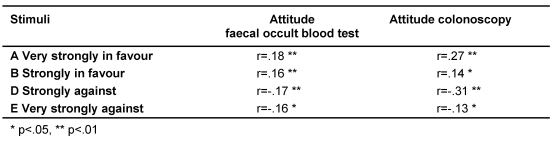
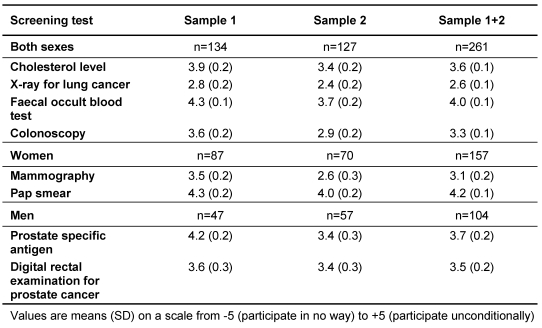
Participants were very much in favour of screening with scores for faecal occult blood test of 4.0 (0.1) and for colonoscopy 3.3 (0.1). According to our hypothesis we found statistically significant positive correlations between the stimuli in favour of screening and attitudes and significant negative correlations between the stimuli against screening and attitudes.

CONCLUSION

The theory of cognitive dissonance is applicable to medical decision-making. It may explain some phenomena of irrational reactions to evidence-based patient information.

摘要

背景

循证患者信息(EBPI)是做出明智决策的前提条件。然而,EBPI的呈现可能会引发非理性反应,导致对信息的回避、轻视和贬低。

目的

探讨认知失调理论是否适用于医疗决策,以及是否有助于解释这些现象。

设置与参与者

来自汉堡的261名志愿者(157名女性),年龄≥50岁,未被诊断为结直肠癌。

设计与变量

在一项实验中,我们模拟了结直肠癌筛查的信息搜索过程。使用从-5(绝不参与)到+5(无条件参与)的评分量表对消费者对筛查的态度进行了调查(自变量)。通过一个掩饰故事,要求参与者根据他们的阅读偏好对5篇文章标题进行排序。这些标题模拟了印刷媒体上关于结直肠癌筛查的各种支持与反对的内容。因变量是文章标题的排序顺序。

结果

参与者非常支持筛查,粪便潜血试验的得分是4.0(0.1),结肠镜检查的得分是3.3(0.1)。根据我们的假设,我们发现支持筛查的刺激因素与态度之间存在统计学上显著的正相关,而反对筛查的刺激因素与态度之间存在显著的负相关。

结论

认知失调理论适用于医疗决策。它可能解释了对循证患者信息的一些非理性反应现象。
https://cdn.ncbi.nlm.nih.gov/pmc/blobs/1a66/2703235/095438a1c47c/GMS-05-05-g-001.jpg
https://cdn.ncbi.nlm.nih.gov/pmc/blobs/1a66/2703235/01487c280927/GMS-05-05-t-001.jpg
https://cdn.ncbi.nlm.nih.gov/pmc/blobs/1a66/2703235/7c45beef39f6/GMS-05-05-t-002.jpg
https://cdn.ncbi.nlm.nih.gov/pmc/blobs/1a66/2703235/62697fdecc35/GMS-05-05-t-003.jpg
https://cdn.ncbi.nlm.nih.gov/pmc/blobs/1a66/2703235/095438a1c47c/GMS-05-05-g-001.jpg
https://cdn.ncbi.nlm.nih.gov/pmc/blobs/1a66/2703235/01487c280927/GMS-05-05-t-001.jpg
https://cdn.ncbi.nlm.nih.gov/pmc/blobs/1a66/2703235/7c45beef39f6/GMS-05-05-t-002.jpg
https://cdn.ncbi.nlm.nih.gov/pmc/blobs/1a66/2703235/62697fdecc35/GMS-05-05-t-003.jpg
https://cdn.ncbi.nlm.nih.gov/pmc/blobs/1a66/2703235/095438a1c47c/GMS-05-05-g-001.jpg

相似文献

1
Selective information seeking: can consumers' avoidance of evidence-based information on colorectal cancer screening be explained by the theory of cognitive dissonance?选择性信息搜寻:消费者对结直肠癌筛查的循证信息的回避能否用认知失调理论来解释?
Ger Med Sci. 2007 Aug 27;5:Doc05.
2
Risk information--barrier to informed choice? A focus group study.
Soz Praventivmed. 2004;49(6):375-80. doi: 10.1007/s00038-004-3153-4.
3
The impact of personalised risk information compared to a positive/negative result on informed choice and intention to undergo colonoscopy following colorectal Cancer screening in Scotland (PERICCS) - a randomised controlled trial: study protocol.苏格兰基于结直肠癌筛查的个人化风险信息对比阳性/阴性结果对知情选择和接受结肠镜检查意向的影响(PERICCS)-一项随机对照试验:研究方案。
BMC Public Health. 2019 Apr 16;19(1):411. doi: 10.1186/s12889-019-6734-0.
4
Faecal occult blood screening: knowledge, attitudes, and practice in four Hong Kong primary care clinics.粪便潜血筛查:四家香港基层医疗诊所的知识、态度和实践。
Hong Kong Med J. 2011 Oct;17(5):350-7.
5
Avoiding versus seeking: the relationship of information seeking to avoidance, blunting, coping, dissonance, and related concepts.回避与寻求:信息寻求与回避、情感迟钝、应对、失调及相关概念的关系。
J Med Libr Assoc. 2005 Jul;93(3):353-62.
6
["Who is glossary?"--Focus-group evaluation of an evidence-based consumer information brochure on risk of falling and fall prevention in the elderly].
Pflege. 2010 Aug;23(4):267-74. doi: 10.1024/1012-5302/a000054.
7
Cognitive dissonance and attitudes toward unpleasant medical screenings.认知失调与对不愉快医学筛查的态度
J Health Psychol. 2016 Sep;21(9):2075-84. doi: 10.1177/1359105315570986. Epub 2015 Feb 20.
8
Factors Associated with Informed Decisions and Participation in Bowel Cancer Screening among Adults with Lower Education and Literacy.低教育水平和识字能力的成年人中与知情决策及参与肠癌筛查相关的因素
Med Decis Making. 2014 Aug;34(6):756-72. doi: 10.1177/0272989X13518976. Epub 2014 Jan 13.
9
What motivates Chinese consumers to avoid information about the COVID-19 pandemic?: The perspective of the stimulus-organism-response model.是什么促使中国消费者回避新冠疫情信息?:刺激-机体-反应模型视角
Inf Process Manag. 2021 Jan;58(1):102407. doi: 10.1016/j.ipm.2020.102407. Epub 2020 Oct 6.
10
Geographic variation in compliance with Australian colorectal cancer screening programs: the role of attitudinal and cognitive traits.澳大利亚结直肠癌筛查项目依从性的地理差异:态度和认知特征的作用。
Rural Remote Health. 2019 Jul;19(3):4957. doi: 10.22605/RRH4957. Epub 2019 Jul 22.

引用本文的文献

1
Reasons for No Colonoscopy After an Unfavorable Screening Result in Dutch Colorectal Cancer Screening: A Nationwide Questionnaire.荷兰结直肠癌筛查中因初筛结果不佳而未行结肠镜检查的原因:一项全国性问卷调查。
Ann Fam Med. 2022 Nov-Dec;20(6):526-534. doi: 10.1370/afm.2871.
2
How information about overdetection changes breast cancer screening decisions: a mediation analysis within a randomised controlled trial.关于过度诊断信息如何改变乳腺癌筛查决策:一项随机对照试验中的中介分析
BMJ Open. 2017 Oct 6;7(10):e016246. doi: 10.1136/bmjopen-2017-016246.
3
Using an informed consent in mammography screening: a randomized trial.

本文引用的文献

1
[Sociodemographic differences in the participation in "early detection of cancer examinations" in Germany--a review].[德国“癌症早期检测检查”参与情况中的社会人口学差异——综述]
Gesundheitswesen. 2006 Mar;68(3):139-46. doi: 10.1055/s-2006-926641.
2
[Criteria for evidence-based patient information].[循证患者信息的标准]
Z Arztl Fortbild Qualitatssich. 2005;99(6):343-51.
3
Risk information--barrier to informed choice? A focus group study.
Soz Praventivmed. 2004;49(6):375-80. doi: 10.1007/s00038-004-3153-4.
在乳腺钼靶筛查中使用知情同意书:一项随机试验。
Cancer Med. 2015 Dec;4(12):1923-32. doi: 10.1002/cam4.525. Epub 2015 Sep 17.
4
Preconceptions influence women's perceptions of information on breast cancer screening: a qualitative study.先入之见影响女性对乳腺癌筛查信息的认知:一项定性研究。
BMC Res Notes. 2015 Sep 3;8:404. doi: 10.1186/s13104-015-1327-1.
5
Scientific Versus Experiential Evidence: Discourse Analysis of the Chronic Cerebrospinal Venous Insufficiency Debate in a Multiple Sclerosis Forum.科学证据与经验证据:对多发性硬化症论坛中慢性脑脊髓静脉功能不全辩论的话语分析
J Med Internet Res. 2015 Jul 1;17(7):e159. doi: 10.2196/jmir.4103.
6
Effect of evidence based risk information on "informed choice" in colorectal cancer screening: randomised controlled trial.基于证据的风险信息对结直肠癌筛查中“知情选择”的影响:随机对照试验。
BMJ. 2011 Jun 2;342:d3193. doi: 10.1136/bmj.d3193.
7
Understanding, comprehensibility and acceptance of an evidence-based consumer information brochure on fall prevention in old age: a focus group study.了解、理解和接受基于证据的老年防跌倒消费者信息手册:一项焦点小组研究。
BMC Geriatr. 2011 May 20;11:26. doi: 10.1186/1471-2318-11-26.
4
Consumer information materials for diagnostic breast tests: women's views on information and their understanding of test results.用于乳腺诊断检测的消费者信息材料:女性对信息的看法及其对检测结果的理解
Health Expect. 2003 Dec;6(4):298-311. doi: 10.1046/j.1369-7625.2003.00227.x.
5
Enthusiasm for cancer screening in the United States.美国对癌症筛查的热情。
JAMA. 2004 Jan 7;291(1):71-8. doi: 10.1001/jama.291.1.71.
6
How can doctors communicate information about risk more effectively?医生如何更有效地传达风险信息?
BMJ. 2003 Sep 27;327(7417):728-31. doi: 10.1136/bmj.327.7417.728.
7
Learning support for the consultation: information support and decision support should be placed in an educational framework.
Med Educ. 2003 May;37(5):429-33. doi: 10.1046/j.1365-2923.2003.01498.x.
8
How underlying patient beliefs can affect physician-patient communication about prostate-specific antigen testing.患者的潜在信念如何影响医患之间关于前列腺特异性抗原检测的沟通。
Eff Clin Pract. 2002 May-Jun;5(3):120-9.
9
Explaining risks: turning numerical data into meaningful pictures.解释风险:将数值数据转化为有意义的图表。
BMJ. 2002 Apr 6;324(7341):827-30. doi: 10.1136/bmj.324.7341.827.
10
Medicine. Communicating statistical information.医学。统计信息交流。
Science. 2000 Dec 22;290(5500):2261-2. doi: 10.1126/science.290.5500.2261.