Tharakan Sheeja T, Inamoto Teruo, Sung Bokyung, Aggarwal Bharat B, Kamat Ashish M
Department of Urology, The University of Texas M D Anderson Cancer Center, Houston, Texas 77030, United States.
Biochem Pharmacol. 2010 Jan 15;79(2):218-28. doi: 10.1016/j.bcp.2009.08.007. Epub 2009 Aug 12.
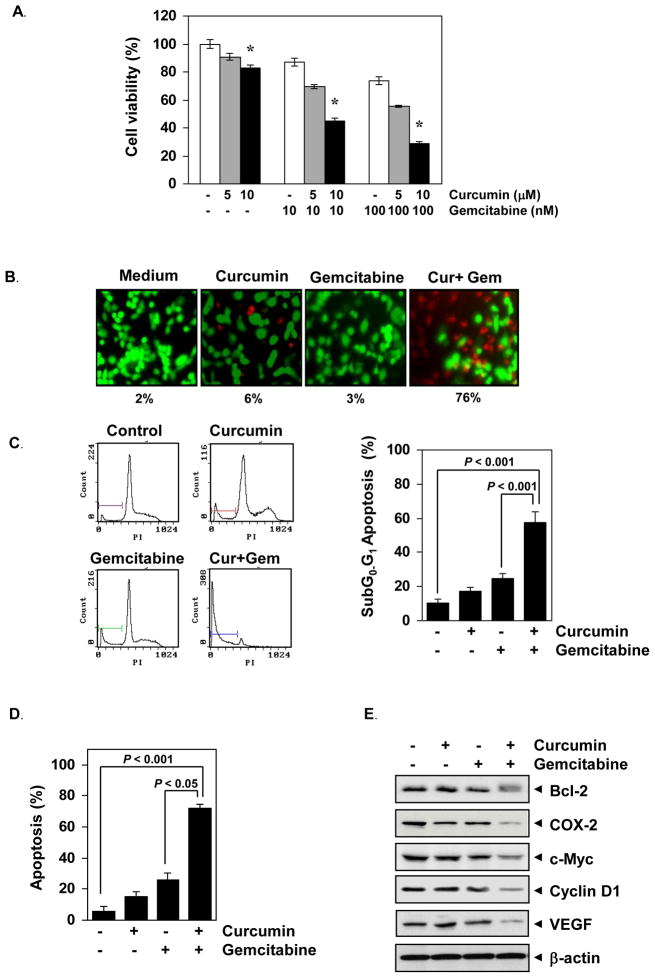
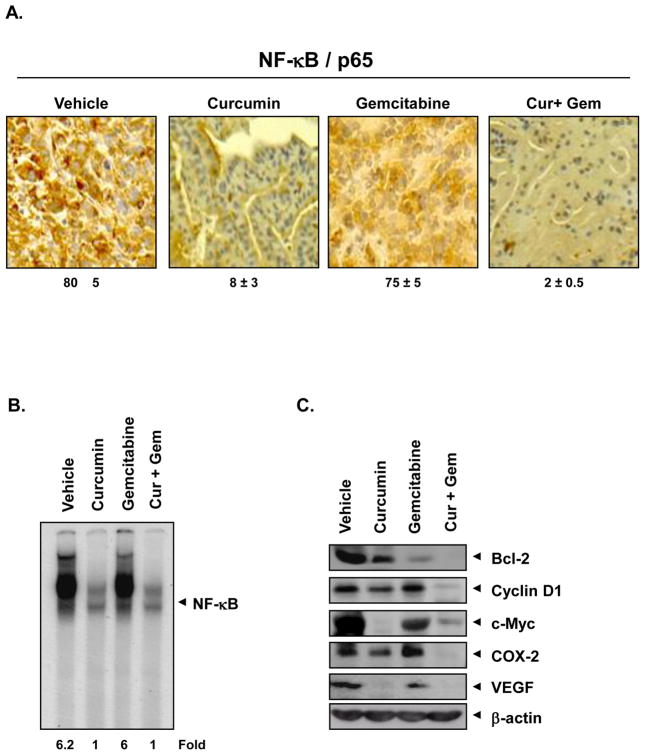
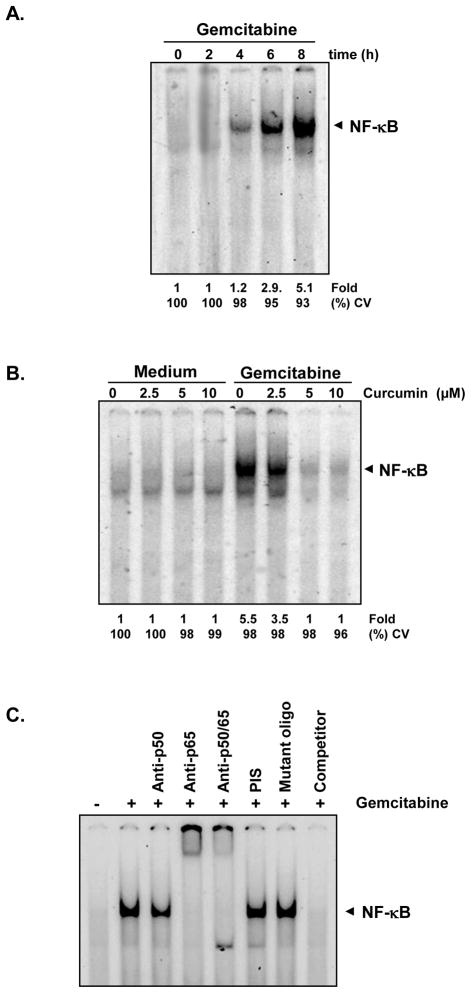
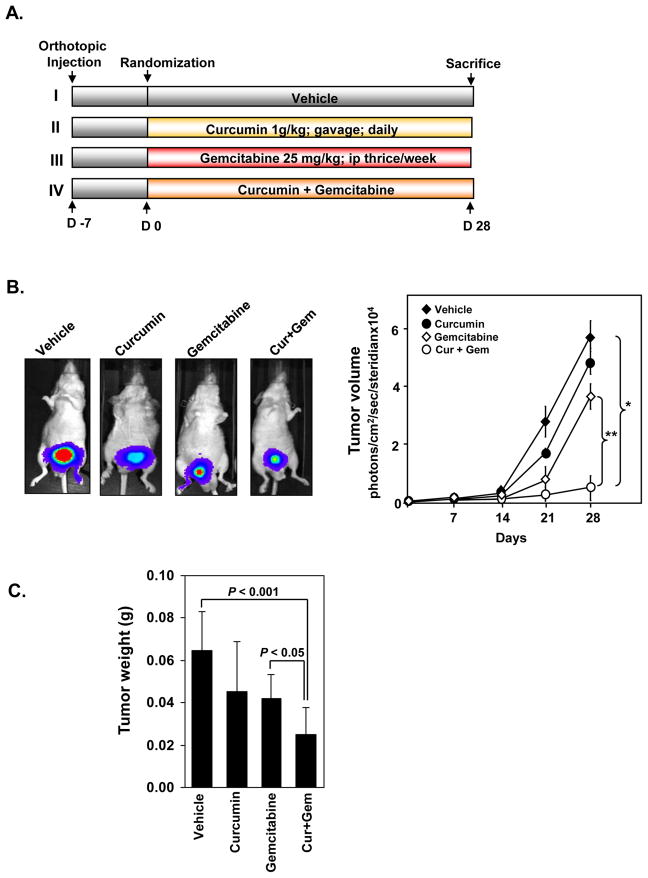
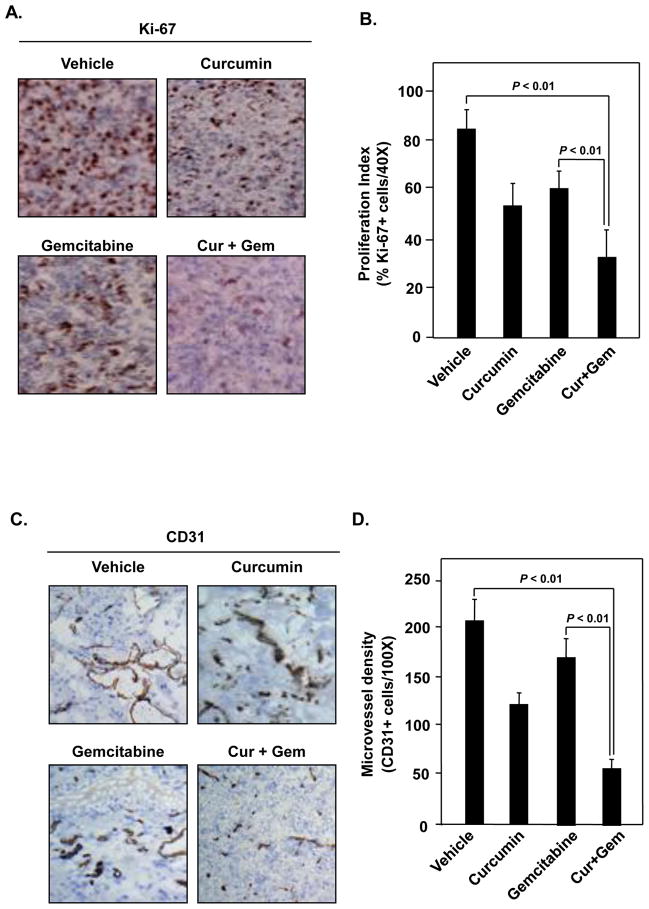
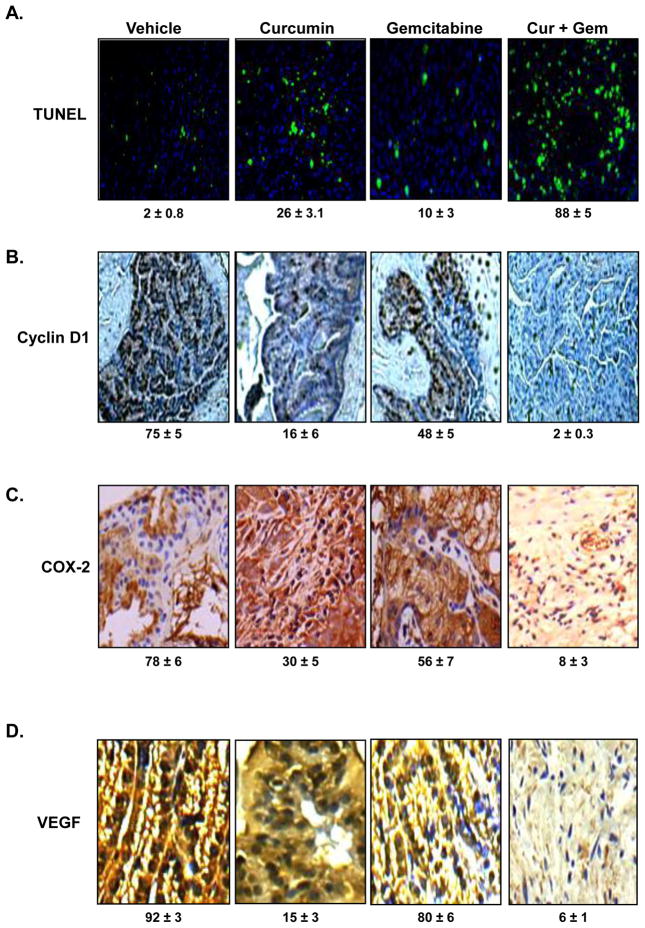
Little progress has been made in the last three decades in the treatment of bladder cancer. Novel agents that are nontoxic and can improve the current standard of care of this disease are urgently needed. Curcumin, a component of Curcuma longa (also called turmeric), is one such agent that has been shown to suppress pathways linked to oncogenesis, including cell survival, proliferation, invasion and angiogenesis. We investigated whether curcumin has potential to improve the current therapy for bladder cancer, using an orthotopic mouse model. Curcumin potentiated the apoptotic effects of gemcitabine against human bladder cancer 253JBV cells in culture. Electrophoretic mobility shift assay revealed that curcumin also suppressed the gemcitabine-induced activation of the cell survival transcription factor NF-kappaB. In an orthotopic mouse model, bioluminescence imaging revealed that while curcumin alone significantly reduced the bladder tumor volume, maximum reduction was observed when curcumin was used in combination with gemcitabine (P<0.01 versus vehicle; P<0.01 versus gemcitabine alone). Curcumin also significantly decreased the proliferation marker Ki-67 and microvessel density (CD31) (P<0.01 versus vehicle; P<0.01 versus gemcitabine alone), but maximum reduction occurred when it was combined with gemcitabine (P<0.01 versus vehicle; P<0.01 versus gemcitabine alone). Curcumin abolished the constitutive activation of NF-kappaB in the tumor tissue; induced apoptosis, and decreased cyclin D1, VEGF, COX-2, c-myc and Bcl-2 expression in the bladder cancer tissue. Overall our results suggest that curcumin alone exhibits significant antitumor effects against human bladder cancer and it further potentiates the effects of gemictabine, possibly through the modulation of NF-kappaB signaling pathway.
在过去三十年里,膀胱癌的治疗进展甚微。迫切需要新型无毒药物来改善这种疾病的当前治疗标准。姜黄素是姜黄(也称为姜黄根粉)的一种成分,就是这样一种已被证明能抑制与肿瘤发生相关途径的药物,这些途径包括细胞存活、增殖、侵袭和血管生成。我们使用原位小鼠模型研究了姜黄素是否有潜力改善当前的膀胱癌治疗方法。姜黄素增强了吉西他滨对培养的人膀胱癌253JBV细胞的凋亡作用。电泳迁移率变动分析表明,姜黄素还抑制了吉西他滨诱导的细胞存活转录因子NF-κB的激活。在原位小鼠模型中,生物发光成像显示,虽然单独使用姜黄素可显著减小膀胱肿瘤体积,但当姜黄素与吉西他滨联合使用时,肿瘤体积减小最为明显(与赋形剂相比,P<0.01;与单独使用吉西他滨相比,P<).01)。姜黄素还显著降低了增殖标志物Ki-67和微血管密度(CD31)(与赋形剂相比,P<0.01;与单独使用吉西他滨相比,P<0.01),但与吉西他滨联合使用时降低最为明显(与赋形剂相比,P<0.01;与单独使用吉西他滨相比,P<0.01)。姜黄素消除了肿瘤组织中NF-κB的组成性激活;诱导了细胞凋亡,并降低了膀胱癌组织中细胞周期蛋白D1、血管内皮生长因子、环氧合酶-2、c-myc和Bcl-2的表达。总体而言,我们的结果表明,姜黄素单独使用时对人膀胱癌具有显著的抗肿瘤作用,并且它可能通过调节NF-κB信号通路进一步增强吉西他滨的作用。