Prasad Sahdeo, Yadav Vivek R, Sung Bokyung, Gupta Subash C, Tyagi Amit K, Aggarwal Bharat B
Department of Experimental Therapeutics, Cytokine Research Laboratory, The University of Texas MD Anderson Cancer Center, Houston, TX, USA.
Anti-inflammatory Research Institute, San Deigo, CA, USA.
Oncotarget. 2016 Mar 15;7(11):13182-96. doi: 10.18632/oncotarget.7537.
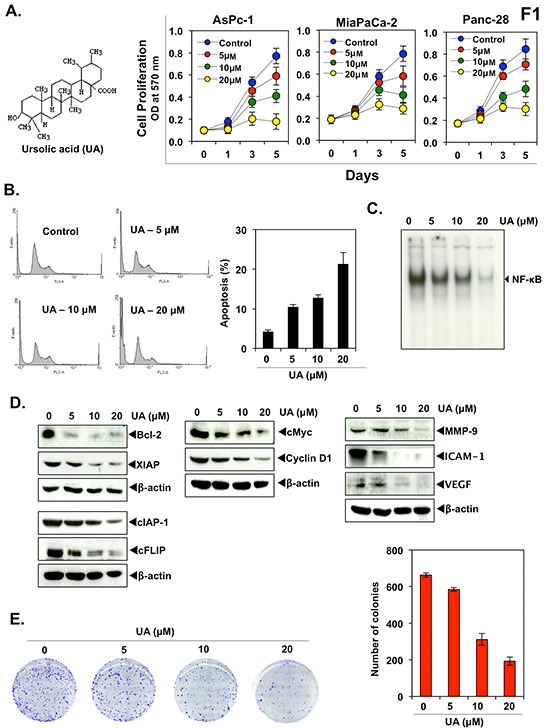
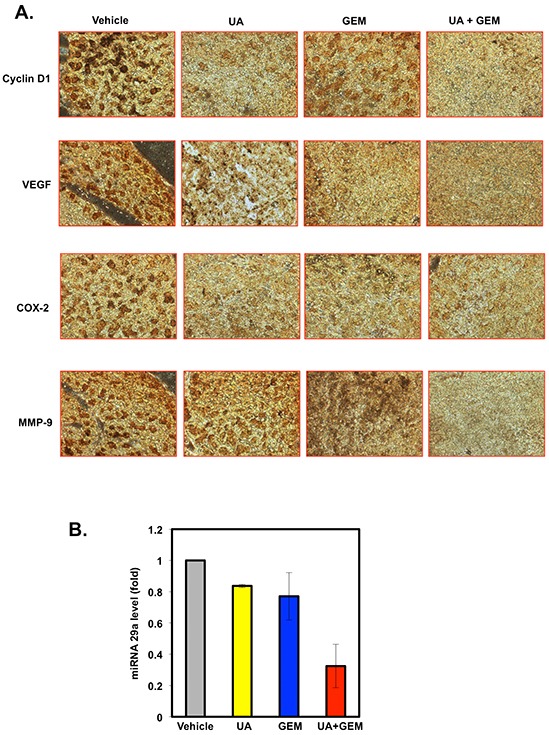
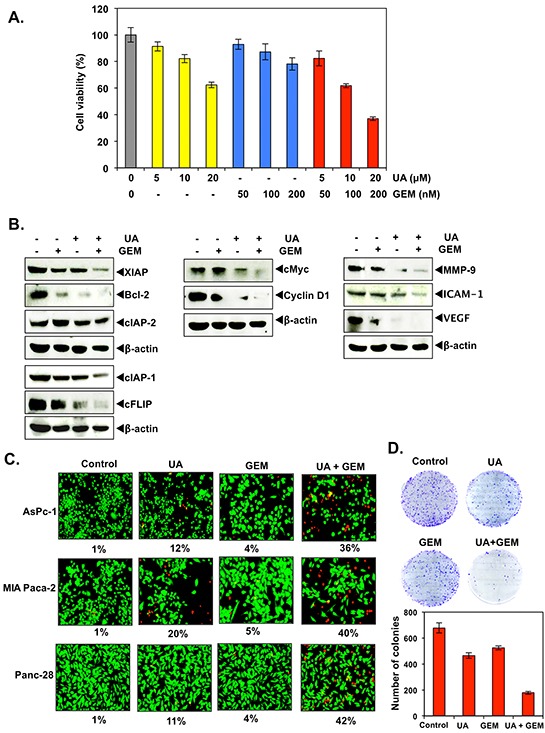
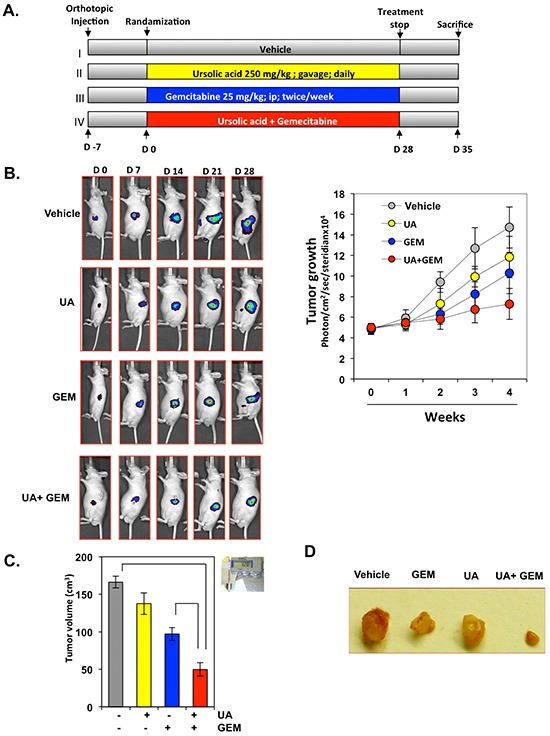
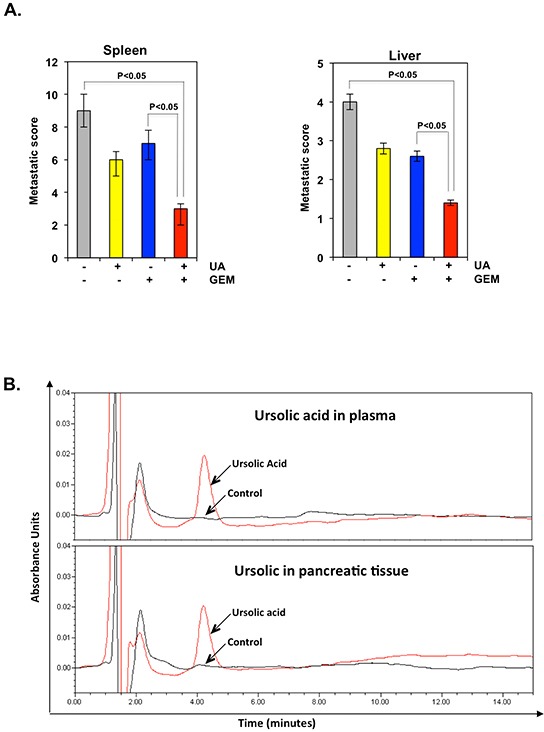
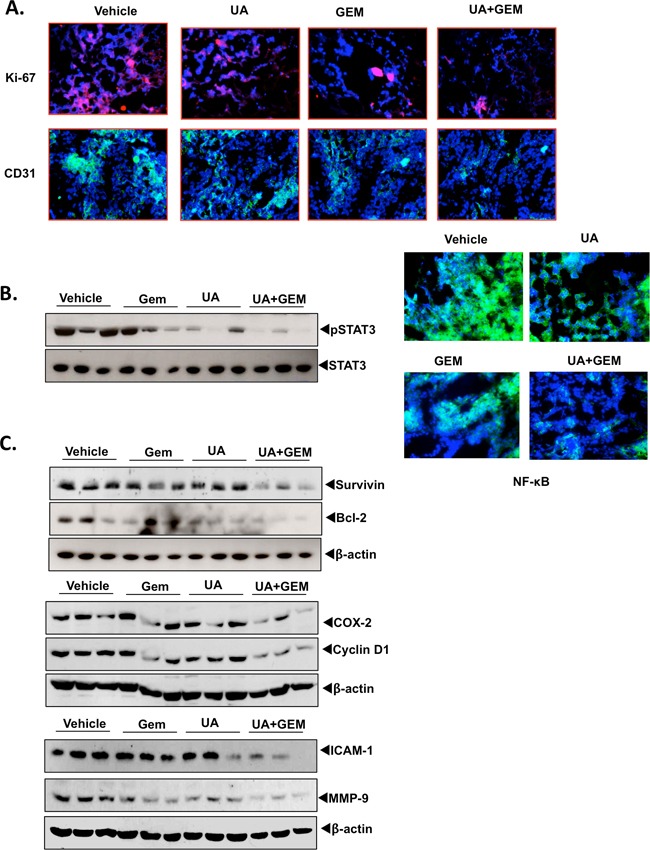
The development of chemoresistance in human pancreatic cancer is one reason for the poor survival rate for patients with this cancer. Because multiple gene products are linked with chemoresistance, we investigated the ability of ursolic acid (UA) to sensitize pancreatic cancer cells to gemcitabine, a standard drug used for the treatment of pancreatic cancer. These investigations were done in AsPC-1, MIA PaCa-2, and Panc-28 cells and in nude mice orthotopically implanted with Panc-28 cells. In vitro, UA inhibited proliferation, induced apoptosis, suppressed NF-κB activation and its regulated proliferative, metastatic, and angiogenic proteins. UA (20 μM) also enhanced gemcitabine (200 nM)-induced apoptosis and suppressed the expression of NF-κB-regulated proteins. In the nude mouse model, oral administration of UA (250 mg/kg) suppressed tumor growth and enhanced the effect of gemcitabine (25 mg/kg). Furthermore, the combination of UA and gemcitabine suppressed the metastasis of cancer cells to distant organs such as liver and spleen. Immunohistochemical analysis showed that biomarkers of proliferation (Ki-67) and microvessel density (CD31) were suppressed by the combination of UA and gemcitabine. UA inhibited the activation of NF-κB and STAT3 and the expression of tumorigenic proteins regulated by these inflammatory transcription factors in tumor tissue. Furthermore, the combination of two agents decreased the expression of miR-29a, closely linked with tumorigenesis, in the tumor tissue. UA was found to be bioavailable in animal serum and tumor tissue. These results suggest that UA can inhibit the growth of human pancreatic tumors and sensitize them to gemcitabine by suppressing inflammatory biomarkers linked to proliferation, invasion, angiogenesis, and metastasis.
人类胰腺癌中化学抗性的发展是该癌症患者生存率低的一个原因。由于多种基因产物与化学抗性相关,我们研究了熊果酸(UA)使胰腺癌细胞对吉西他滨敏感的能力,吉西他滨是用于治疗胰腺癌的一种标准药物。这些研究在AsPC-1、MIA PaCa-2和Panc-28细胞以及原位植入Panc-28细胞的裸鼠中进行。在体外,UA抑制增殖、诱导凋亡、抑制NF-κB激活及其调节的增殖、转移和血管生成蛋白。UA(20 μM)还增强了吉西他滨(200 nM)诱导的凋亡并抑制了NF-κB调节蛋白的表达。在裸鼠模型中,口服UA(250 mg/kg)可抑制肿瘤生长并增强吉西他滨(25 mg/kg)的效果。此外,UA和吉西他滨的联合使用抑制了癌细胞向肝脏和脾脏等远处器官的转移。免疫组织化学分析表明,UA和吉西他滨的联合使用抑制了增殖生物标志物(Ki-67)和微血管密度(CD31)。UA抑制肿瘤组织中NF-κB和STAT3的激活以及这些炎症转录因子调节的致瘤蛋白的表达。此外,两种药物的联合使用降低了肿瘤组织中与肿瘤发生密切相关的miR-29a的表达。发现UA在动物血清和肿瘤组织中具有生物利用度。这些结果表明,UA可以通过抑制与增殖、侵袭、血管生成和转移相关的炎症生物标志物来抑制人类胰腺肿瘤的生长并使其对吉西他滨敏感。