Androgen Signalling Laboratory, Department of Oncology, Imperial College London, London, W12 0NN, UK.
Curr Genomics. 2009 Mar;10(1):18-25. doi: 10.2174/138920209787581307.
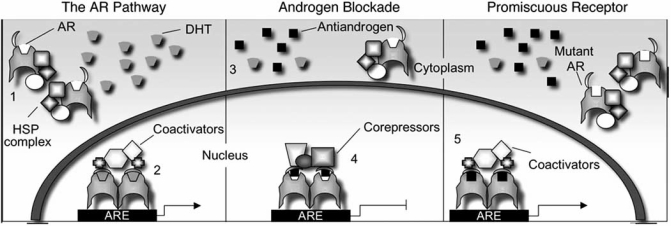
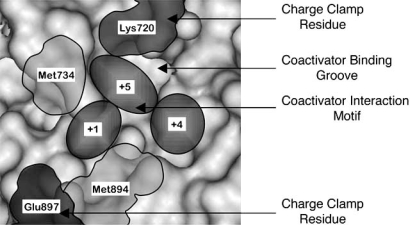
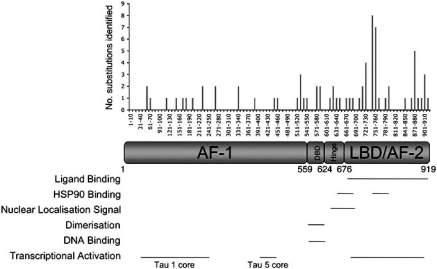
Prostate tumour growth is almost always dependent upon the androgen receptor pathway and hence therapies aimed at blocking this signalling axis are useful tools in the management of this disease. Unfortunately such therapies invariably fail; and the tumour progresses to an "androgen-independent" stage. In such cases androgen receptor expression is almost always maintained and much evidence exists to suggest that it may still be driving growth. One mechanism by which the receptor is thought to remain active is mutation. This review summarises the present data on androgen receptor mutations in prostate cancer, and how such substitutions offer a growth advantage by affecting cofactor interactions or by reducing ligand specificity. Such alterations appear to have a subsequent effect upon gene expression suggesting that tumours may "behave" differently dependent upon the ligand promoting growth and if a mutation is present.
前列腺肿瘤的生长几乎总是依赖于雄激素受体通路,因此,旨在阻断这一信号轴的治疗方法是该疾病治疗的有用工具。不幸的是,这些治疗方法总是无效;肿瘤进展到“雄激素非依赖性”阶段。在这种情况下,雄激素受体的表达几乎总是保持不变,并且有大量证据表明它可能仍然在驱动肿瘤的生长。受体被认为保持活性的一种机制是突变。这篇综述总结了目前关于前列腺癌中雄激素受体突变的数据,以及这些取代如何通过影响辅助因子相互作用或降低配体特异性来提供生长优势。这种改变似乎对基因表达有后续影响,表明肿瘤可能“表现”不同,这取决于促进生长的配体以及是否存在突变。