Mehra Arun, Baker Christopher L, Loros Jennifer J, Dunlap Jay C
Department of Genetics, Dartmouth Medical School, Hanover, NH 03755, USA.
Trends Biochem Sci. 2009 Oct;34(10):483-90. doi: 10.1016/j.tibs.2009.06.006. Epub 2009 Sep 7.
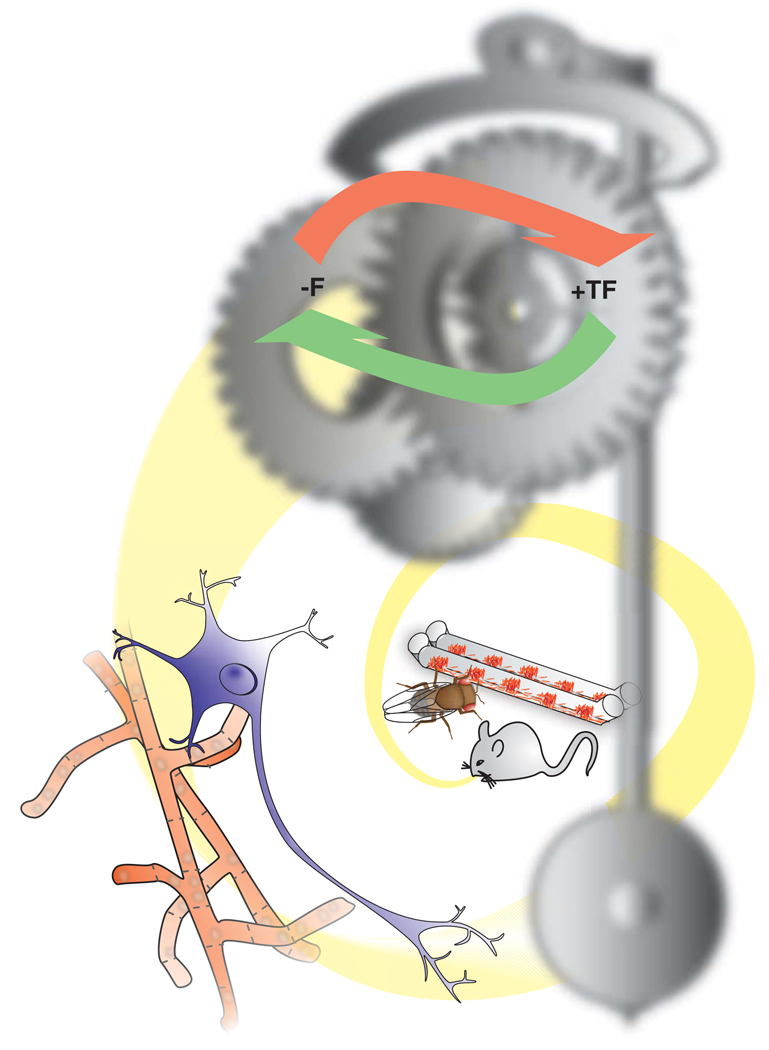
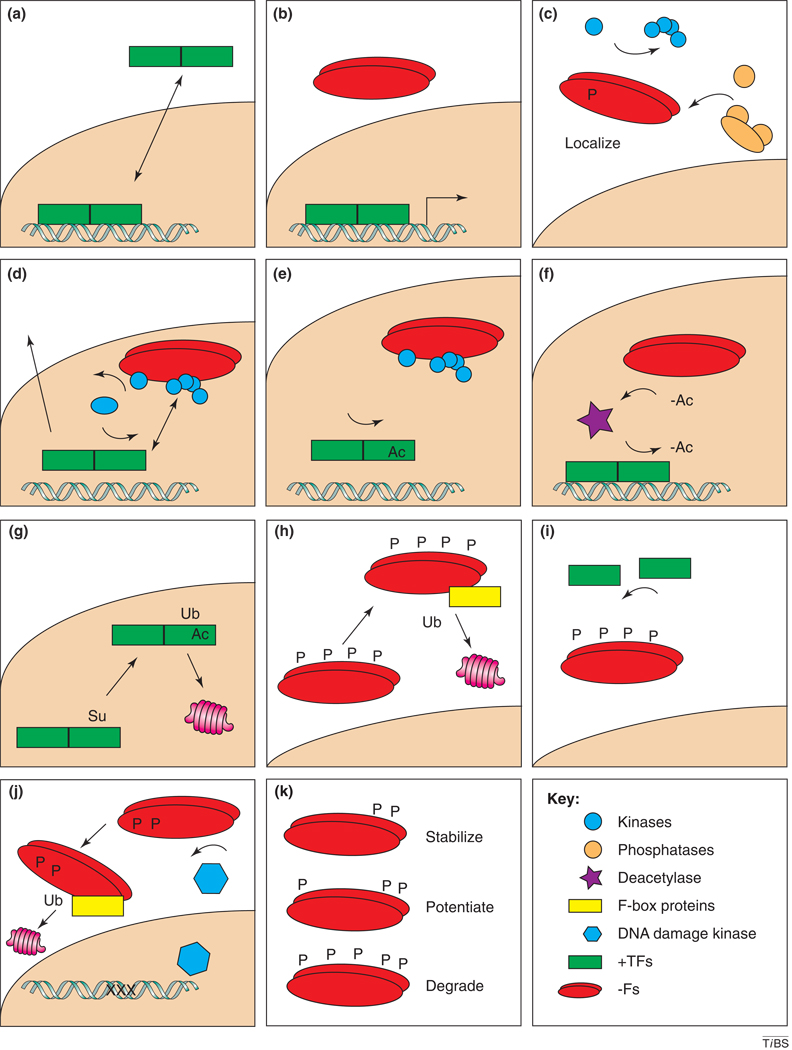
The pace has quickened in circadian biology research. In particular, an abundance of results focused on post-translational modifications (PTMs) is sharpening our view of circadian molecular clockworks. PTMs affect nearly all aspects of clock biology; in some cases they are essential for clock function and in others, they provide layers of regulatory fine-tuning. Our goal is to review recent advances in clock PTMs, help make sense of emerging themes, and spotlight intriguing (and perhaps controversial) new findings. We focus on PTMs affecting the core functions of eukaryotic clocks, in particular the functionally related oscillators in Neurospora crassa, Drosophila melanogaster, and mammalian cells.
昼夜节律生物学研究的步伐已经加快。特别是,大量聚焦于翻译后修饰(PTMs)的研究结果正在加深我们对昼夜节律分子机制的理解。翻译后修饰几乎影响着生物钟生物学的各个方面;在某些情况下,它们对生物钟功能至关重要,而在其他情况下,它们提供了多层次的调节微调。我们的目标是回顾生物钟翻译后修饰的最新进展,梳理新出现的主题,并突出有趣(可能还有争议)的新发现。我们重点关注影响真核生物钟核心功能的翻译后修饰,特别是粗糙脉孢菌、黑腹果蝇和哺乳动物细胞中功能相关的振荡器。