Department of Chemistry and Biochemistry, Montana State University, Bozeman, MT, USA.
PLoS One. 2009 Sep 16;4(9):e6964. doi: 10.1371/journal.pone.0006964.
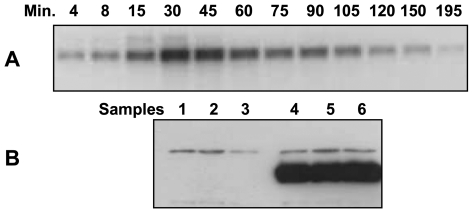
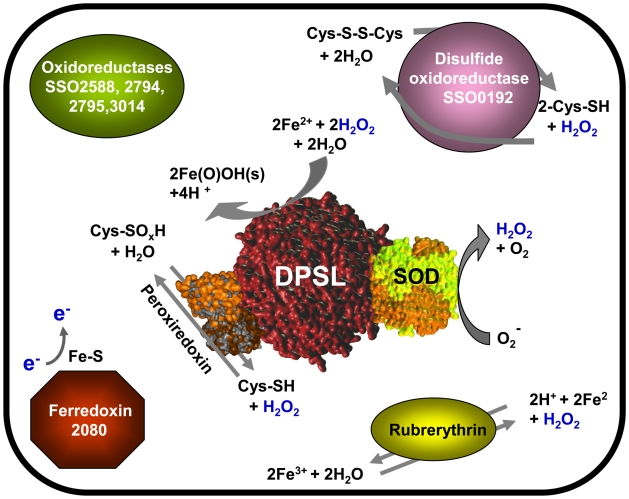
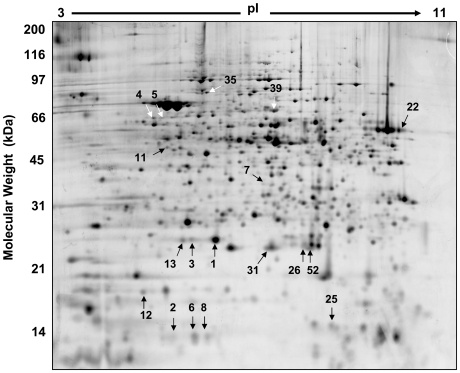
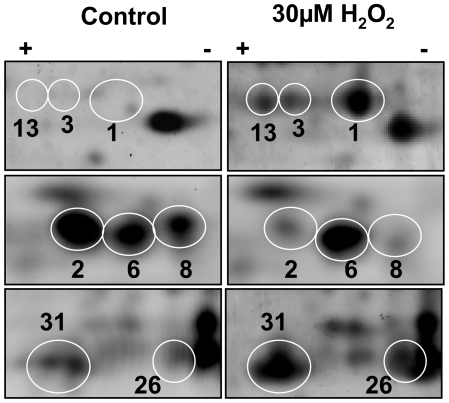
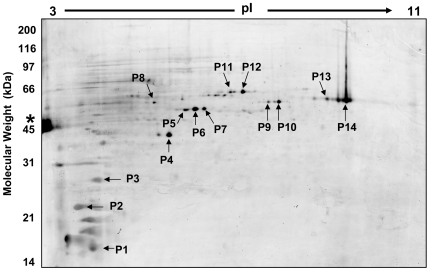
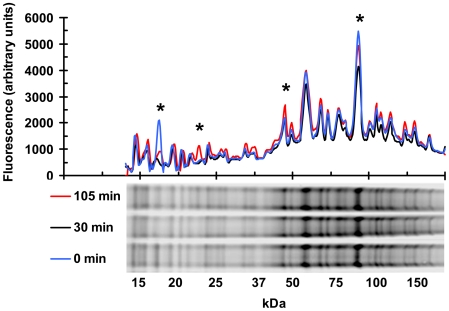
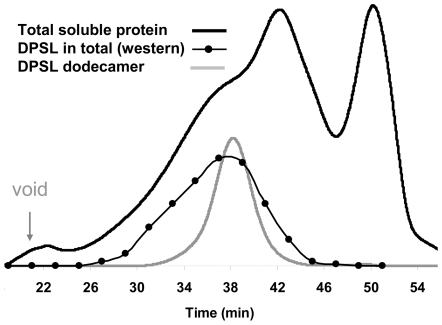
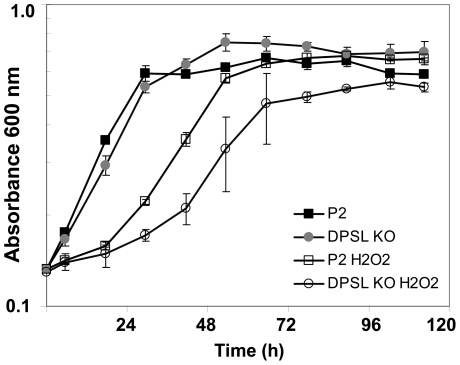
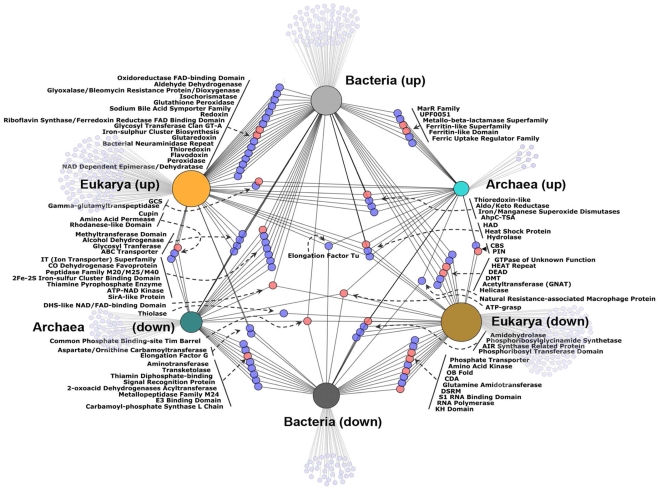
To avoid molecular damage of biomolecules due to oxidation, all cells have evolved constitutive and responsive systems to mitigate and repair chemical modifications. Archaea have adapted to some of the most extreme environments known to support life, including highly oxidizing conditions. However, in comparison to bacteria and eukaryotes, relatively little is known about the biology and biochemistry of archaea in response to changing conditions and repair of oxidative damage. In this study transcriptome, proteome, and chemical reactivity analyses of hydrogen peroxide (H(2)O(2)) induced oxidative stress in Sulfolobus solfataricus (P2) were conducted. Microarray analysis of mRNA expression showed that 102 transcripts were regulated by at least 1.5 fold, 30 minutes after exposure to 30 microM H(2)O(2). Parallel proteomic analyses using two-dimensional differential gel electrophoresis (2D-DIGE), monitored more than 800 proteins 30 and 105 minutes after exposure and found that 18 had significant changes in abundance. A recently characterized ferritin-like antioxidant protein, DPSL, was the most highly regulated species of mRNA and protein, in addition to being post-translationally modified. As expected, a number of antioxidant related mRNAs and proteins were differentially regulated. Three of these, DPSL, superoxide dismutase, and peroxiredoxin were shown to interact and likely form a novel supramolecular complex for mitigating oxidative damage. A scheme for the ability of this complex to perform multi-step reactions is presented. Despite the central role played by DPSL, cells maintained a lower level of protection after disruption of the dpsl gene, indicating a level of redundancy in the oxidative stress pathways of S. solfataricus. This work provides the first "omics" scale assessment of the oxidative stress response for an archeal organism and together with a network analysis using data from previous studies on bacteria and eukaryotes reveals evolutionarily conserved pathways where complex and overlapping defense mechanisms protect against oxygen toxicity.
为了避免生物分子因氧化而受到分子损伤,所有细胞都进化出组成型和响应型系统来减轻和修复化学修饰。古菌已经适应了一些已知的最极端的生命支持环境,包括高度氧化的条件。然而,与细菌和真核生物相比,人们对古菌在应对环境变化和修复氧化损伤方面的生物学和生物化学了解相对较少。在这项研究中,我们对过氧化氢(H₂O₂)诱导的氧化应激条件下的嗜热硫化叶菌(P2)进行了转录组、蛋白质组和化学反应性分析。mRNA 表达的微阵列分析显示,暴露于 30 μM H₂O₂ 30 分钟后,有 102 个转录物的表达至少被调节了 1.5 倍。使用二维差异凝胶电泳(2D-DIGE)进行的平行蛋白质组分析,在暴露后 30 和 105 分钟监测了超过 800 种蛋白质,发现其中 18 种的丰度有显著变化。一种最近被表征的铁蛋白样抗氧化蛋白 DPSL 是 mRNA 和蛋白质中被调节最多的物种,除了被翻译后修饰之外。正如预期的那样,许多抗氧化相关的 mRNAs 和蛋白质也被差异调节。其中三种,DPSL、超氧化物歧化酶和过氧化物酶,被证明相互作用,并可能形成一个新的超分子复合物来减轻氧化损伤。提出了一个该复合物进行多步反应的方案。尽管 DPSL 发挥了核心作用,但在 dpsl 基因被破坏后,细胞保持了较低水平的保护,这表明在嗜热硫化叶菌的氧化应激途径中存在一定程度的冗余。这项工作首次对古菌的氧化应激反应进行了“组学”规模的评估,并与以前在细菌和真核生物上进行的研究的数据进行了网络分析,揭示了进化上保守的途径,其中复杂和重叠的防御机制可以防止氧气毒性。