Bekalo Tesfaye Hailemariam, Woodmatas Sebsebe Demissew, Woldemariam Zemede Asfaw
Louis Dreyfus Commodities-Coffee Division, Addis Ababa, Ethiopia.
J Ethnobiol Ethnomed. 2009 Sep 24;5:26. doi: 10.1186/1746-4269-5-26.
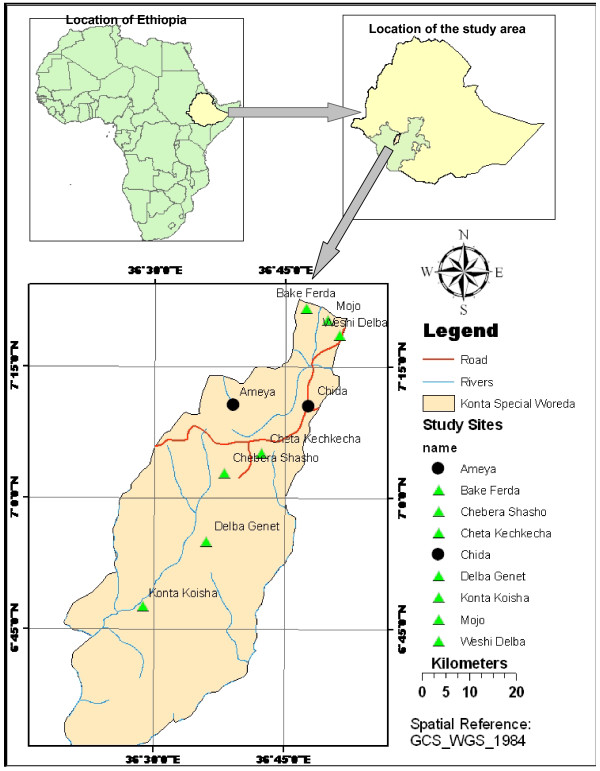
Research was carried out in Konta Special Woreda (District); it is a remote area with lack of infrastructure like road to make any research activities in the area. Therefore, this research was conducted to investigate medicinal plants of the Konta people and to document the local knowledge before environmental and cultural changes deplete the resources.
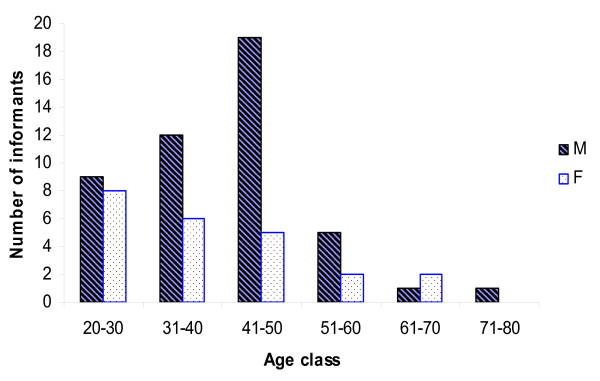
The information was collected between October 2006 and February 2007. Interview-based field study constituted the main data collection method in which the gathering, preparation, use, previous and current status and cultivation practices were systematically investigated. The abundance, taxonomic diversity and distribution of medicinal plants were studied using ecological approach.
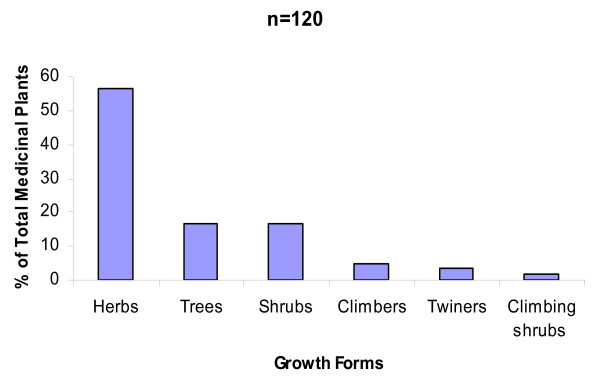
A total of 120 species, grouped within 100 genera and 47 families that are used in traditional medical practices were identified and studied. The Fabaceae and Lamiaceae were the most commonly reported medicinal plants with 16 (13.3%) and 14 (12%) species, respectively. 25.4% of the total medicinal plants are collected from homegardens and the rest (74.6%) are collected from wild habitats. Of the total number of medicinal plants, 108 species (90%) were used to treat human ailments, 6 (5%) for livestock diseases and the remaining 6 (5%) were used to treat both human and livestock health problems. The major threats to medicinal plants reported include harvesting medicinal plants for firewood (24.8%) followed by fire (22.3%) and construction (19%). Of the four plant communities identified in the wild, more medicinal plant species (34) were found in community type-4 (Hyparrhenia cymbaria-Erythrina abyssinica community), which accounted for 61.8%.
Konta Special Woreda is an important area for medicinal plants and associated local knowledge; the natural vegetation being the most important reservoir for the majority of the medicinal plants. Environmental and cultural changes are in the process of threatening the resources and this signals the need for serious efforts to create public awareness so that measures are taken to conserve the medicinal plants in the natural ecosystems and other suitable environments.
研究在孔塔特别沃雷达(区)开展;这是一个偏远地区,缺乏道路等基础设施,不利于在该地区开展任何研究活动。因此,开展本研究旨在调查孔塔族的药用植物,并在环境和文化变迁耗尽这些资源之前记录当地知识。
信息收集于2006年10月至2007年2月期间。基于访谈的实地研究是主要的数据收集方法,其中系统地调查了药用植物的采集、制备、使用、过去和当前状况以及种植方法。采用生态学方法研究了药用植物的丰度、分类多样性和分布情况。
共鉴定并研究了120种用于传统医疗实践的植物,它们分属于100属47科。豆科和唇形科是最常被报道的药用植物科,分别有16种(13.3%)和14种(12%)。25.4%的药用植物是从家庭菜园采集的,其余(74.6%)是从野生生境采集的。在所有药用植物中,108种(90%)用于治疗人类疾病,6种(5%)用于治疗牲畜疾病,其余6种(5%)用于治疗人类和牲畜的健康问题。报告的对药用植物的主要威胁包括为获取柴火而采集药用植物(24.8%),其次是火灾(22.3%)和建设活动(19%)。在野外识别出的四个植物群落中,在群落类型4(纤毛野古草 - 阿比西尼亚刺桐群落)中发现的药用植物种类更多(34种),占61.8%。
孔塔特别沃雷达是药用植物及相关当地知识的重要地区;自然植被是大多数药用植物的最重要储存库。环境和文化变迁正在威胁这些资源,这表明需要做出认真努力来提高公众意识,以便采取措施保护自然生态系统和其他适宜环境中的药用植物。